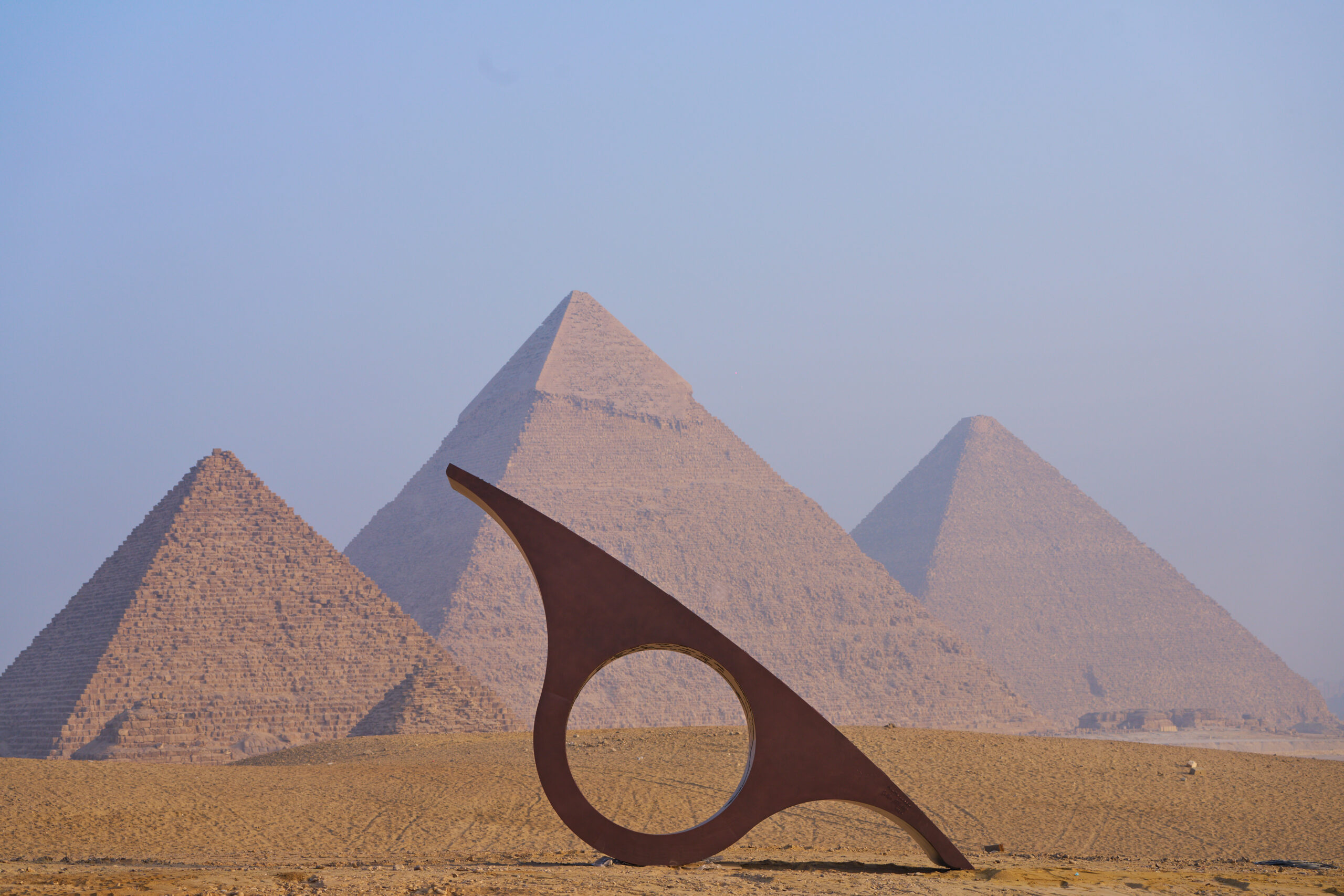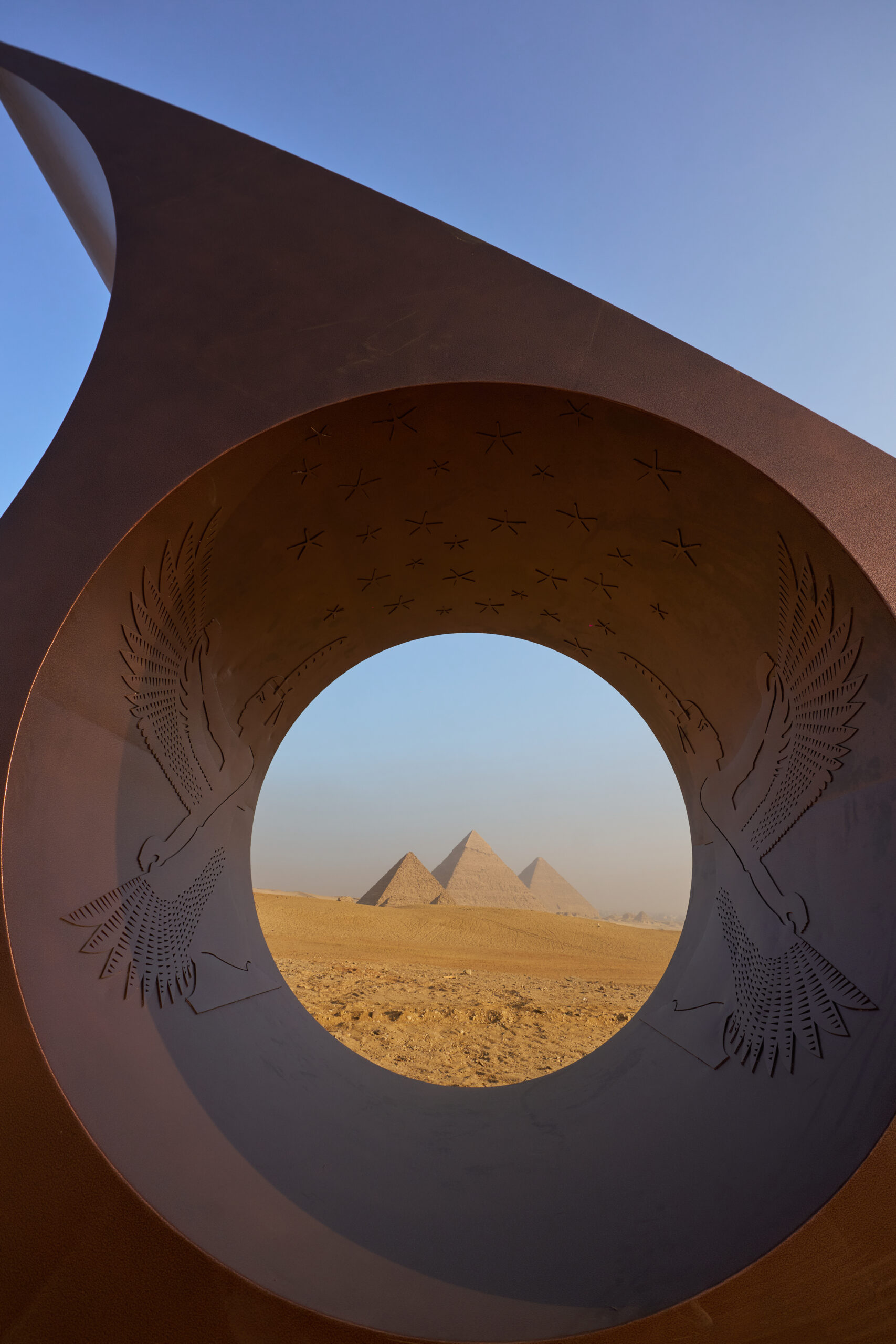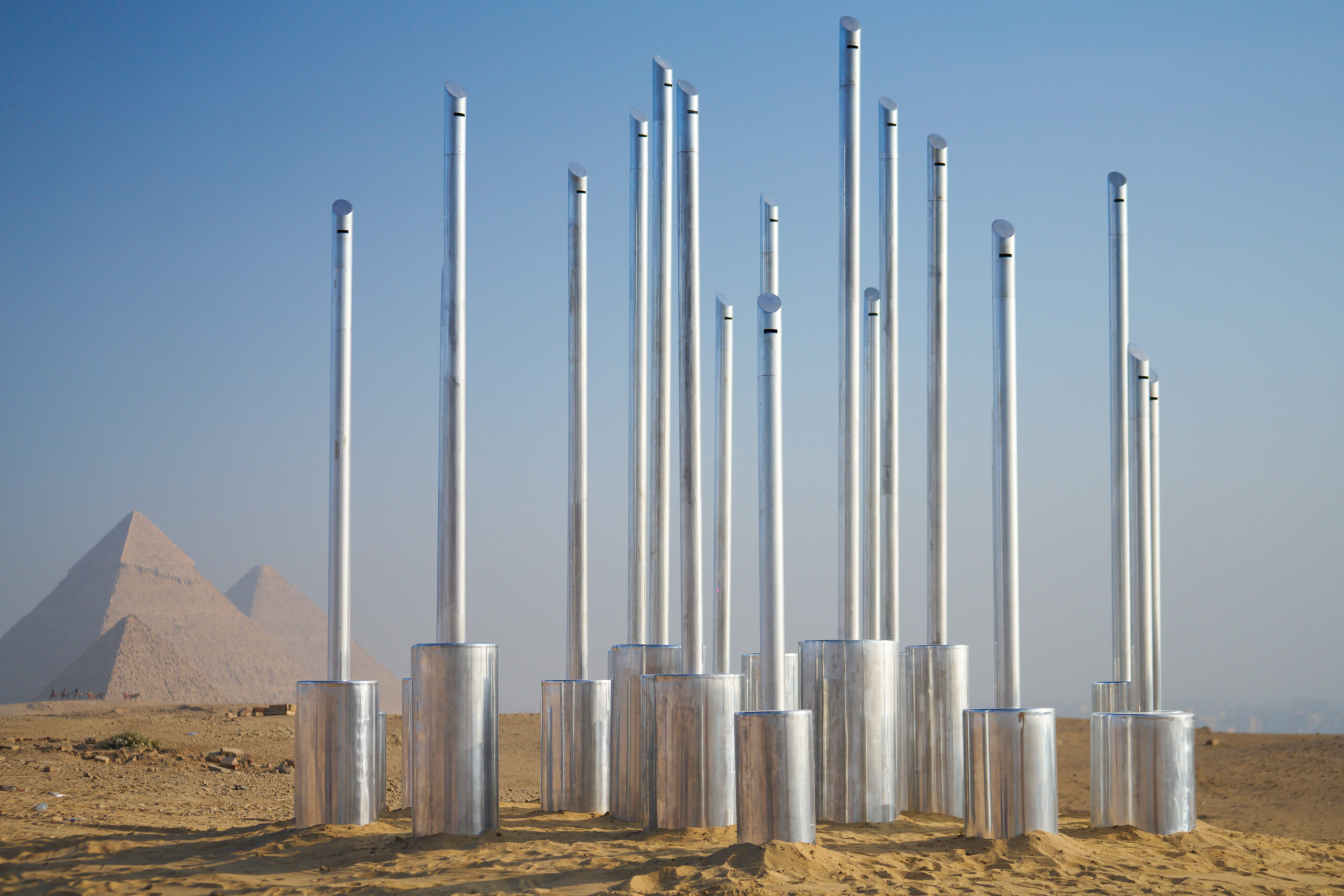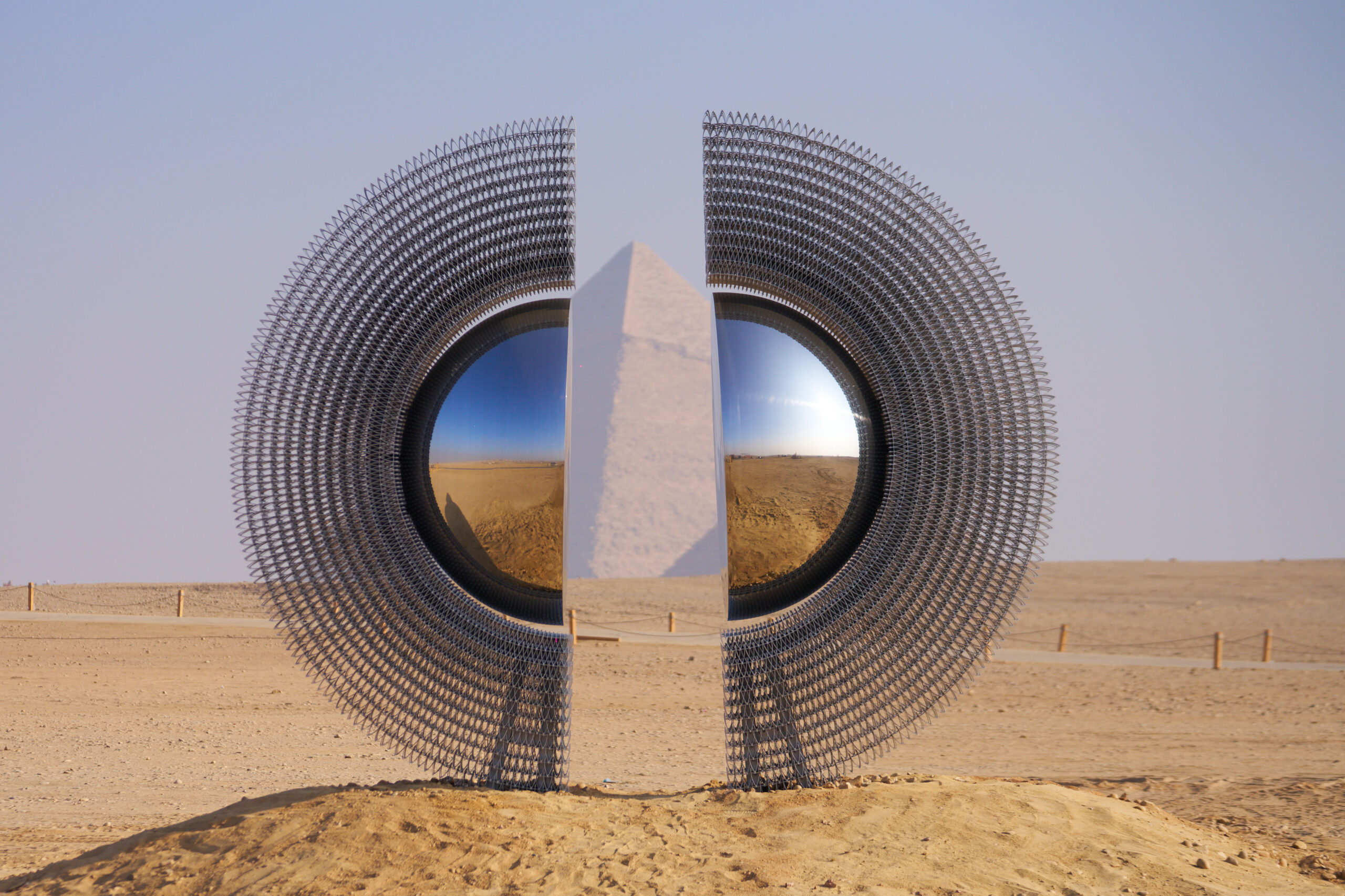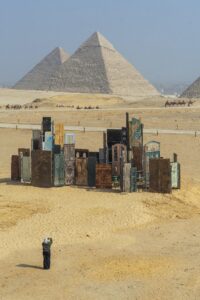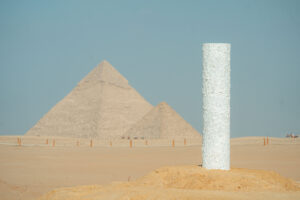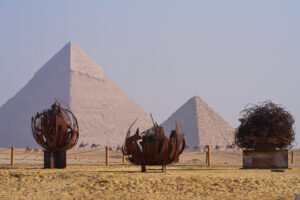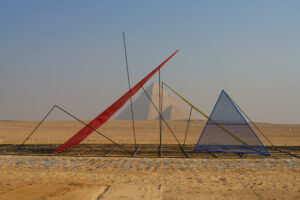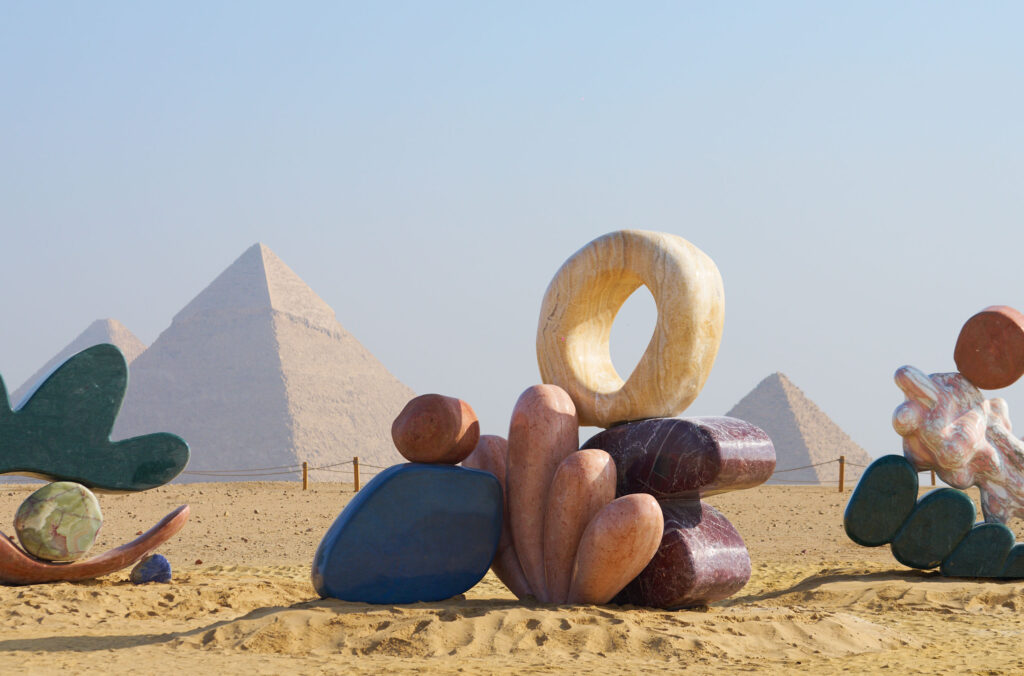


Few monuments around the world are so immediately recognisable as the Giza pyramids – Khufu, Khafre and Menkaure, surrounded by their smaller “sisters”, the Queen’s pyramids. We have seen images of them since childhood, in school books, their pointed profiles standing out among menhirs and Greek temples, or in cartoons, setting the scene for the adventures of Asterix, or again on the big screen, from Indiana Jones onwards. And we still see them everywhere, often as cliché reproductions in any context, from travel brochures to adverts. Thus, the symbol of man’s eternal challenge to obtain immortality is doomed to fade from sight, despite being visited by over 17 million tourists every year. “This is precisely the problem: it is as if we know them, yet we never truly look at them. They belong to the world’s imagination more than its sensory experience,” explains the Franco-Egyptian curator Nadine Abdel Ghaffar, who in 2017 founded the platform Art d’Égypte / Culturvator with a view to enhancing the historical and artistic heritage of her country through dialogue with contemporary art. The first step was to try to rekindle that sense of wonder and suspension in time that represents the prelude to deep thought among the public.
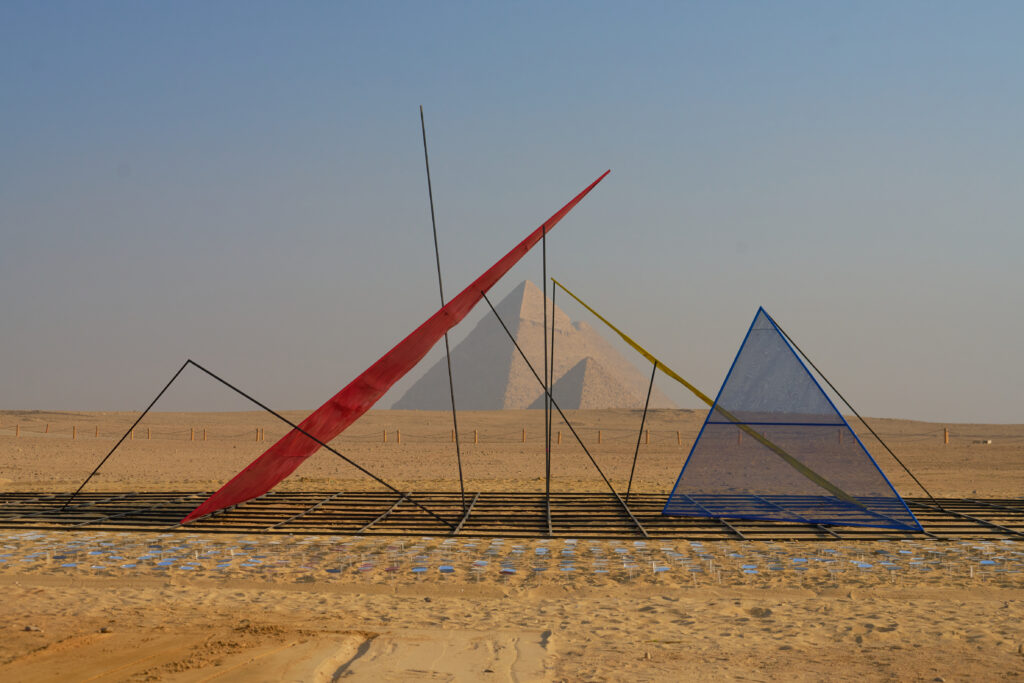
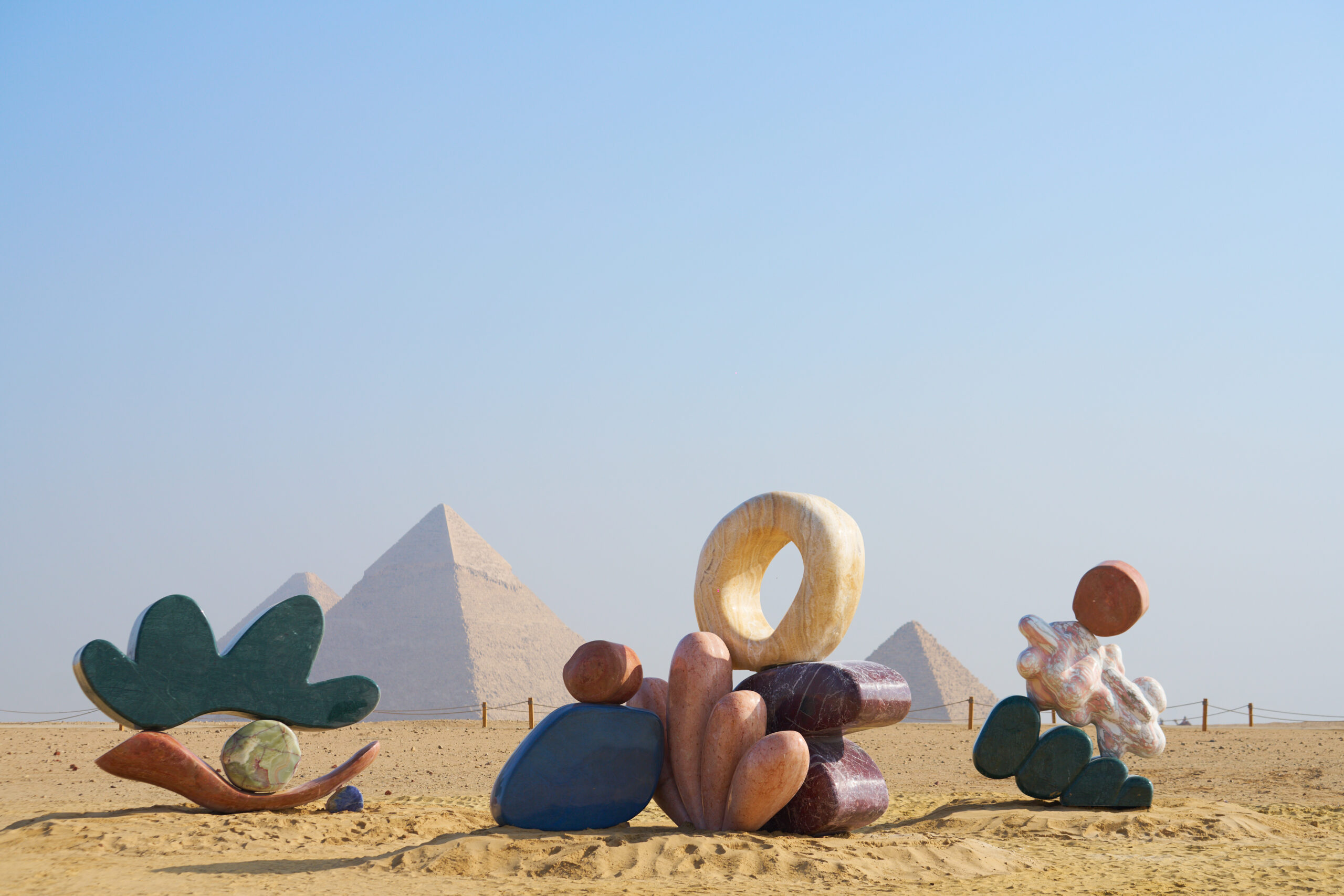
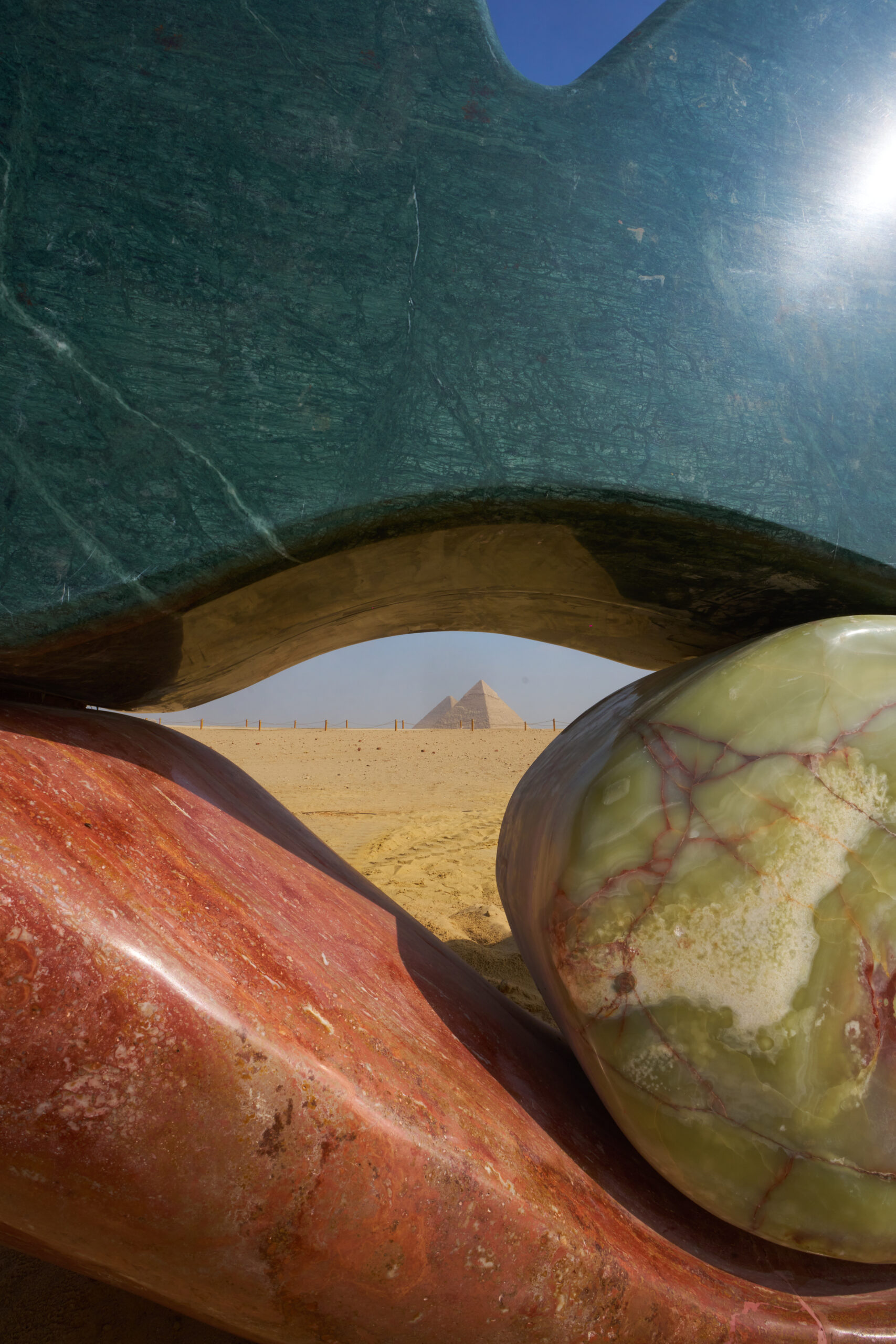
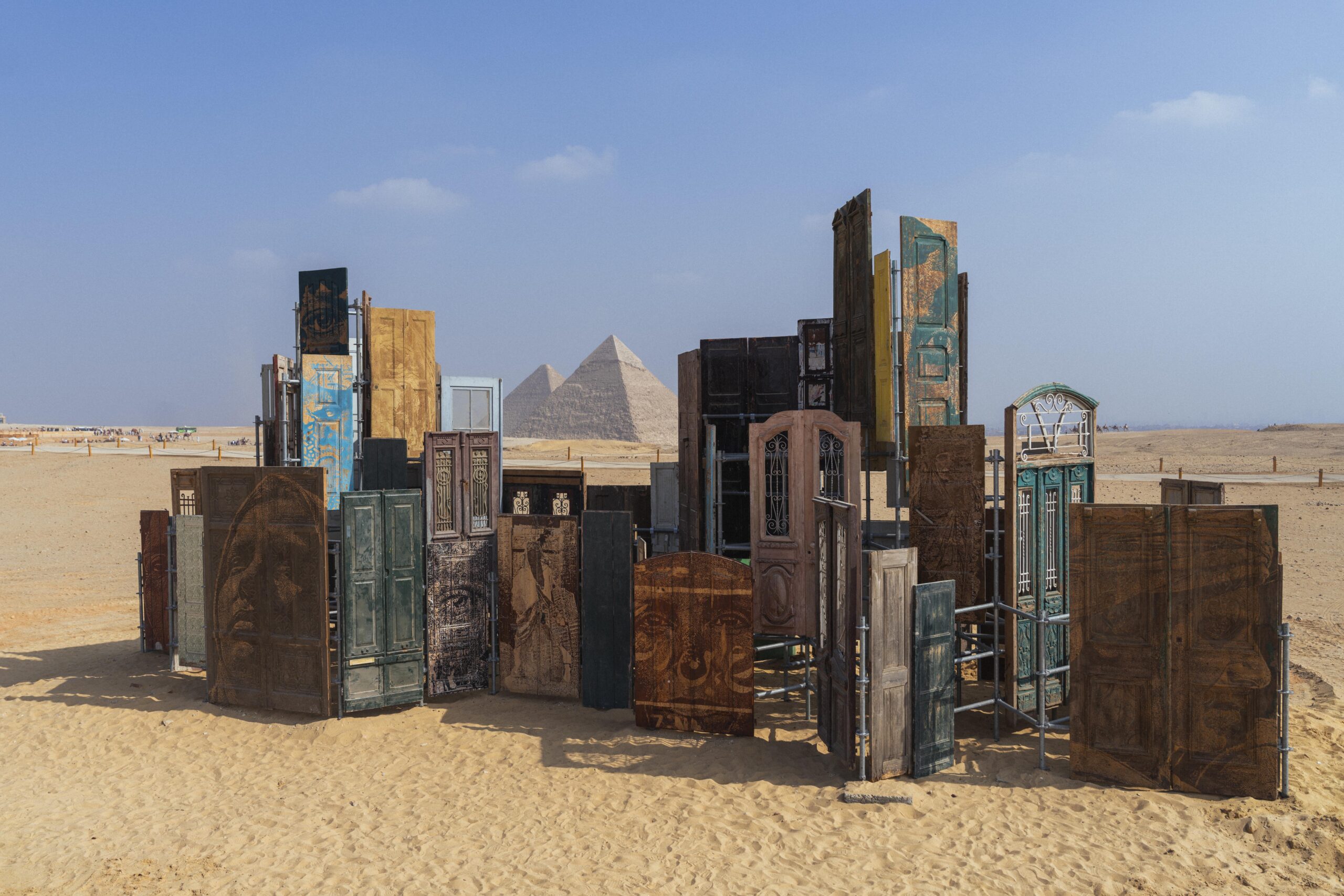
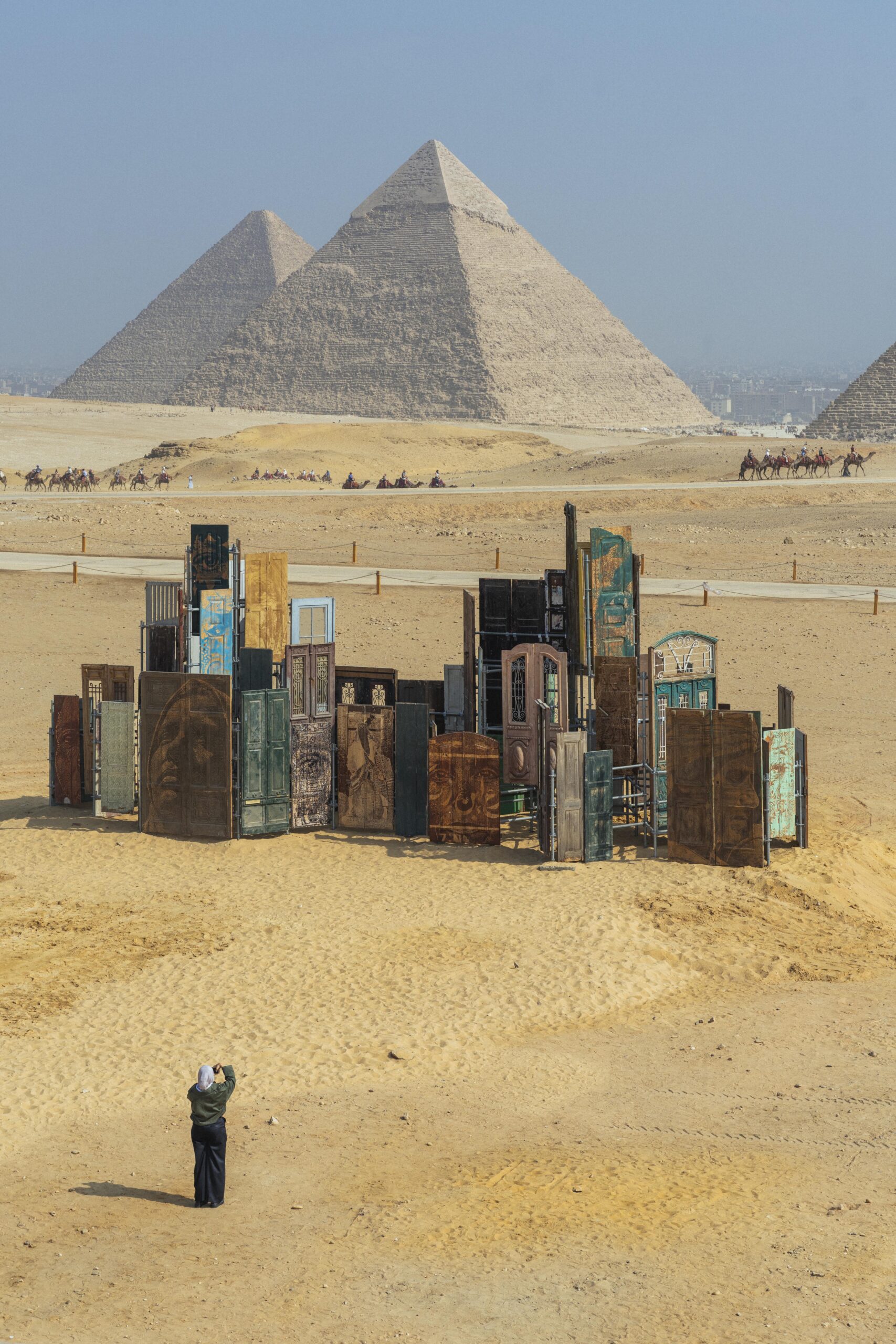
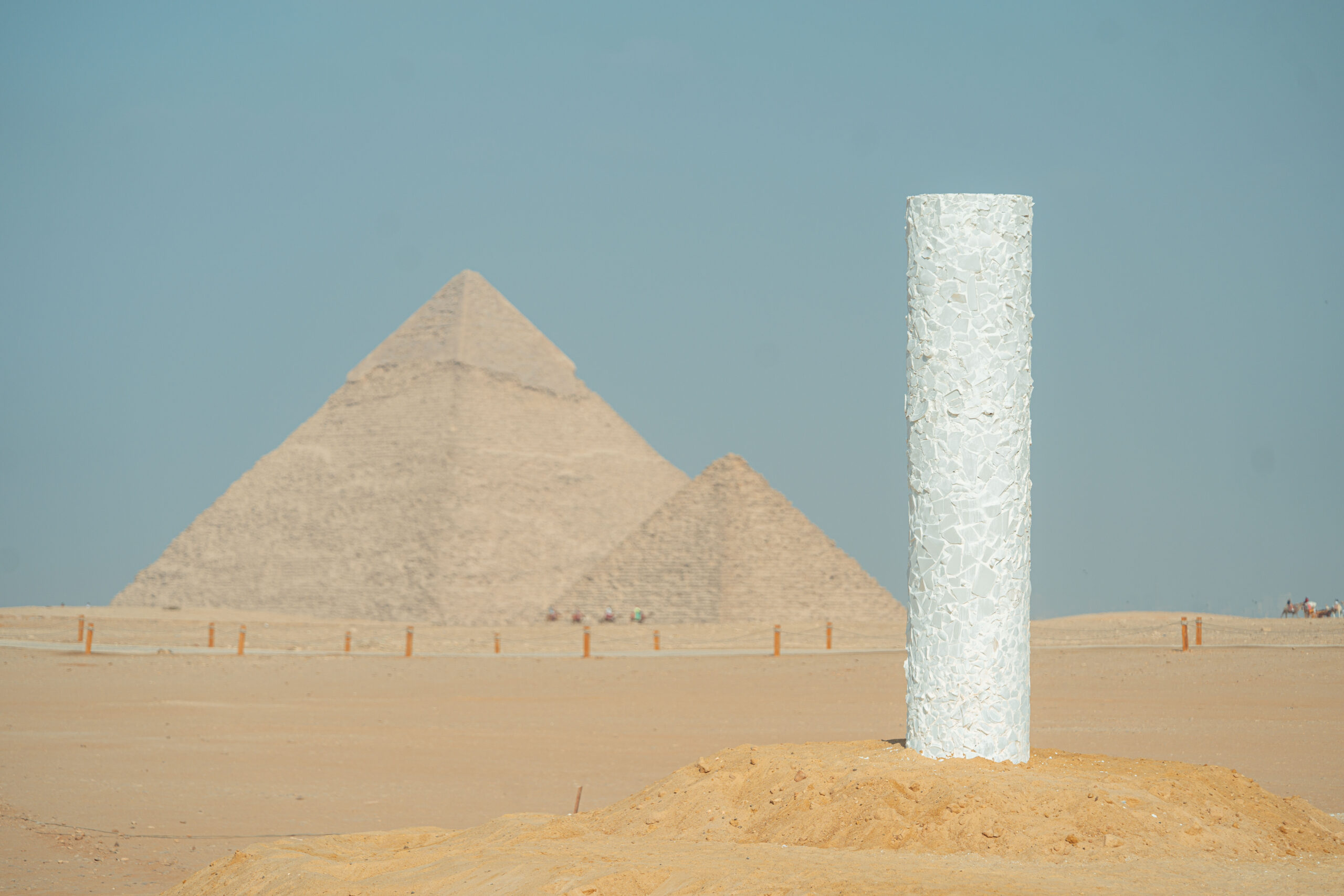
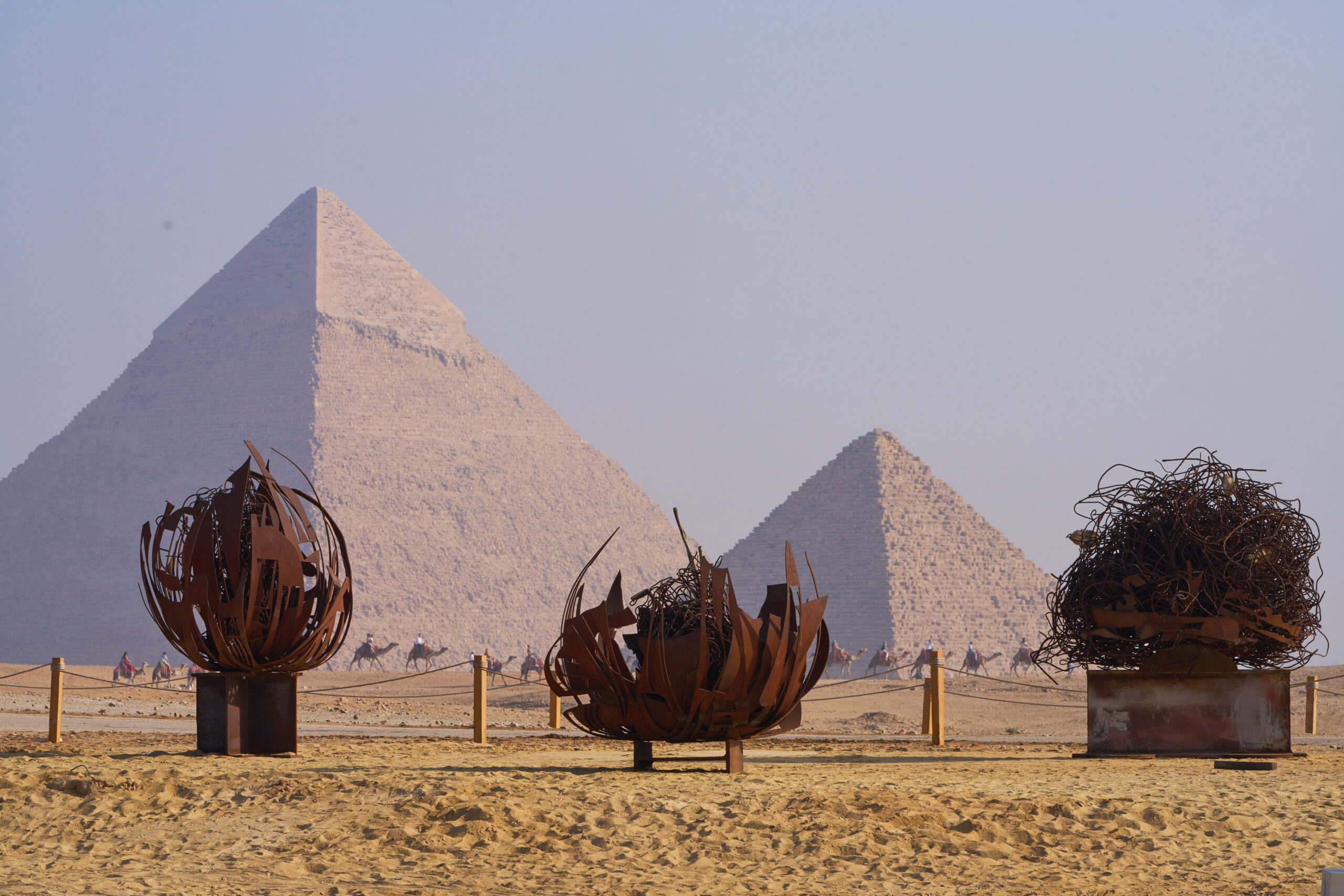
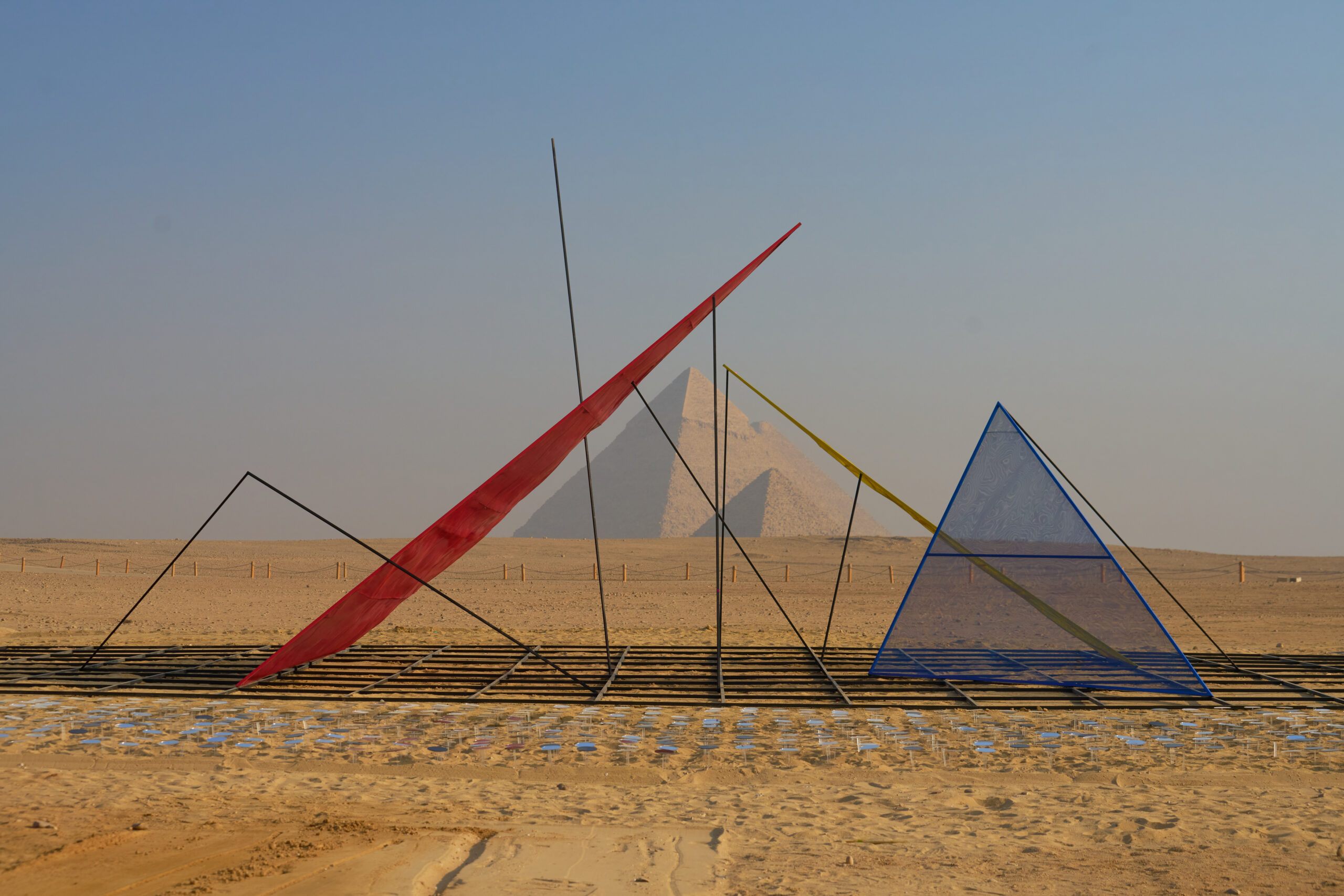
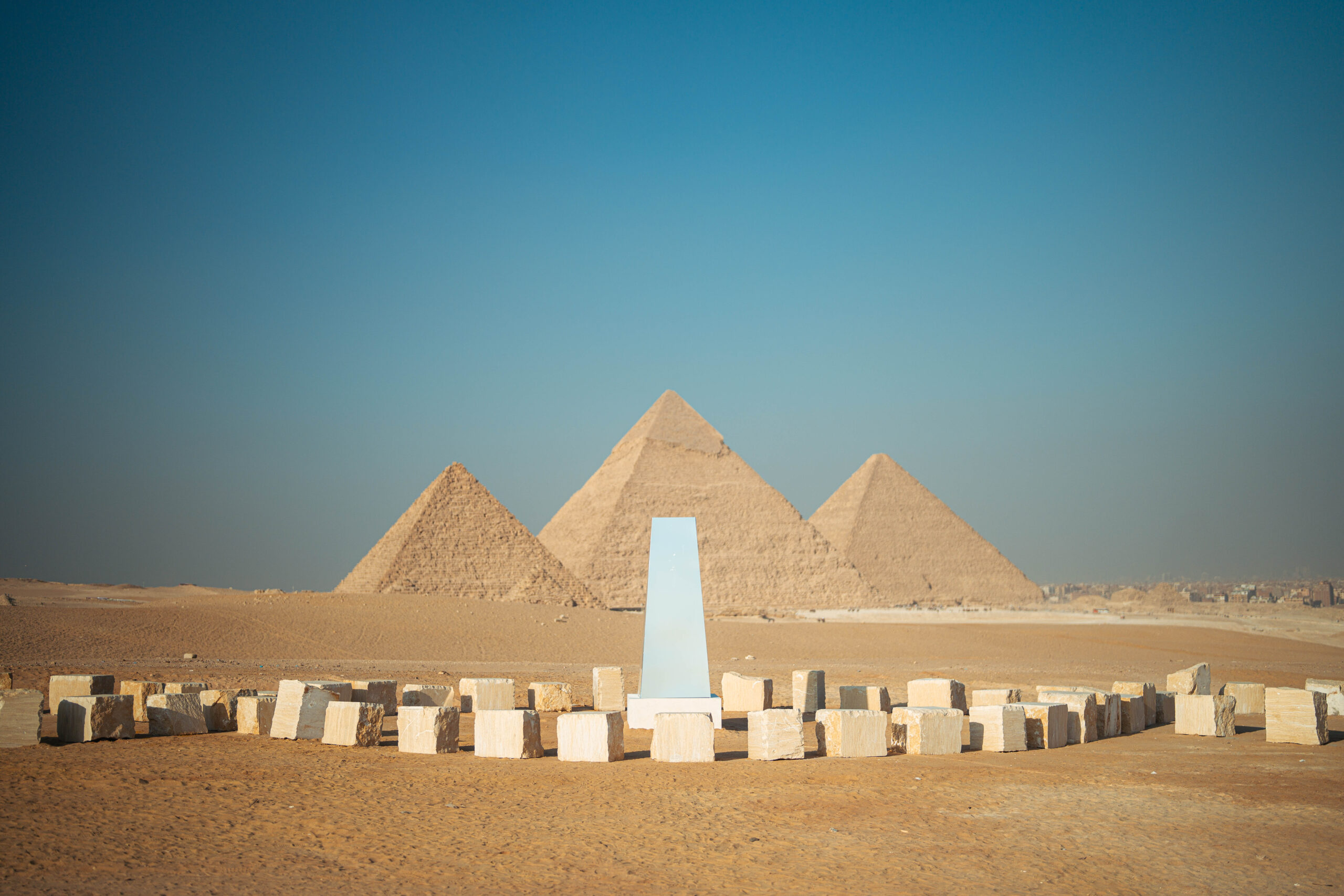
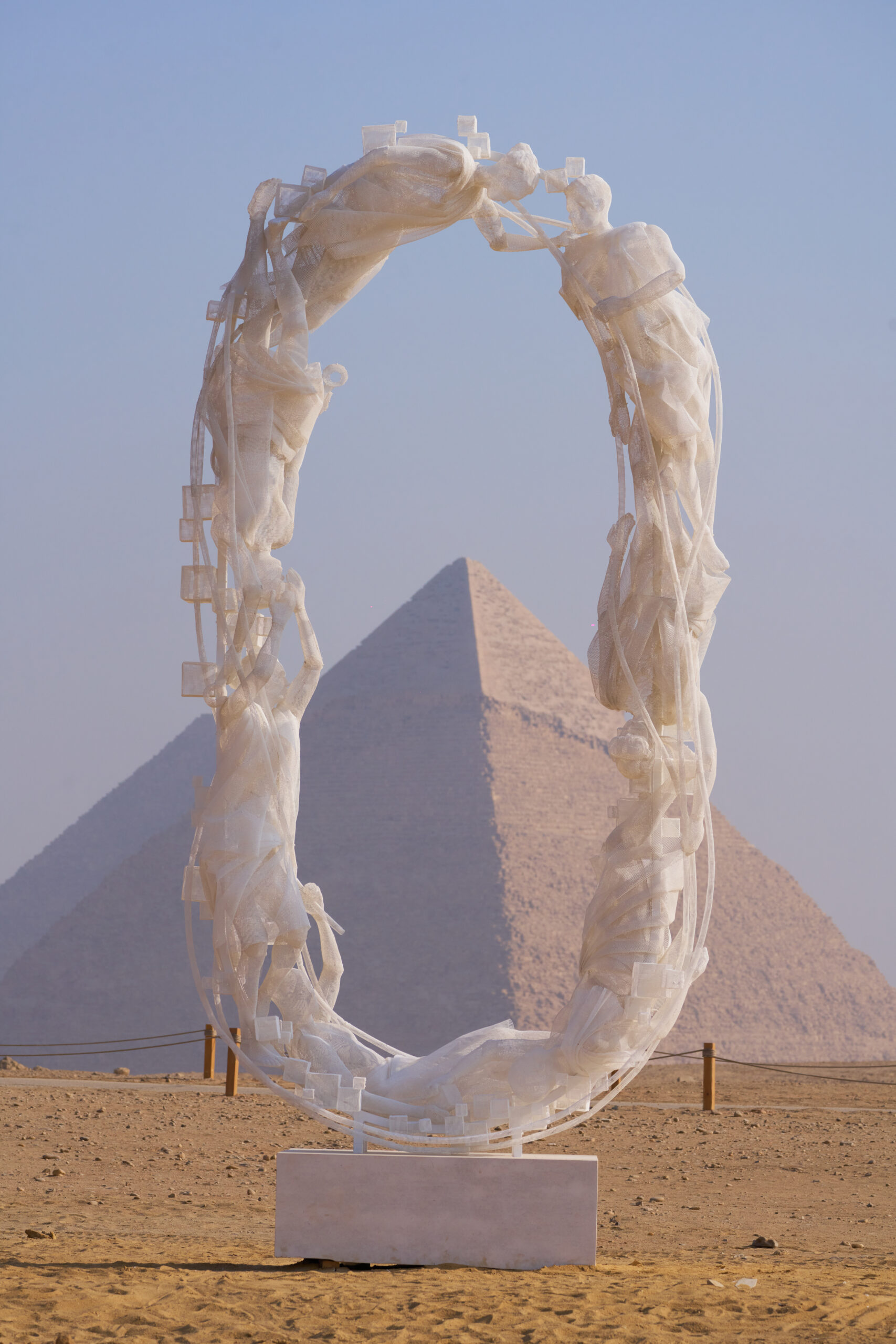
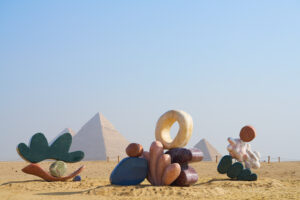
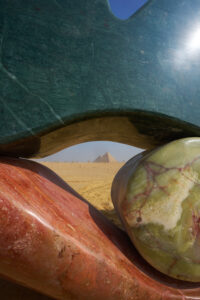
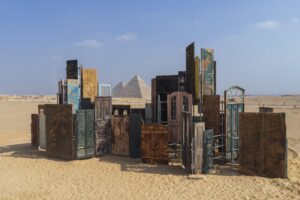
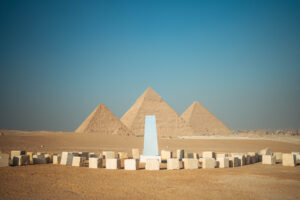
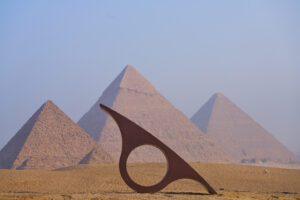
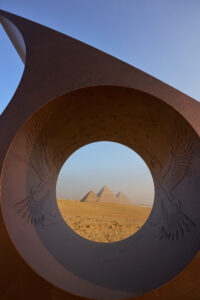
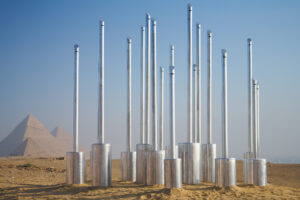
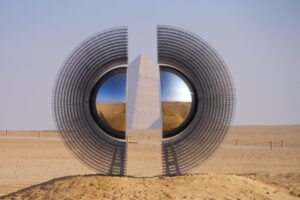
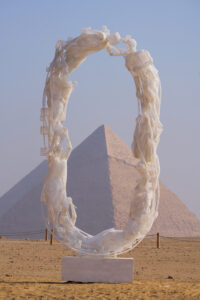
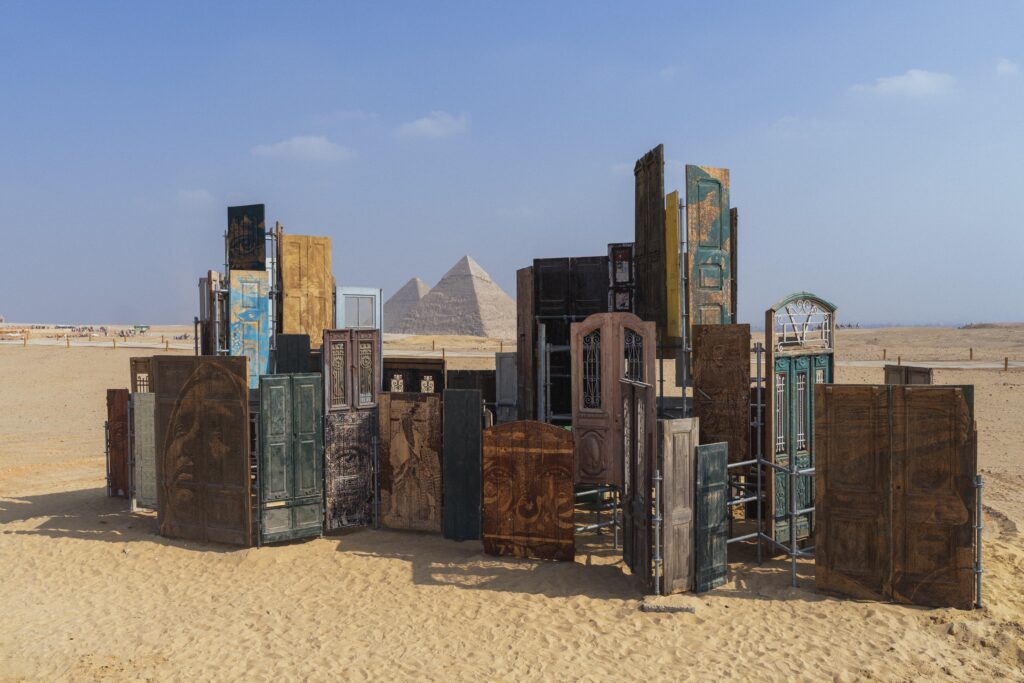
And she did this with the last edition of the event Forever Is Now, between November and December 2025, by bringing ten site-specific works of international contemporary artists, including Italy’s Michelangelo Pistoletto, to the sand in Giza, at the foot of the pyramids and the Sphinx. Each in its own way, these impressive installations converge on a single theme – eternity, the Absolute, the concept of “forever” in the title – creating a truly unique appeal, a dialogue between the monumental past and a present in which surviving the passing of time also requires a shift in one’s own nature. Pistoletto, one of the founders of the Arte Povera movement, set up a new version of his Third Paradise with marble scraps from quarries around the world. Doors of Cairo, the work of the Portuguese artist Vhils that opens the circuit, places old doors collected in Cairo in a new context, turning them into a temporary monument. Recycle Group, the French-Russian duo Andrey Blokhin and Georgy Kuznetsov, built a ring of human figures made of plastic mesh to criticise the consequences of mass consumerism (also visible just a short distance from the pyramids, a UNESCO World Heritage site). “A historical site stops living when it stops raising questions,” the curator continues. “By placing contemporary works in front of ancient wonders dating back 4500 years, we aim to achieve a shock value: thus, visitors do not merely observe history, they become aware of their own position in the time continuum and the fact that humans have always felt an urgent need to leave a trace of their passage. Contemporary art does not translate the past for today’s spectators, it does not simplify; on the contrary, it makes complexity visible, recreating a state of attention.”
Forever Is Now is not the only project in which Nadine Abdel Ghaffar has built bridges between Egypt’s millenarian history and its current creative scene, between one shore of the Mediterranean and the other. With two editions under its belt, the Tale of Two Cities initiative focuses on the cultural interconnections that led to the birth of the classical culture, each time pairing Alexandria – where Ghaffar grew up among artists, collectors and archaeologists in an erudite and cosmopolitan environment – with a European city, highlighting the points of contact between the two. In 2025, through a series of exhibitions, she chose to investigate the parallelism between Alexandria and Milan, two cities that resemble each other “as they are built through encounters: Alexandria, a former Greek cultural hub, is made of subsequent stratifications and Greek, Roman and Arab – and generally Mediterranean – influences, while Milan is the product of countless exchanges, trade contacts and migrations.”
In the near future, she tells humus®, she would like to investigate the matter further with other European cities, perhaps those on the coast. “Whatever the most obvious choices such as Rome or Paris, there are close similarities with Portugal, Istanbul or the other side of the Red Sea. One way of showing how Egypt was a crossroads of relations, rather than an isolated place where a great civilisation was born in the middle of nowhere.”