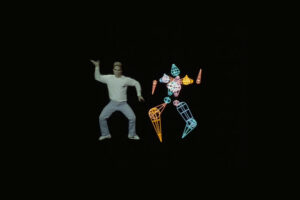


Rebecca Allen’s name (Michigan, USA, 1953) may not be immediately familiar, but her digitally animated figures have helped shape the collective imagination. By the 1980s and 1990s, they had already entered popular culture, appearing not only in museums and research centres devoted to digital culture, but also in the unexpected context of music videos broadcast on MTV.
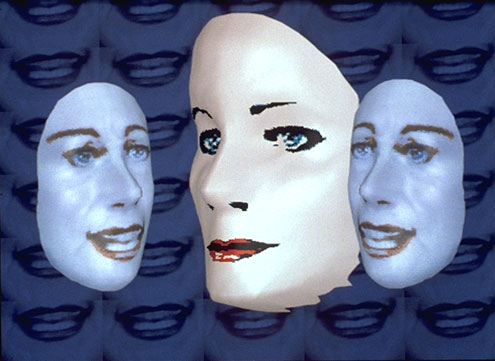
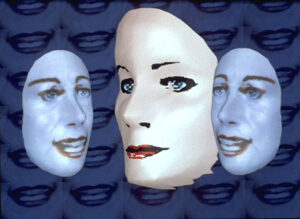
She created, for example, the iconic three-dimensional digital faces that reproduce the features of the members of Kraftwerk in Musique Non-Stop (1986), singing alongside the band. At a time when accurately reproducing facial expressions and lip movements represented a major technological breakthrough – achieved through painstaking geometric calculations and wireframe modelling – the video quickly became a cult classic. Active since the early 1970s, Allen was one of the very few women working in the then overwhelmingly male field of computer graphics. She also became a pioneer in introducing the human body, with all its movement, gesture and expressiveness, into computer-generated worlds.
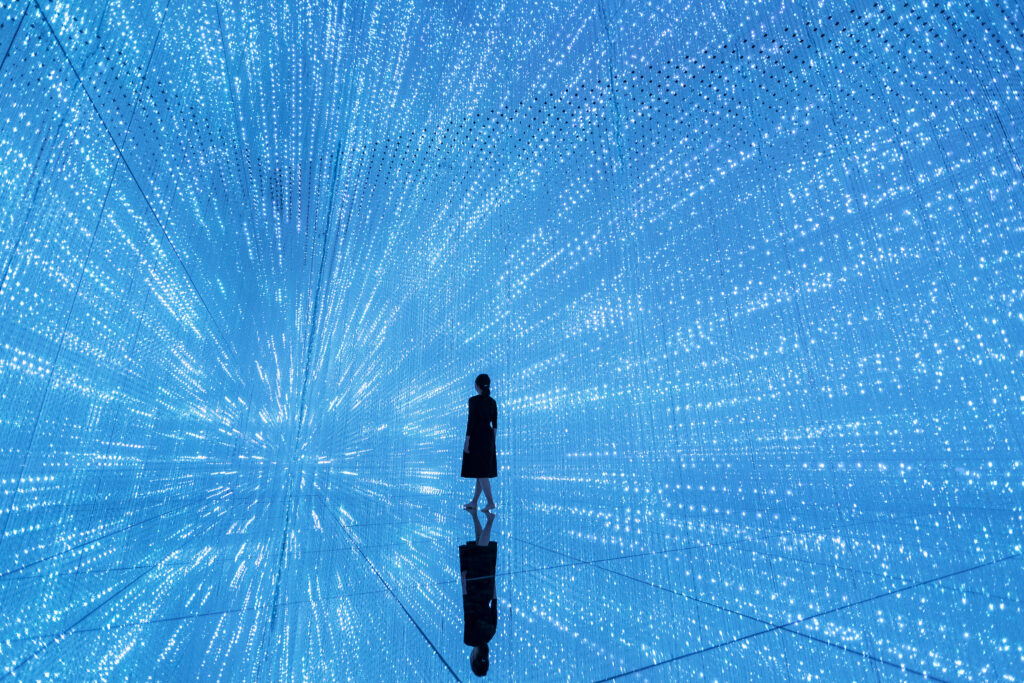
Until 13 September, MEET – Digital Culture Center in Milan is presenting Synthetic Creatures, a retrospective celebrating fifty years of Allen’s artistic research and experimentation. From her earliest animations, created using hand drawings and punched cards, to her recent explorations of consciousness and interspecies connections, via her pioneering 3D models, collaborations with artists such as Nam June Paik, and experiments in video games, the exhibition reveals an artist who consistently anticipated cultural and technological shifts.
Many of the issues dominating today’s public debate, including digital identity, avatars and the gamification of experience, can already be traced in works Allen created decades ago.
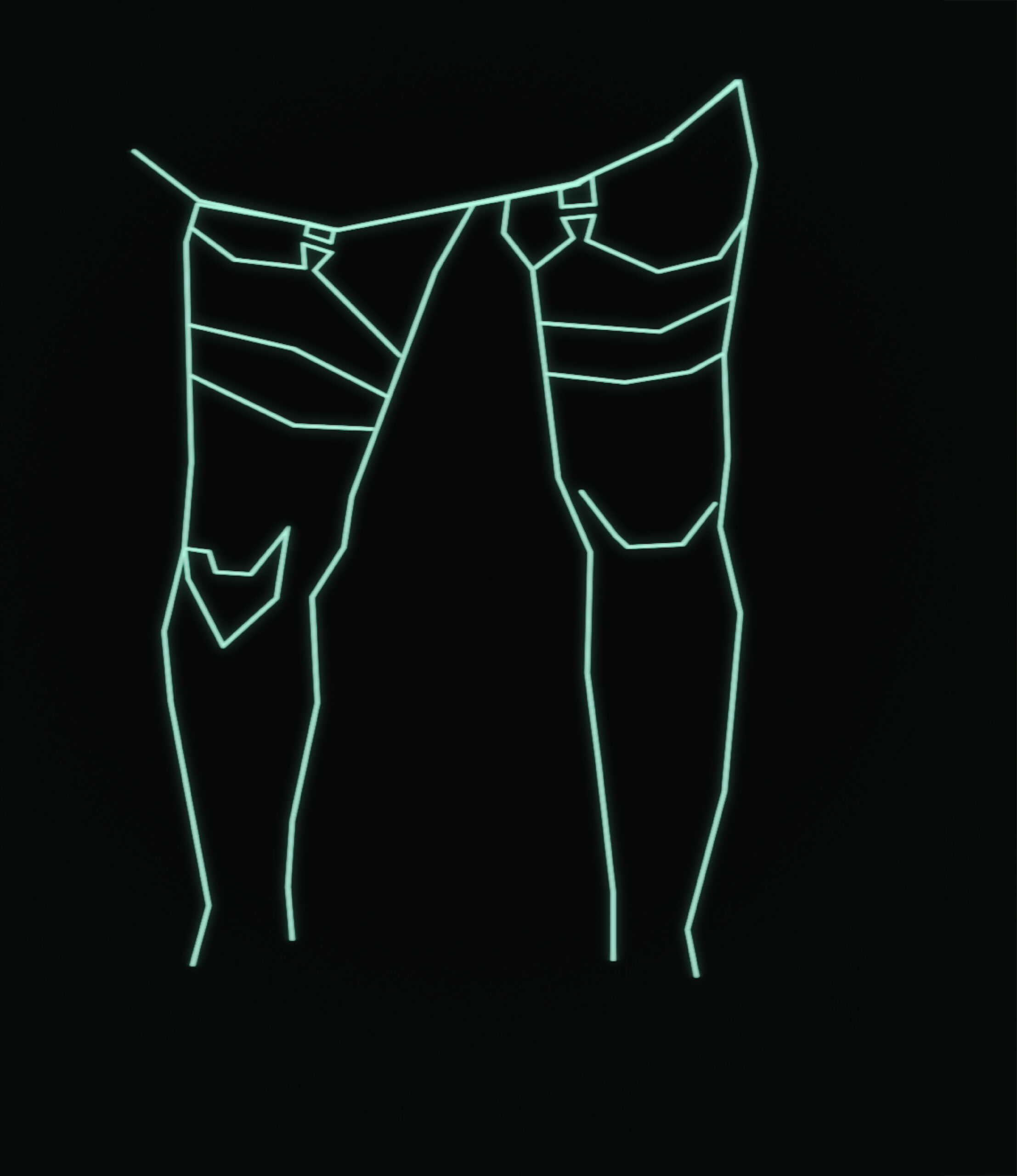
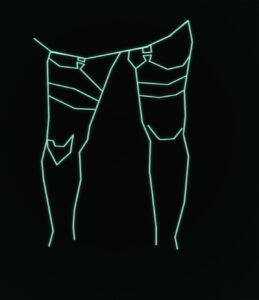
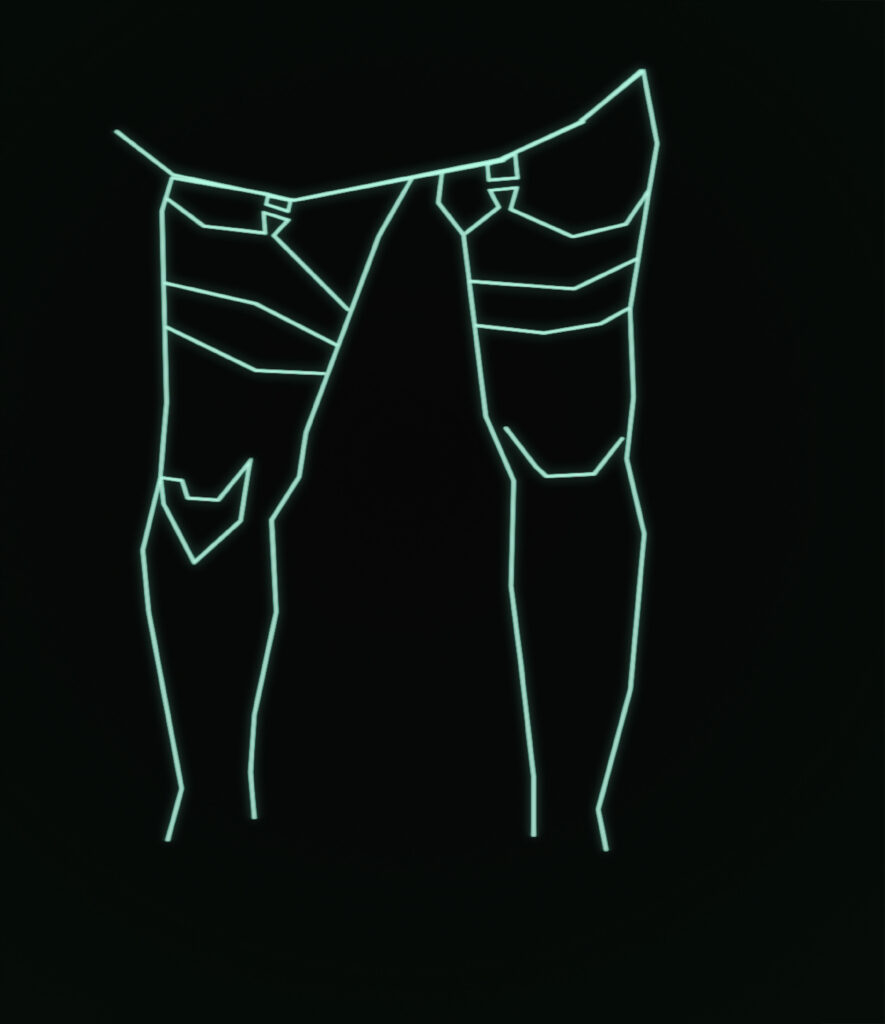
The female body, sensual, confident and almost alien within the sterile technological landscapes of early computer graphics, has been central to her practice from the very beginning. In Girl Lifts Skirt and Flirt (both 1974), one woman lifts her skirt to reveal a garter belt while another performs deliberately seductive movements. “I was studying at the art school next to Brown University when I heard about the computer animation research taking place there,” Allen recalls. “I convinced one of the professors to help me turn my idea into reality. After recording the data onto punched cards and waiting several days for the results, the animation finally appeared on the screen. I was thrilled. My male colleagues in the lab, on the other hand, seemed almost taken aback.”
The choice of subject matter was entirely deliberate. Allen consciously entered a space dominated by men – she often uses the word “infiltrate” when describing this period – and sought to introduce a sense of humanity into the emerging world of machines. “From the very beginning it was clear to me that computers would profoundly change humanity, and that artists and creative practitioners needed to be involved in shaping that evolution”, she explains. “Creating a new form of moving art meant entering a highly technical field where women were scarcely represented, which made my presence all the more important. More broadly, there were so few recognised women artists at the time that it felt worthwhile taking the risk of exploring something entirely new.”
Fifty years later, although women are far more visible within digital culture, leadership in the technology sector remains largely concentrated in male hands. “There are certainly more women today”, Allen says, “but what still concerns me is that such a small group of people – scientists, engineers, investors, mostly men – continues to determine the direction of a force that will shape everyone’s future”.
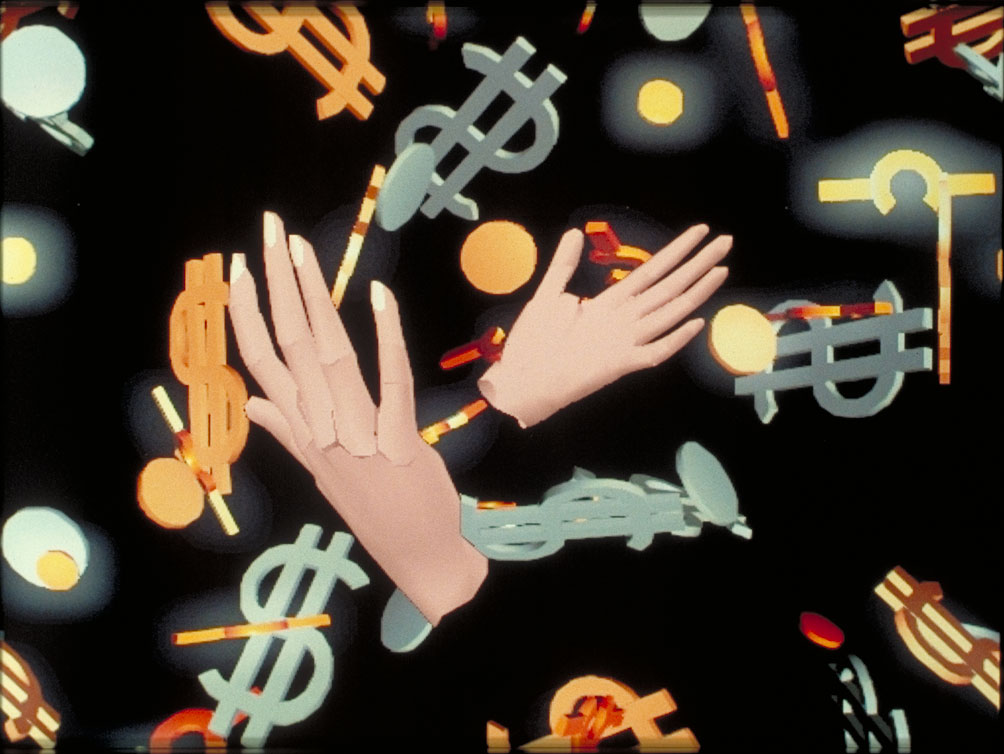
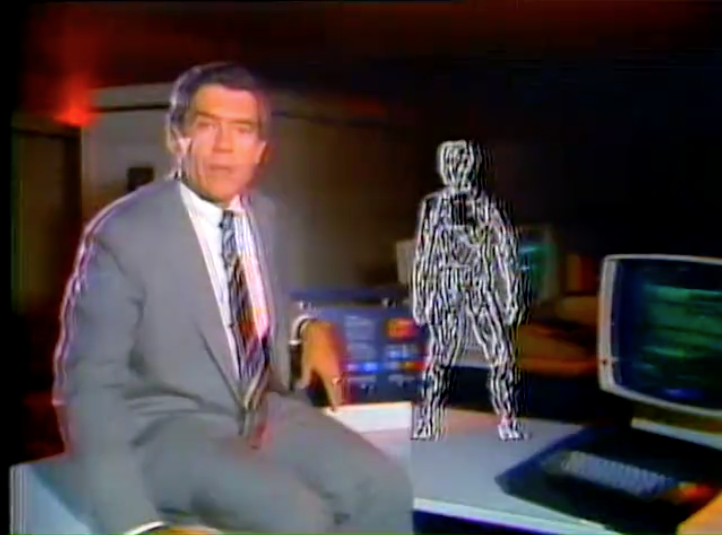
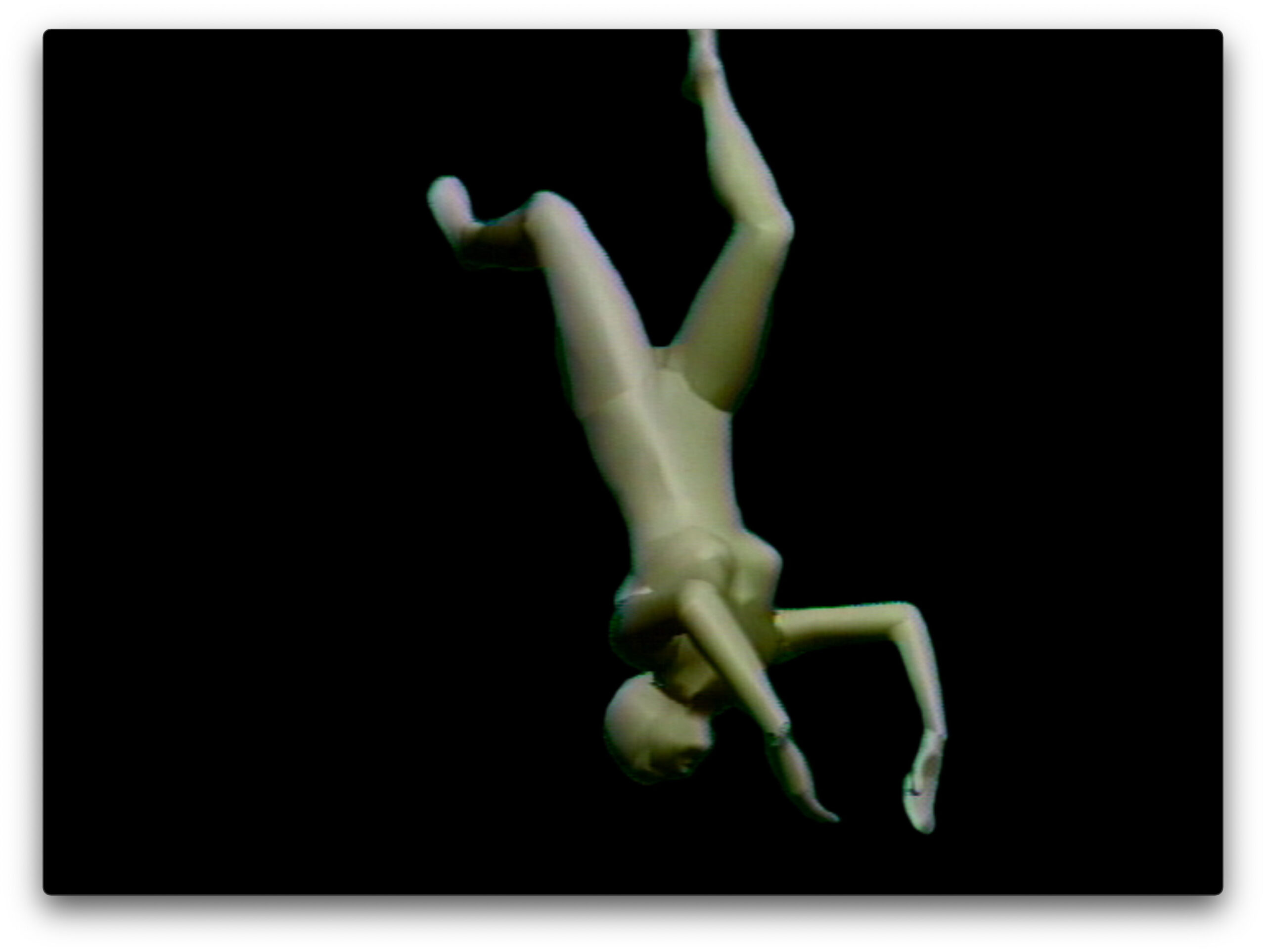
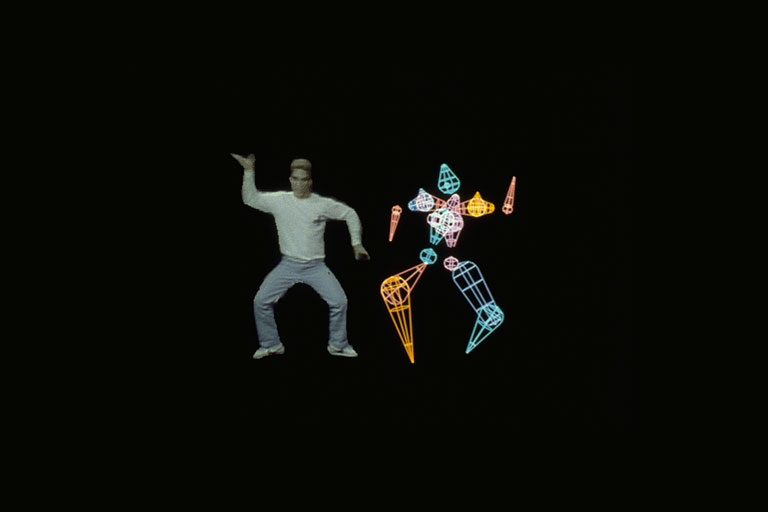
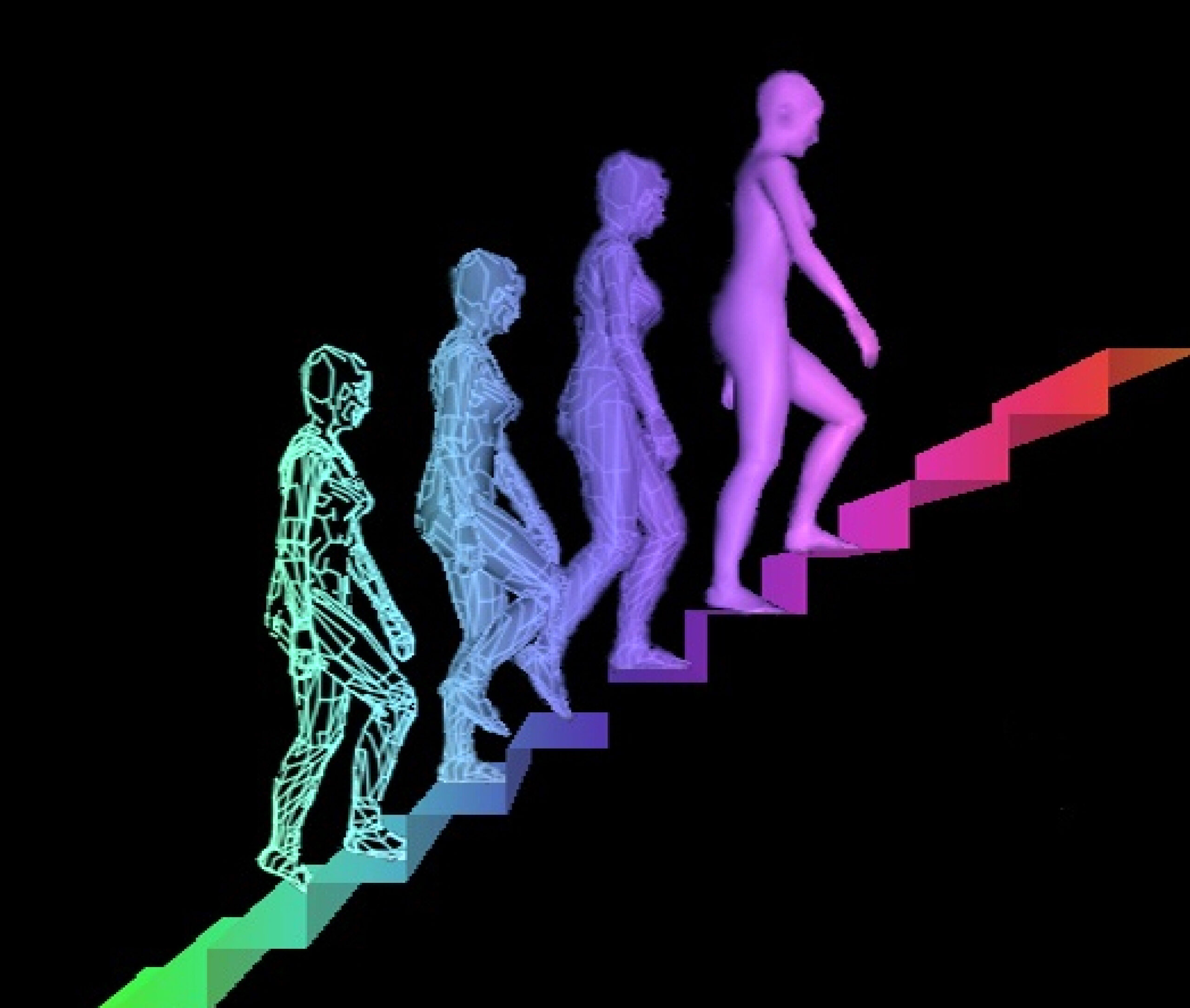
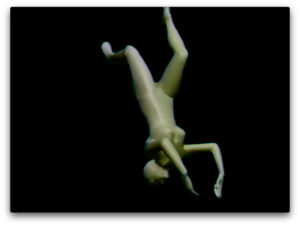
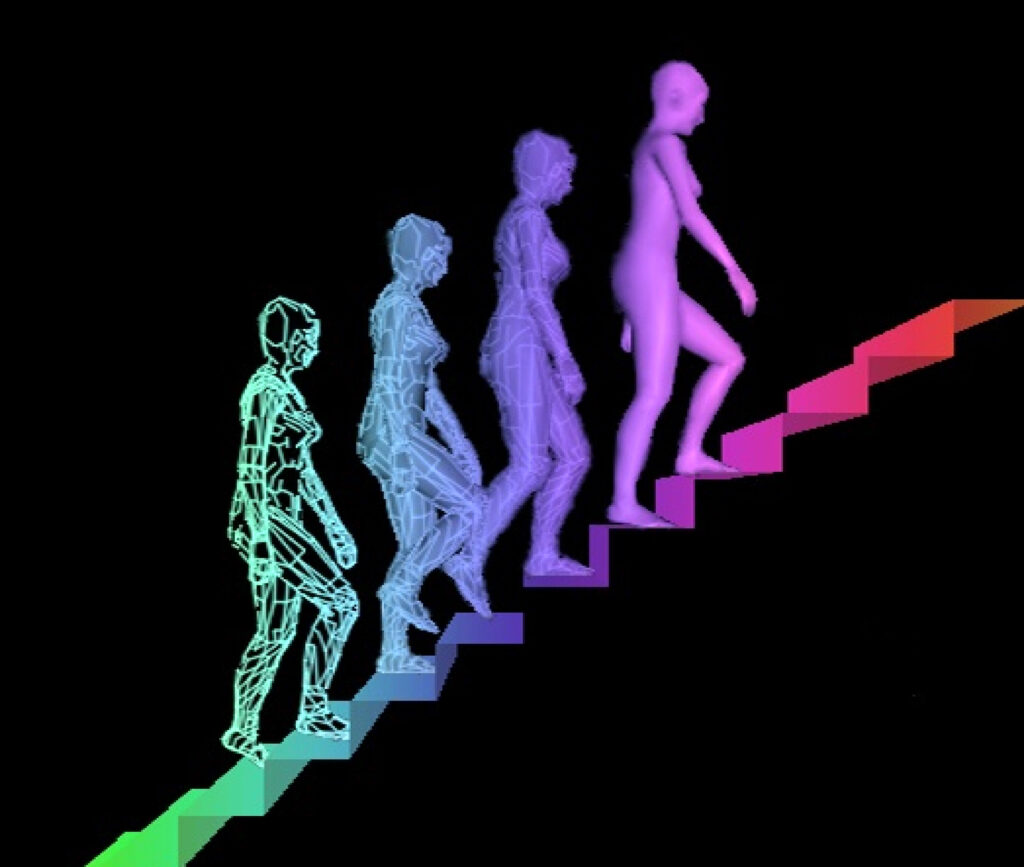
In 1981, while working at the Computer Graphics Laboratory of the New York Institute of Technology, Allen created Swimmer, one of the earliest computer animations to depict a three-dimensional human figure in motion. Using the first static 3D model of a female body developed by Ed Catmull – who would later become one of the founders of Pixar – Allen gave the figure six seconds of fluid underwater movement, overcoming one of the era’s greatest technical challenges: simulating organic motion in a digital environment. She would later make the same virtual figure sing, dance and climb stairs, consistently using the body as a vehicle for emotional expression.
Throughout her career, whenever women appear in her work, they remain active subjects rather than passive objects. “I’ve always been more interested in how the female body moves than in how it looks”, Allen explains. “What fascinates me is how emotion can be communicated through gesture and movement. In later works, I deliberately used generic female 3D models freely available within the video game industry, figures designed to represent an industry standard. Throughout my lifetime I’ve watched increasingly unrealistic ideals of beauty promoted through magazines, television, cinema and now the endless stream of digital images on our screens.”
Has artificial intelligence, with its unnaturally polished images and beauty filters, made the problem even worse? “AI systems are still largely developed in male-dominated environments. Unfortunately, the statement I made with Girl Lifts Skirt – that women are often treated as objects – remains just as relevant today. In my work, by contrast, female characters possess agency. Their identity and intentions are expressed through movement and gesture.”
Today, Allen’s attention has shifted towards a more specialised branch of artificial intelligence known as Artificial Life, which seeks to understand living systems by recreating their behaviour within virtual environments. “For decades I’ve focused on experimenting with emerging forms of digital creation, often exploring possibilities long before audiences fully understood what I was doing or why. Today we have access to an extraordinary range of sophisticated tools. Rather than inventing new technologies, I now find it more stimulating to work creatively with the ones we already have.”
As technological innovation accelerates at an unprecedented pace, Allen believes the most urgent question is no longer what we can build, but where we want technology to take us.
“When I began working, ideas were ahead of technology. We never lacked vision; what held us back was software and computing power. Today the opposite is true. Technological change is happening so quickly that we barely have time to reflect on its psychological, social and spiritual consequences. Technology is a human creation, but this isn’t how I imagined its evolution. I would like to see a stronger cultural movement emerge – one that seriously questions where technology is leading us and is willing to reject its most dehumanising aspects.”