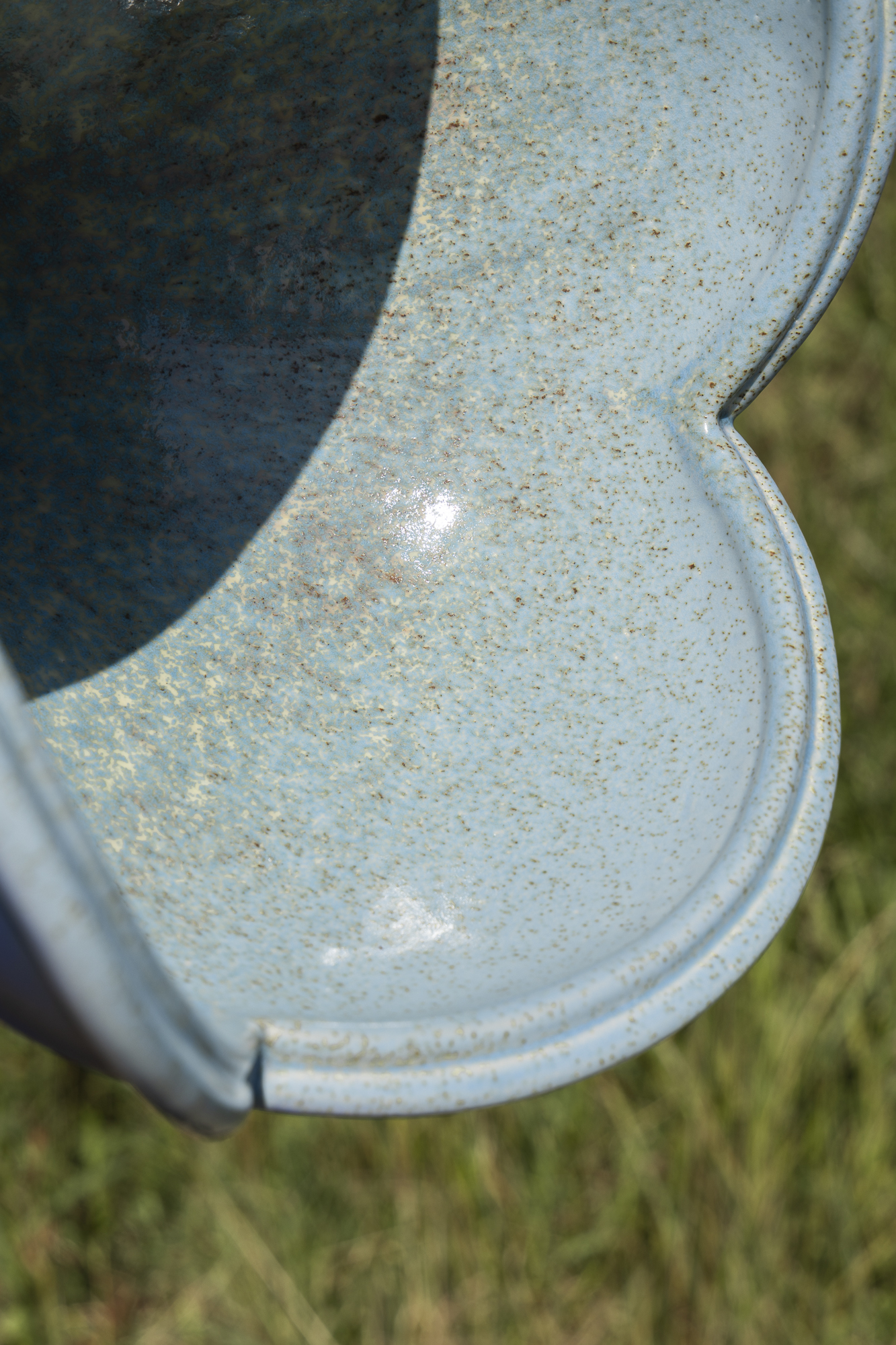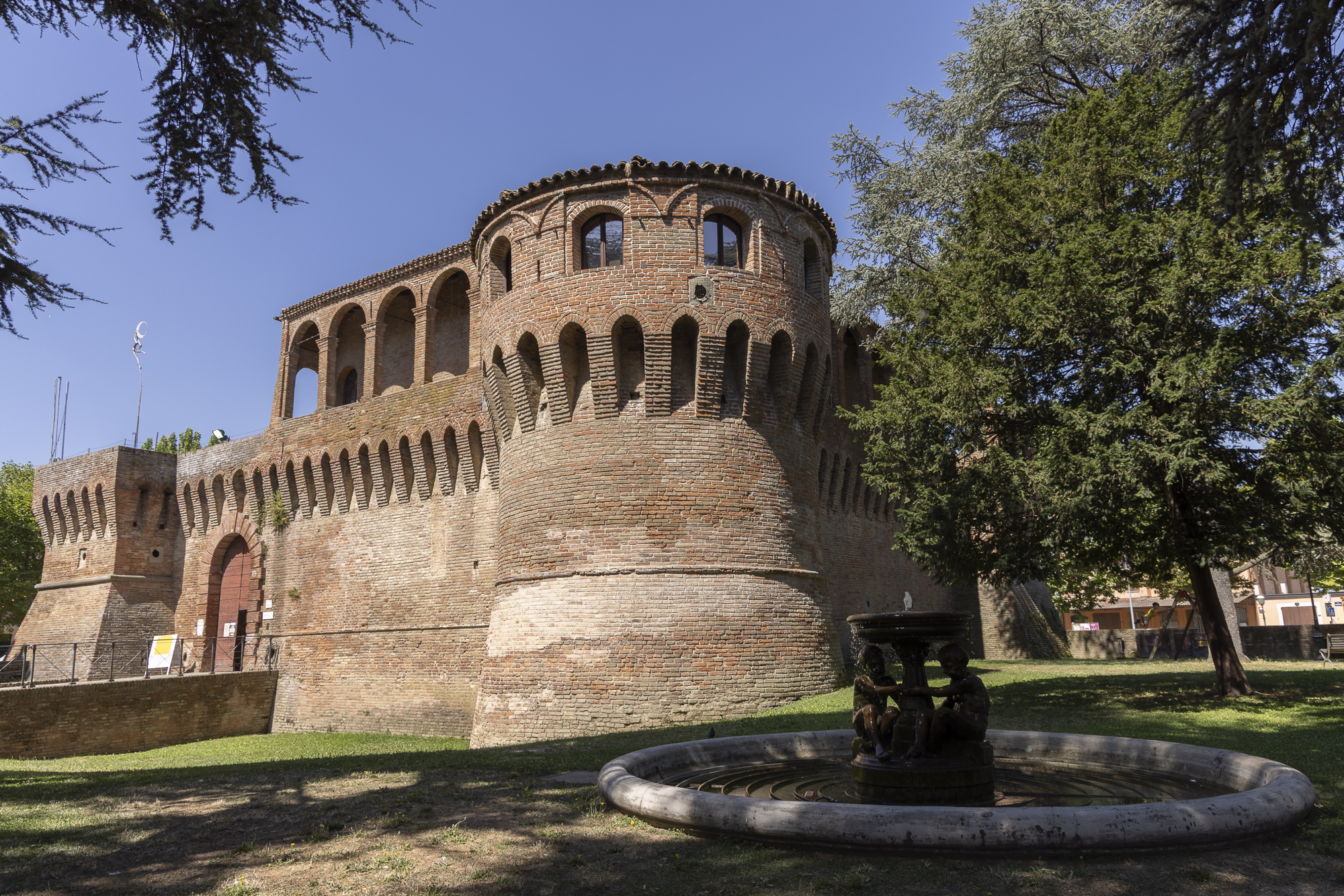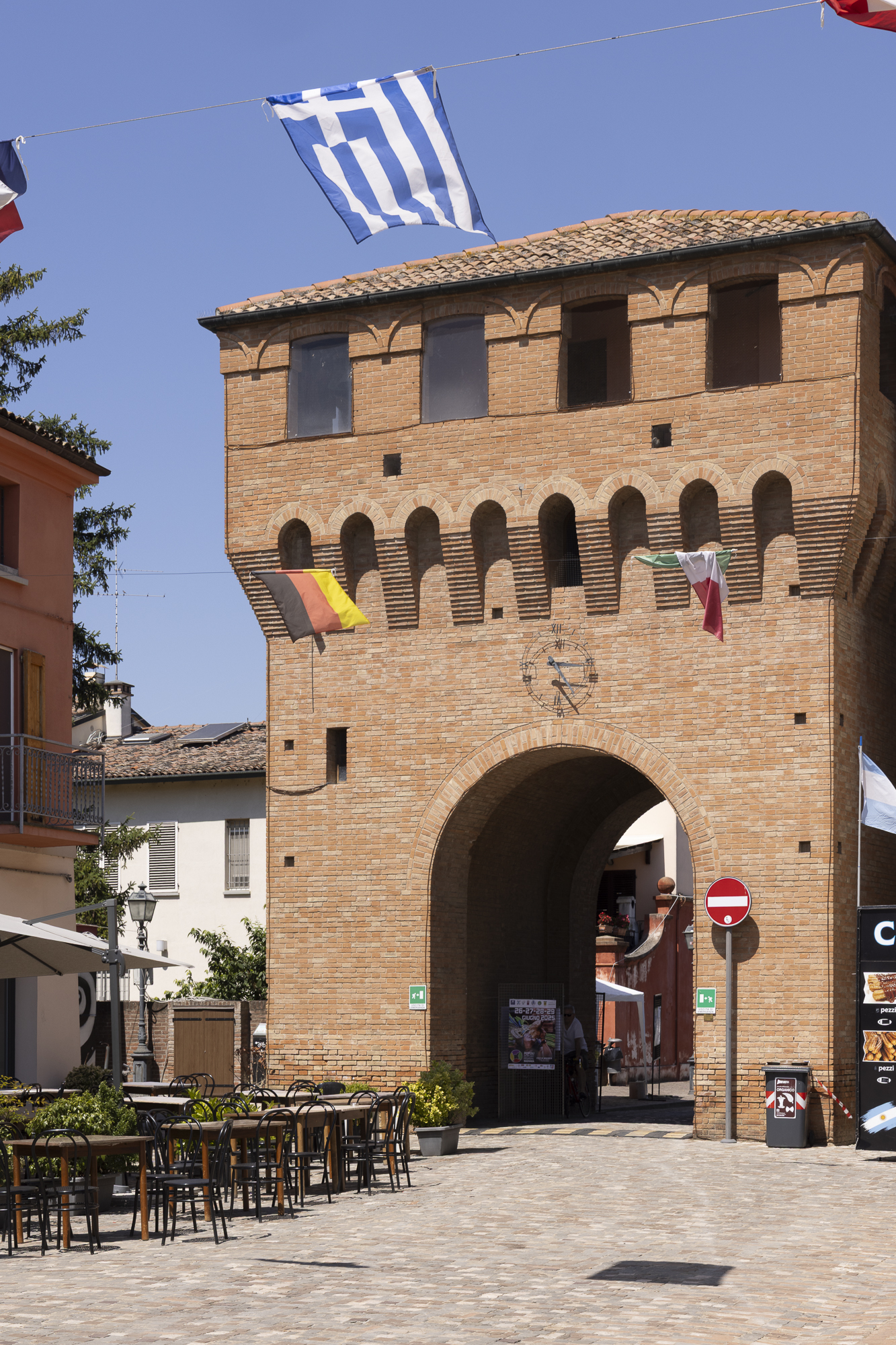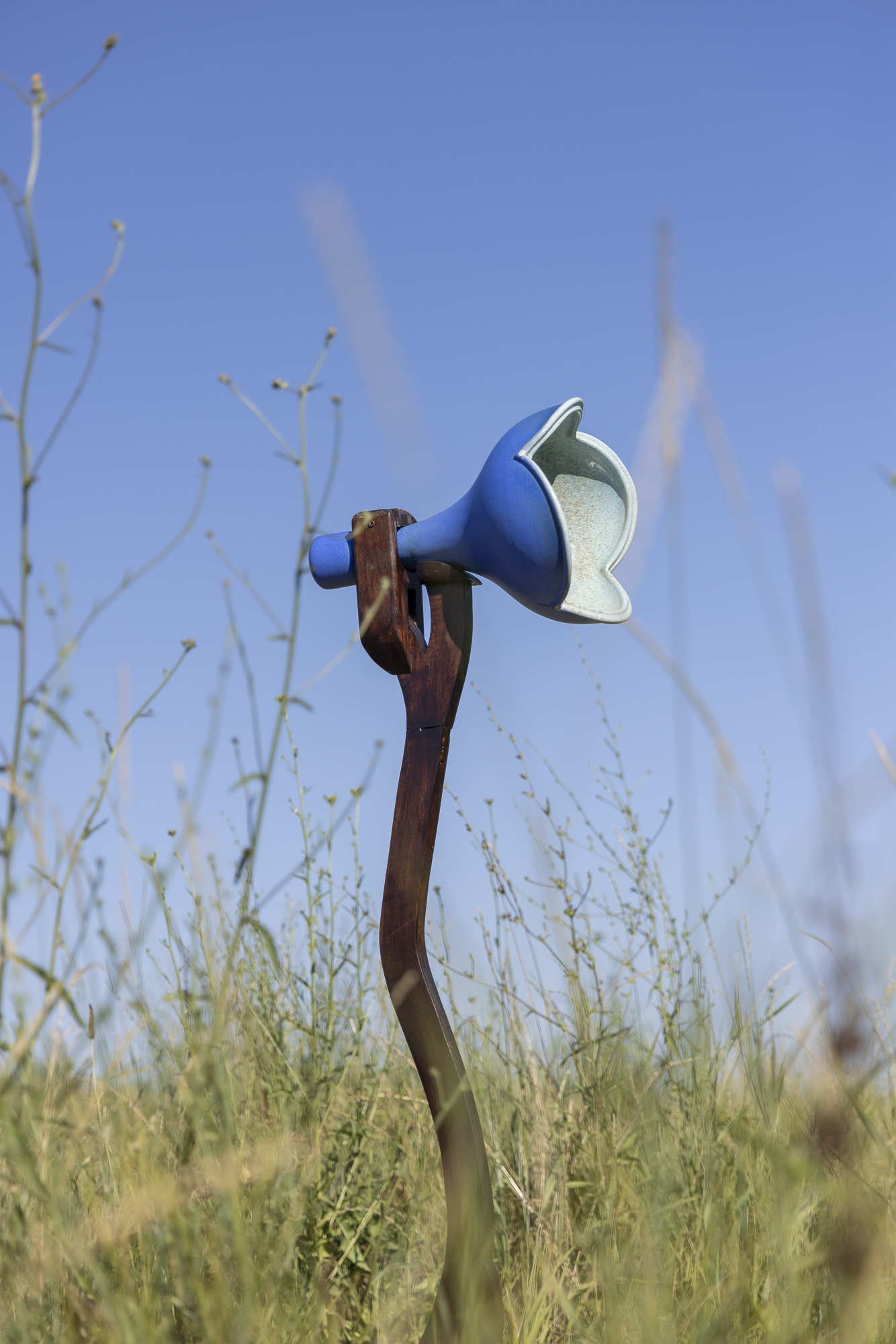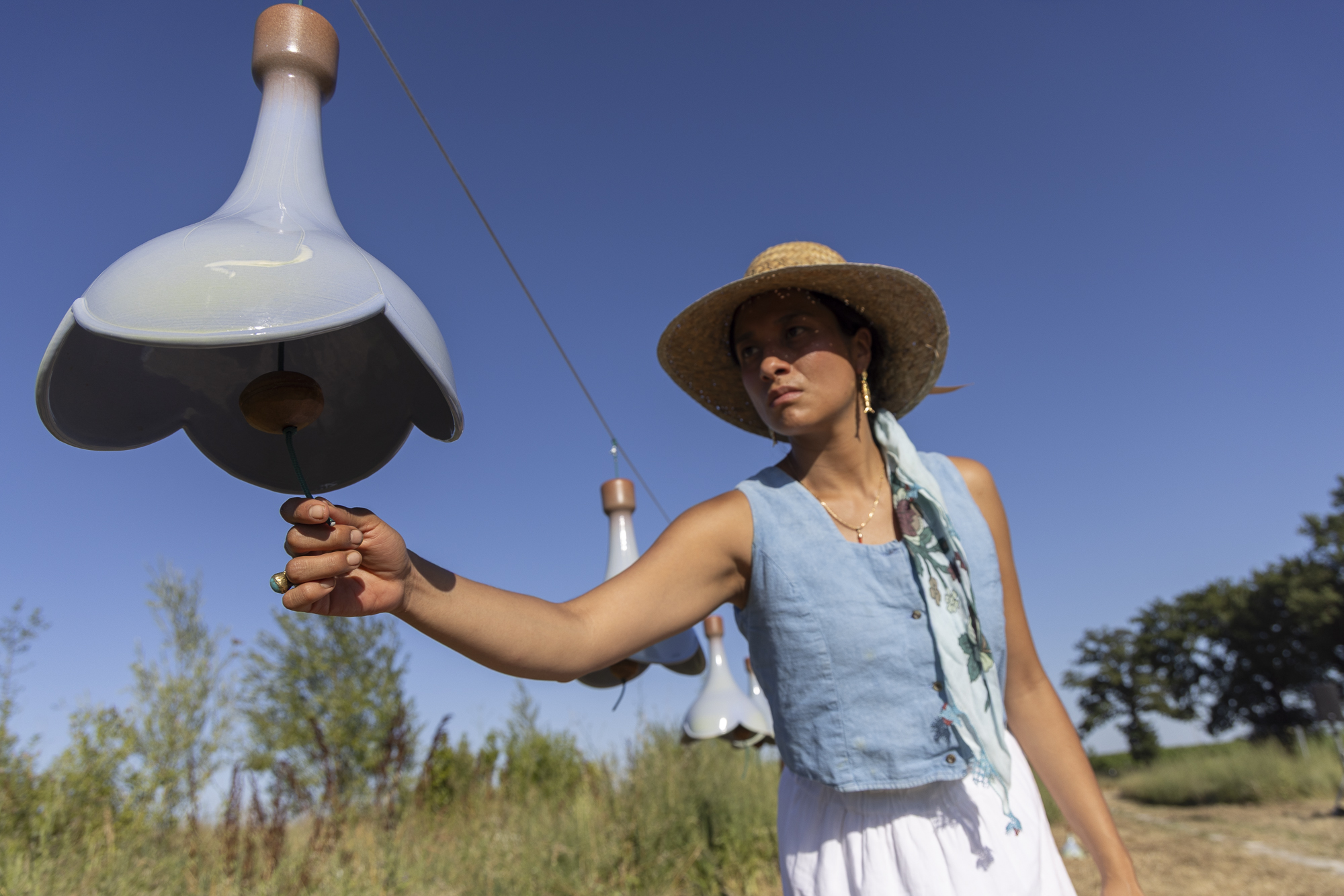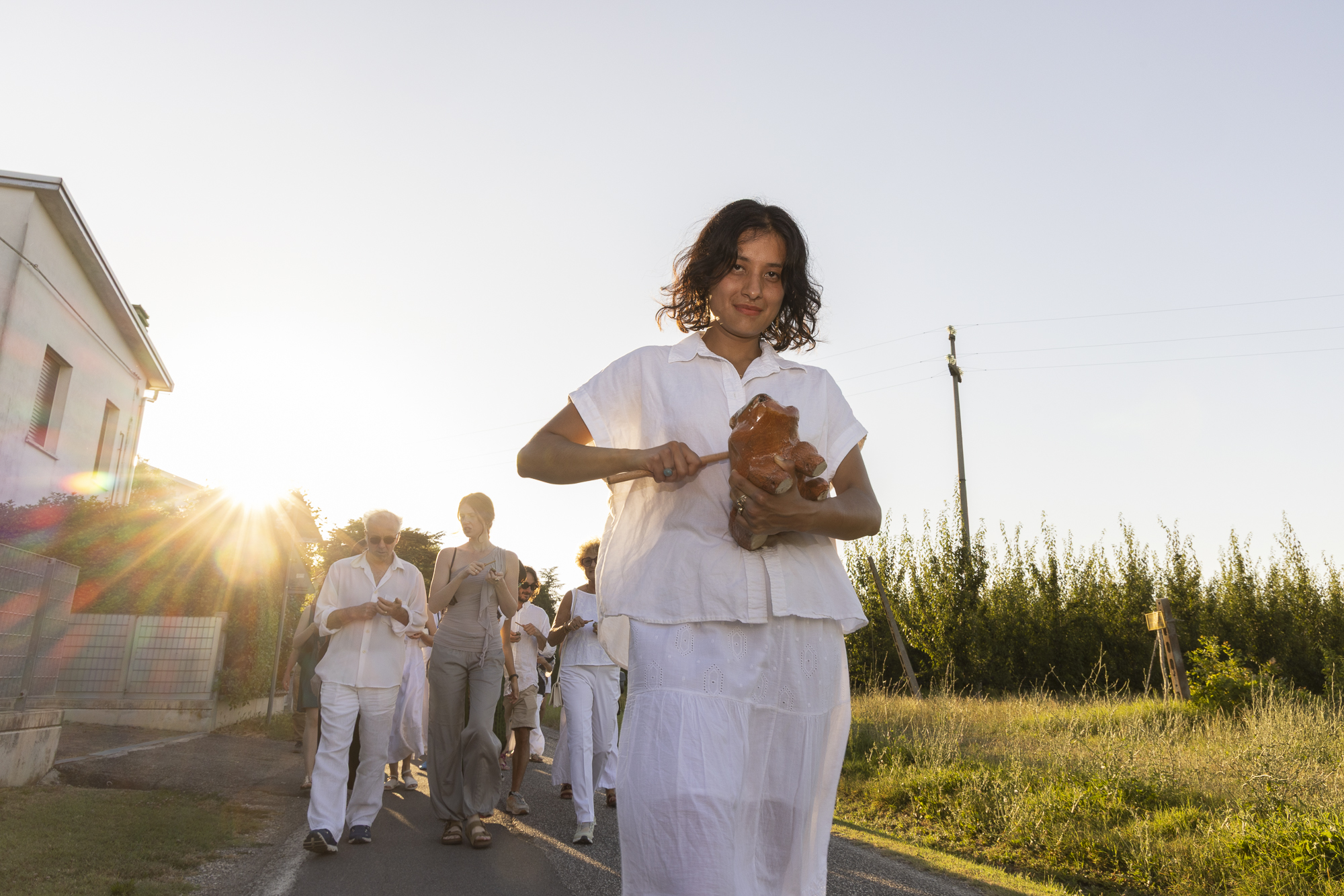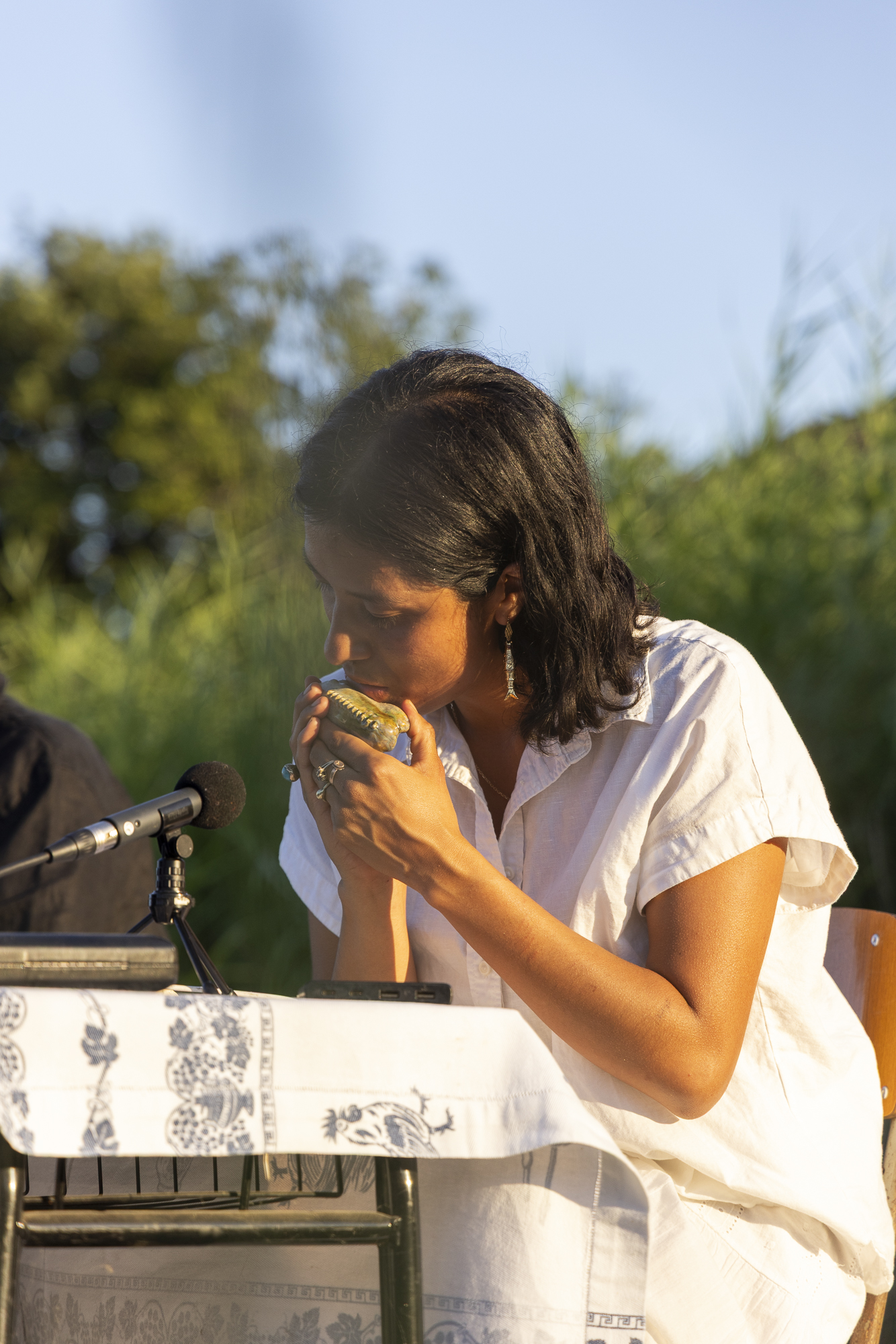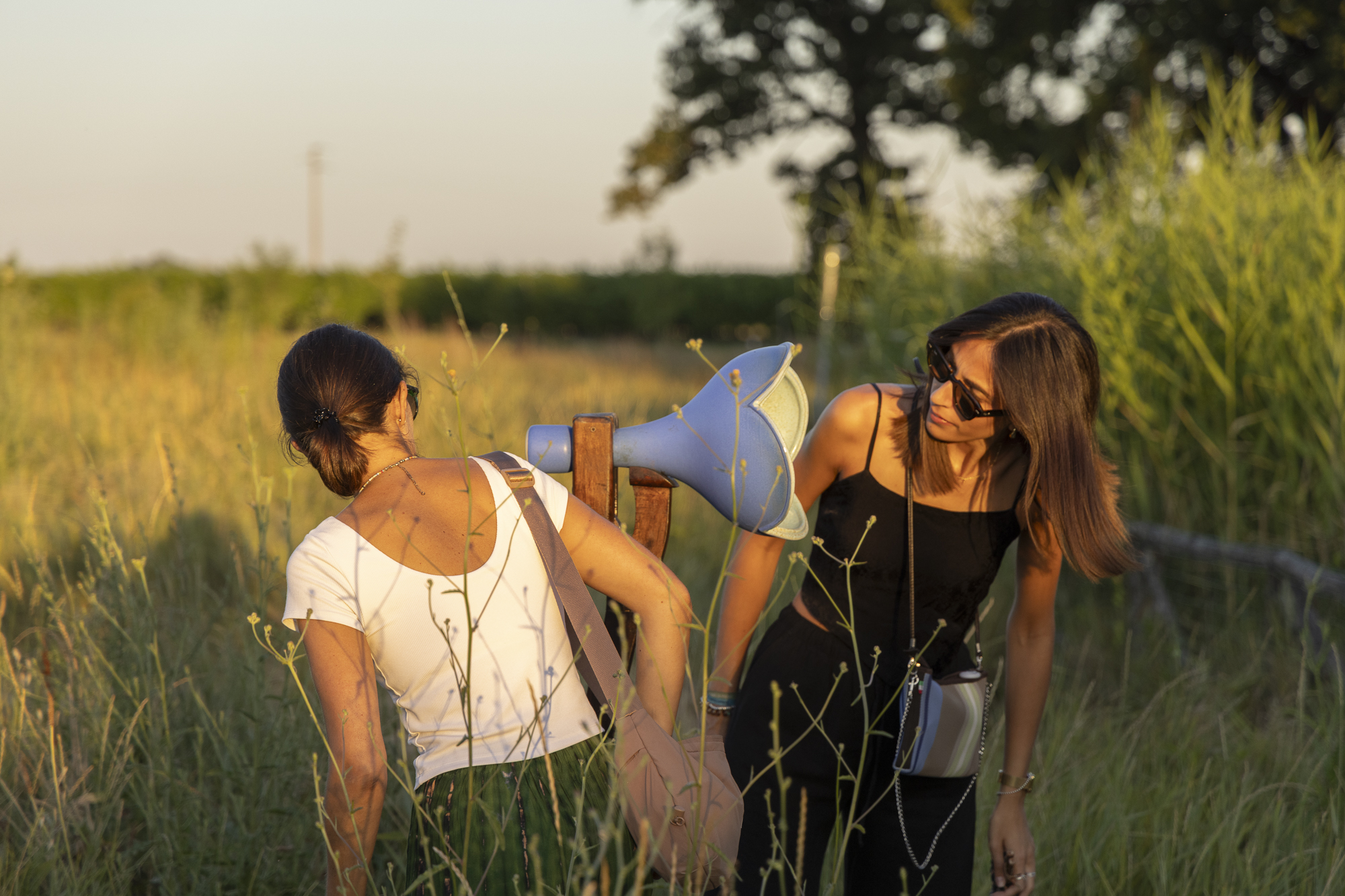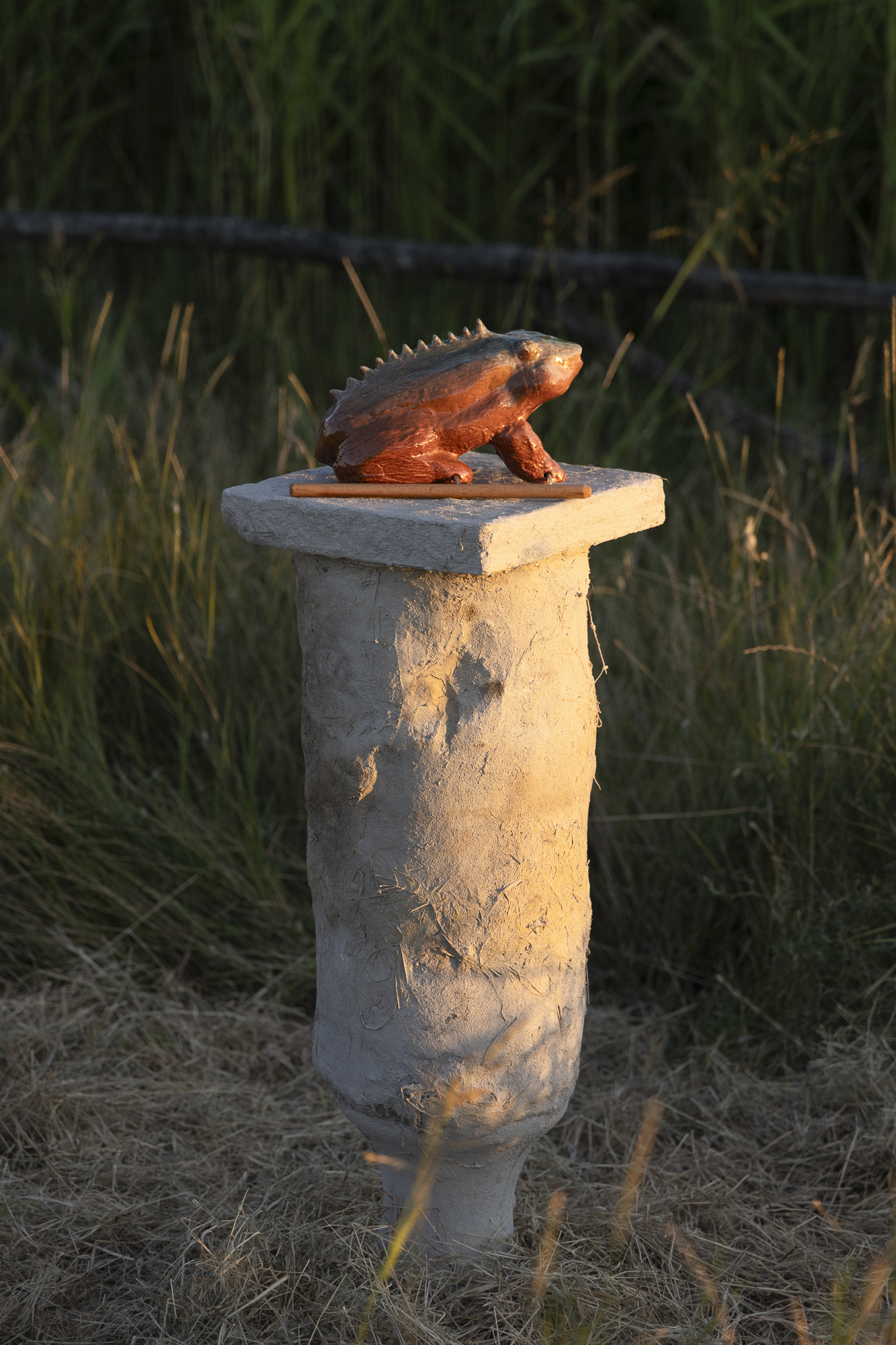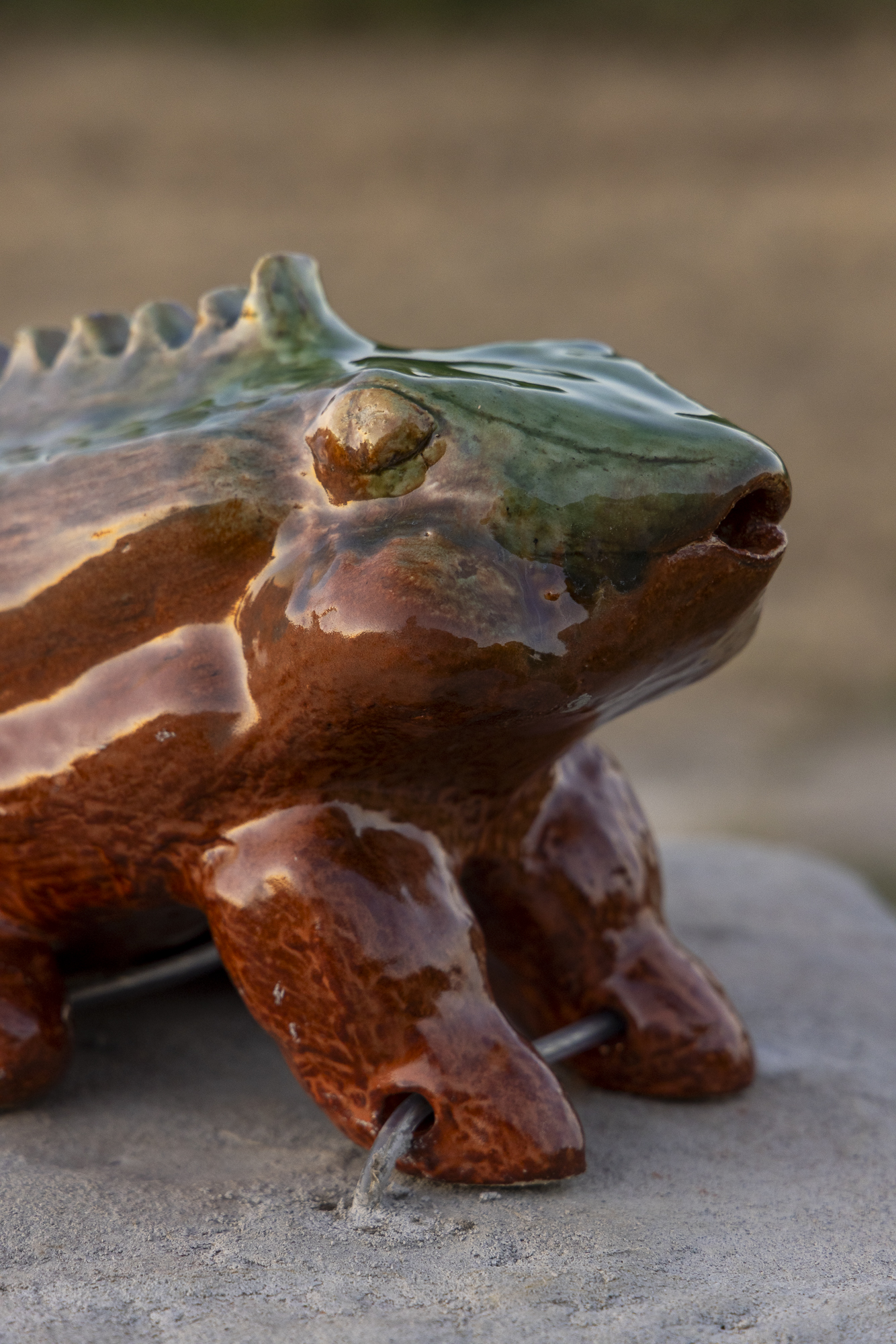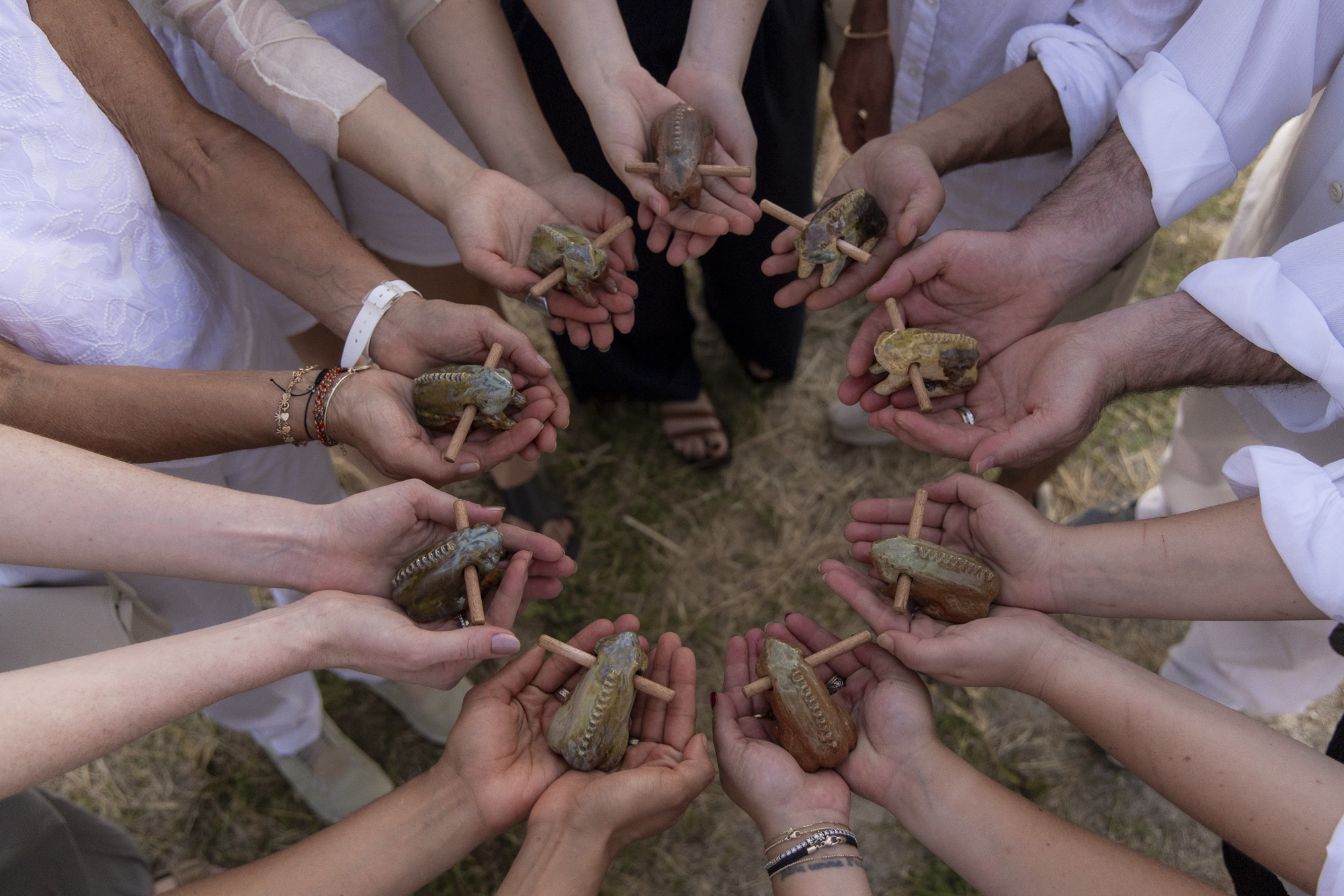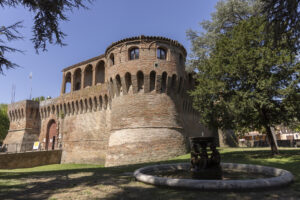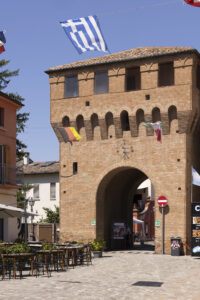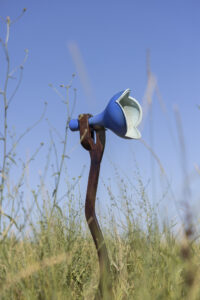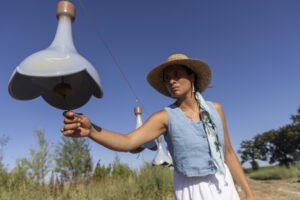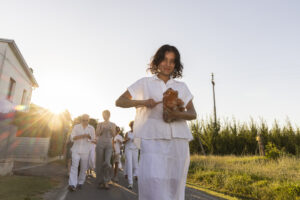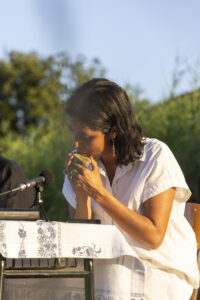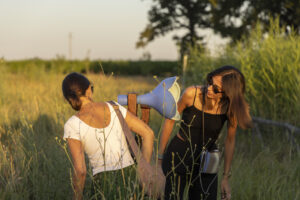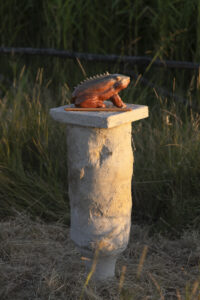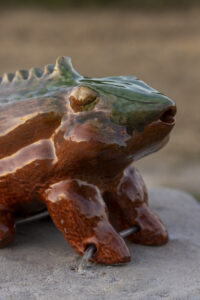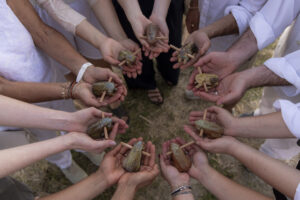


The identities of towns and hamlets lies in the stratified stories of people, with their desires and needs, fears and dreams, often forgotten or hidden. Art has the task of bringing these back, just as happened in Bagnara di Romagna (Ravenna) in June 2025 with the Concierto de ranas – Preludio para seres del umbral. This participatory art project was born in the initiative “Una Boccata d’Arte”, run by Fondazione Elpis that, since 2020 has been involving 20 artists and curators every year in as many hamlets across Italy to create site-specific works that relate to the local communities. Nel Concierto de ranas, created by the Mexican artist Vica Pacheco and curated by Sofia Baldi Pighi, the small town of Bagnara came together in a kind of lay procession, in the nearby historical site of Prato di Sant’Andrea, where the connection with nature and the history of the place were significantly reactivated through a sound event – an itinerant orchestra playing ceramic musical instruments (bells, gramophones shaped like flowers and frogs) made using local traditions.
We met the curator Baldi Pighi and the artist Pacheco to talk about how walking together, close attention and collective participation transformed Bagnara di Romagna into a living organism, where memory emerges as a sensitive archive. The hamlet is not idealised or reduced to a picture postcard, but rather read, listened to and re-imagined.
In the Concierto de ranas, walking together through the hamlet becomes a gesture of careful attention, almost a way of interpreting the town beyond its day-to-day functions. How did walking together help you to relate to the memory of the place and the traces of its present and past inhabitants?
Vica Pacheco: For me, walking together is a way of creating a larger organism – one that listens and sees more sharply. Put very simply, more eyes and more ears allow us to cover more territory, more details and more levels of thought.
As beings, we tend to get used to sensory information: sounds, light, smells. Without the conscious exercise of slowing down and tuning our attention, we risk missing important signals of change – like “you don’t hear some birds anymore” or “there’s more traffic noise than five years ago”. In this scenario, listening becomes a tool, almost an interface for reading what surrounds us.
What I wanted to do was to simply make this listening a little more evident. When we walk together, something wonderful happens: we share what we see and what we hear, and a network in movement starts to form – a collective body that carries information and allows us to situate ourselves differently in the place where we live.
Hamlets often risk being reduced to pictures or spectacular backdrops. In Concierto de ranas, on the other hand, the concert site seems to underline how the hamlet is a living being and bearer of collective memory. What criteria defined the choice of this space, and how does the project dialogue with the urban and social identity of the place, helping it to evolve without cancelling it out?
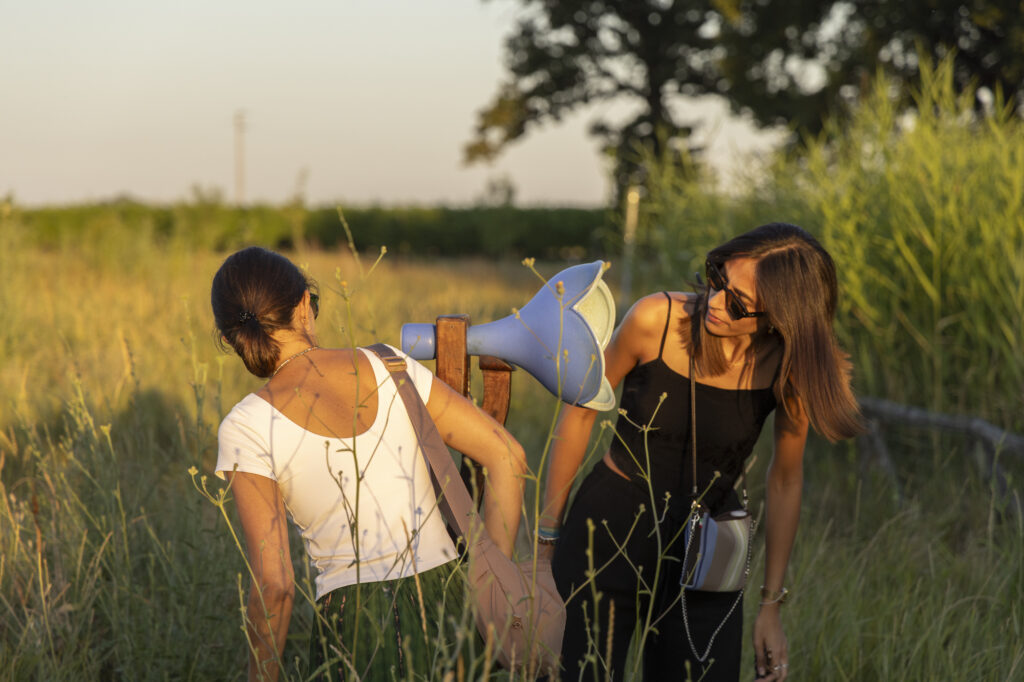
Sofia Baldi Pighi: All too often, hamlets are turned into mere postcard backdrops, cannibalised by strategies to promote tourism. Art is often an accomplice in these dynamics: this is why, as cultural operators, we have the duty to think about how art projects can generate a lasting, concrete impact. The situated, slow creative process offers unexpected spaces for dialogue: it engages local inhabitants, generates common stories, demands close attention. And thus, something magical happens: the community is no longer simply a spectator but an active co-participant. In the case of Concierto de ranas – Preludio para seres del umbral we developed our artistic production around ceramics – because the local area boasts extensive knowledge of this technique, in partnership with the Sottosasso craft workshop – and involved Remo Sassatelli, the local carpenter, for the supports. A local production, made not only of technique but also human participation. The choice of the place to host such a precious public work – a ceramic and porcelain sound installation– was unusual: unexpectedly, Vica Pacheco took us to Prato di Sant’Andrea, a decentralised site around two kilometres from the centre, on foot. Here, the artist builds a symbolic and temporal bridge with the community’s ancient origins, drawing a line towards its future. This choice involves a shift: from the human centre of the hamlet towards the beating heart of non-human life, confirming it as a living organism and bearer of collective memory. The project doesn’t cancel the urban and social identity of the place but rather helps it to evolve, opening it to the songs of other species and to the collective care of the area, in a dialogue between its archaeological past, ecological present and cross-species future.
The place chosen for the concert is not neutral, but an integral part of the hamlet’s identity. How did you ensure that the sound did not overshadow the place but rather helped to reveal its history and landscape, and all that defines as an urban space and a community?
Vica Pacheco: The intention was never to create a work that overshadowed the place but one that rather amplified it. I am very interested in the metaphor of the container, understood as a primordial and empathetic technology, but also as a way of allowing the internal and external to coexist. The sculptures in the space – and those held by the public – acted as containers of the environment, devices for connecting to the site through an act of profound listening.
The concert, organised in cooperation with the composer Luis Pestana, was in some way the projection of a sound collage of Bagnara di Romagna: everyday sounds, the natural elements of the place – the song of the frogs, one of the stars of the performance – the church and its organ, as well as the memory of the works of the composer Pietro Mascagni (to whom Bagnara has devoted a museum, ed.).
More than a conventional concert, it offered a memory, a kind of respite inviting us to think not only of the beauty of the place but also the transformations and changes that the environment and nature have undergone, and on the awareness of what can still be repaired.
In the project, walking becomes a curatorial practice connecting the artist, the community and the urban space. How was the path traced through the hamlet, and how did it help to turn the town into a living archive?
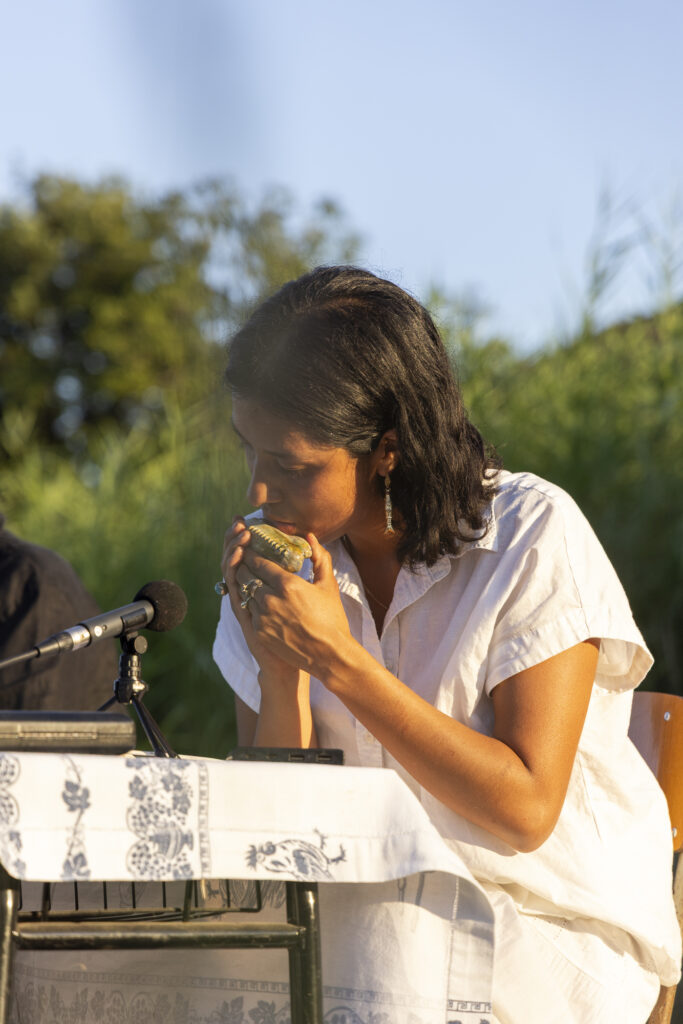
Sofia Baldi Pighi: In my curatorial practice for Boccata d’Arte, which began in 2023 with the curatorship of the Emilia-Romagna region, I decided to foster a method based on the encounter with the public in motion. The group – intentional participants, passers-by, inhabitants and casual observers – is porous, and this makes the work itself permeable to the social context, avoiding a closed form of engagement, reserved only for insiders. As explained in the book Walking as research practice by Alice Twemlow and Tânia A. Cardoso (Roma Publications, 2024), walking together shifts the focus from the one-way transmission of contents and overcomes the idea of a passive audience. In the 2025 edition, Pacheco defines the walk as a collective, secular procession. The artist brought the inhabitants together, distributing a ceramic frog sculpture that sits in the palm of a hand to all of them. This collective distribution triggered the sharing of responsibility, democratising the participation in the work. During the walk, the artist and the audience played the ceramic frogs together, thus turning the walk into a migration that was not only physical but also mental, one that from the urban (and human) centre of the town slowly accompanied them towards another place. Collectively reproducing this “journey of attention” allowed them to relive the artist’s steps. Vica Pacheco created a sound landscape with the sounds of the hamlet: the Baroque organ in the church, the rumpus at the bar, the children playing, the bells ringing out, as well as the non-human life (the songs of the frogs, the birds and other species in the local ecosystem). The performance will become a CD, co-produced by Fondazione Elpis in partnership with Threes, offering the Concierto de ranas sound bath to reach other places and remain “in motion”.