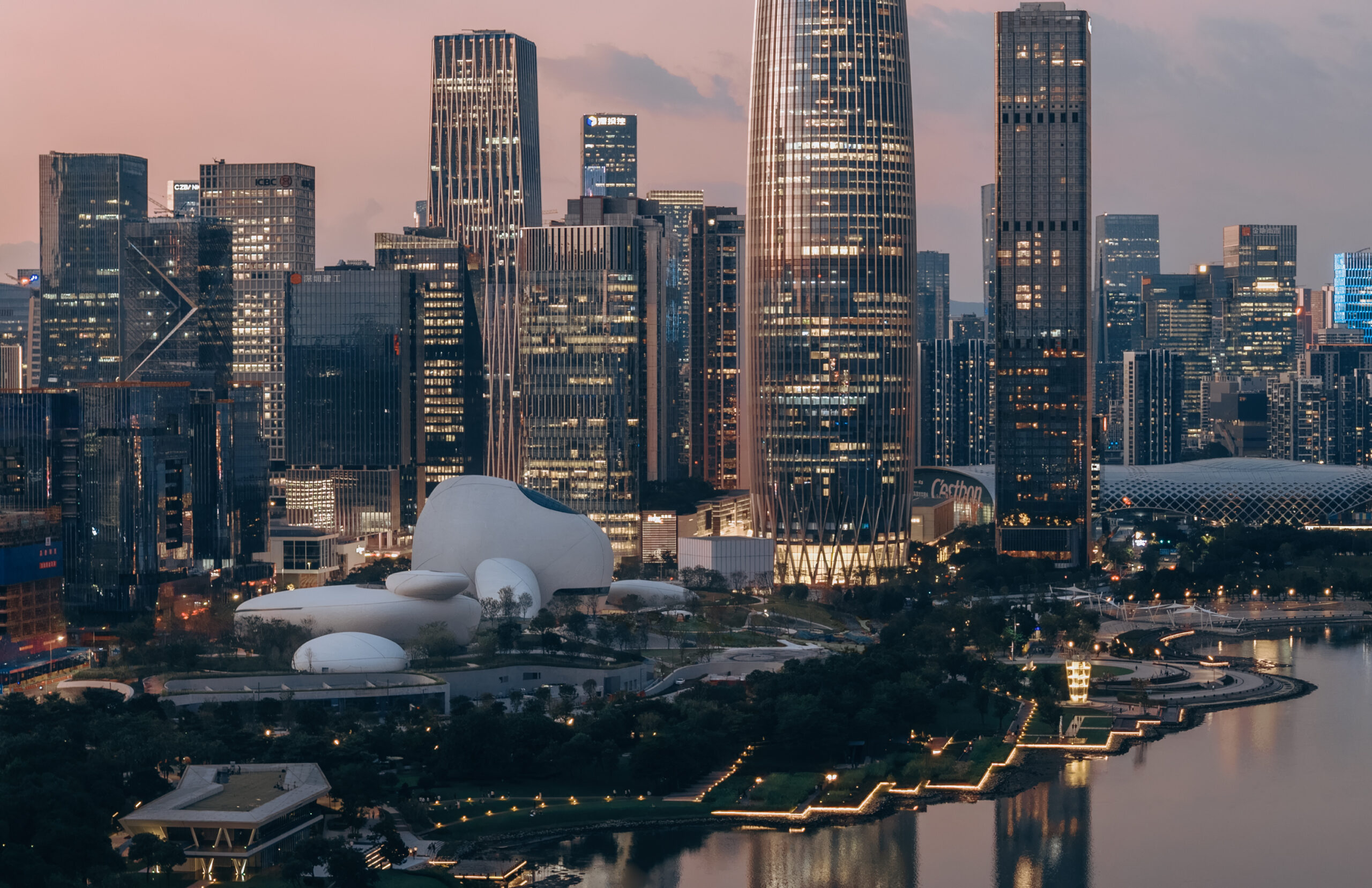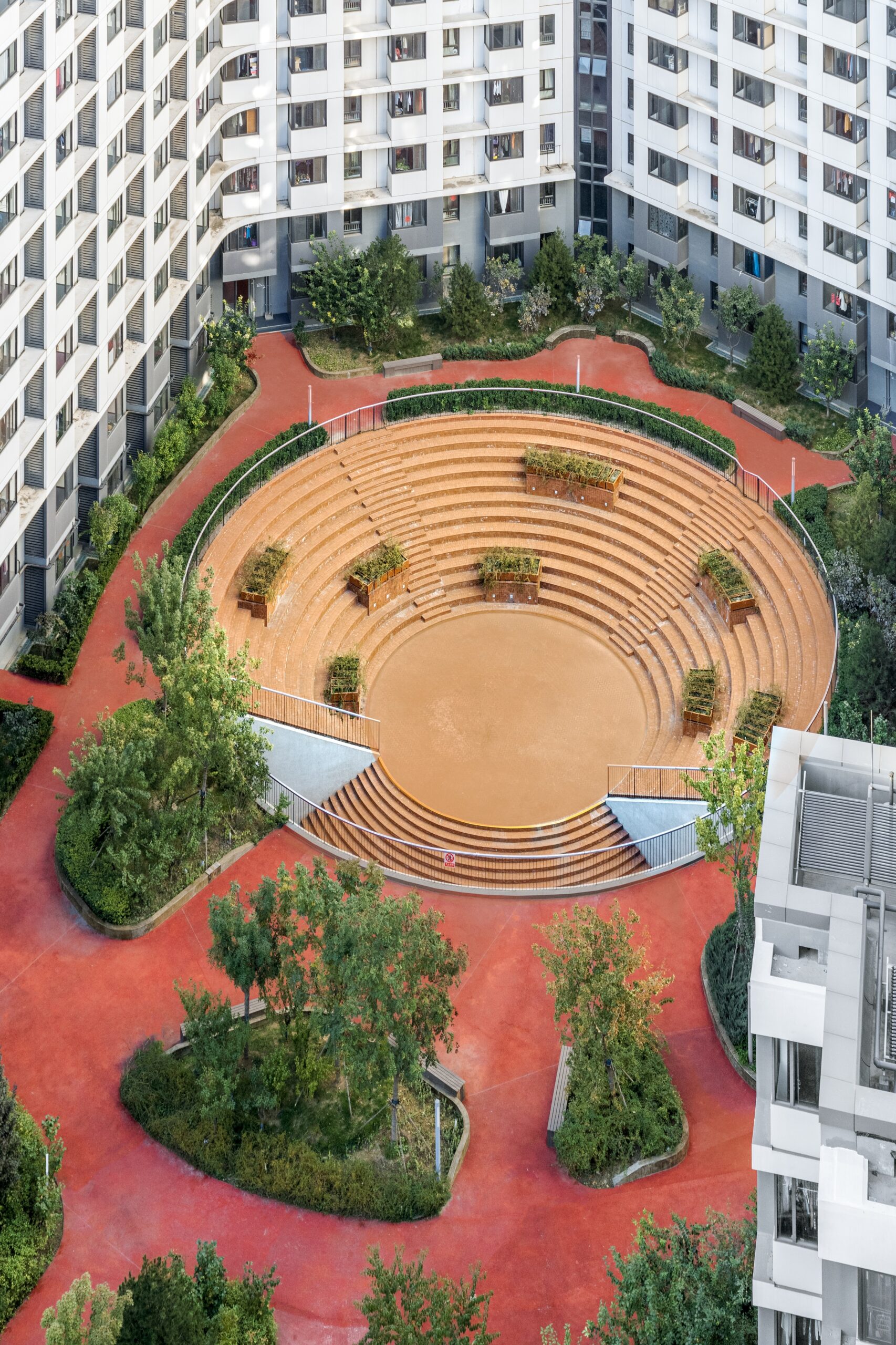


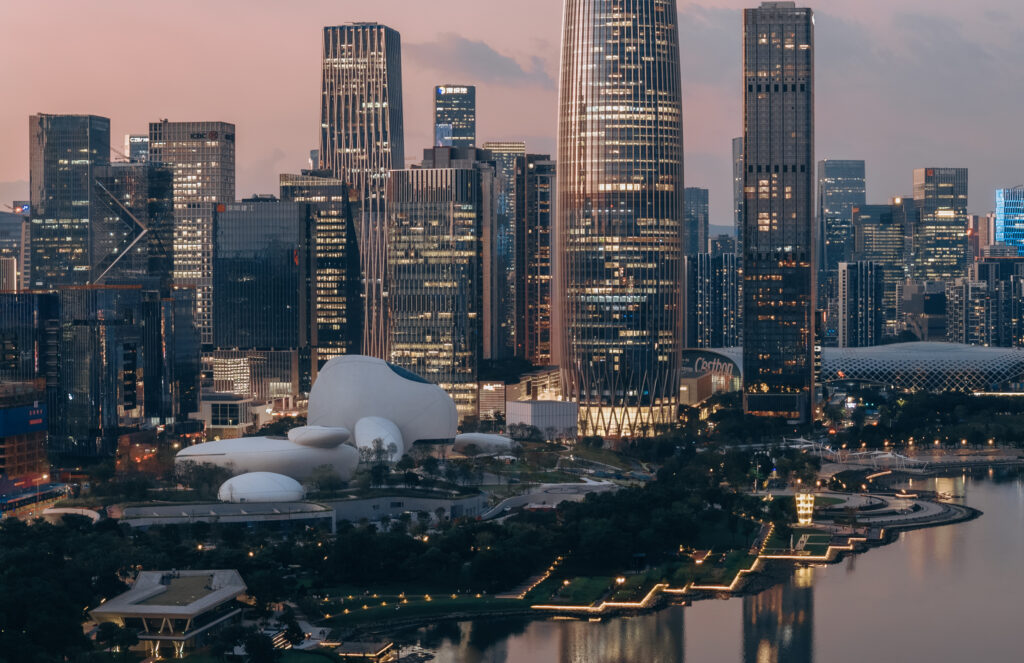
Once upon a time, China was known for its diggers and bulldozers, changing the face of cities in step with the demolitions, heading for the future at such as speed as to cancel out the past. But once upon a time, because today the scenario is much more complex: from an arena with few rules, aside from those linked to optimisation for accommodating the new citizens arriving from the countryside, the urban space has become a fabric that requires not only new buildings but also reconnecting actions – from the recovery of historical neighbourhoods to the enhancement of abandoned or informal areas – aiming to restore temporal stratification.
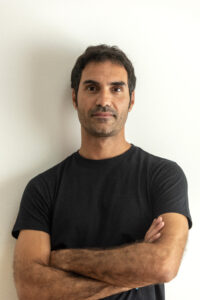
“In Asia there has always been an idea of continuous regeneration,” explains the architect Andrea D’Antrassi, who coordinates the European operations of one of the most important Chinese architecture firms, MAD, founded in 2004 by Ma Yansong, from Rome. “For example, in the past wooden temples were periodically renewed by replacing any deteriorated parts; it was like the Fabbrica del Duomo di Milano, which is considered infinite as it is always in motion. In the contemporary age, on the other hand, for some time people spoke little of regeneration because they tended to demolish in order to rebuild, by virtue of the speculative logics based on the maximisation of real estate investment returns. I lived in Beijing for many years, and saw this phenomenon for myself. In recent years, on the other hand, we have once again understood how important it is to protect the historical fabric, helping it to dialogue with the new.”
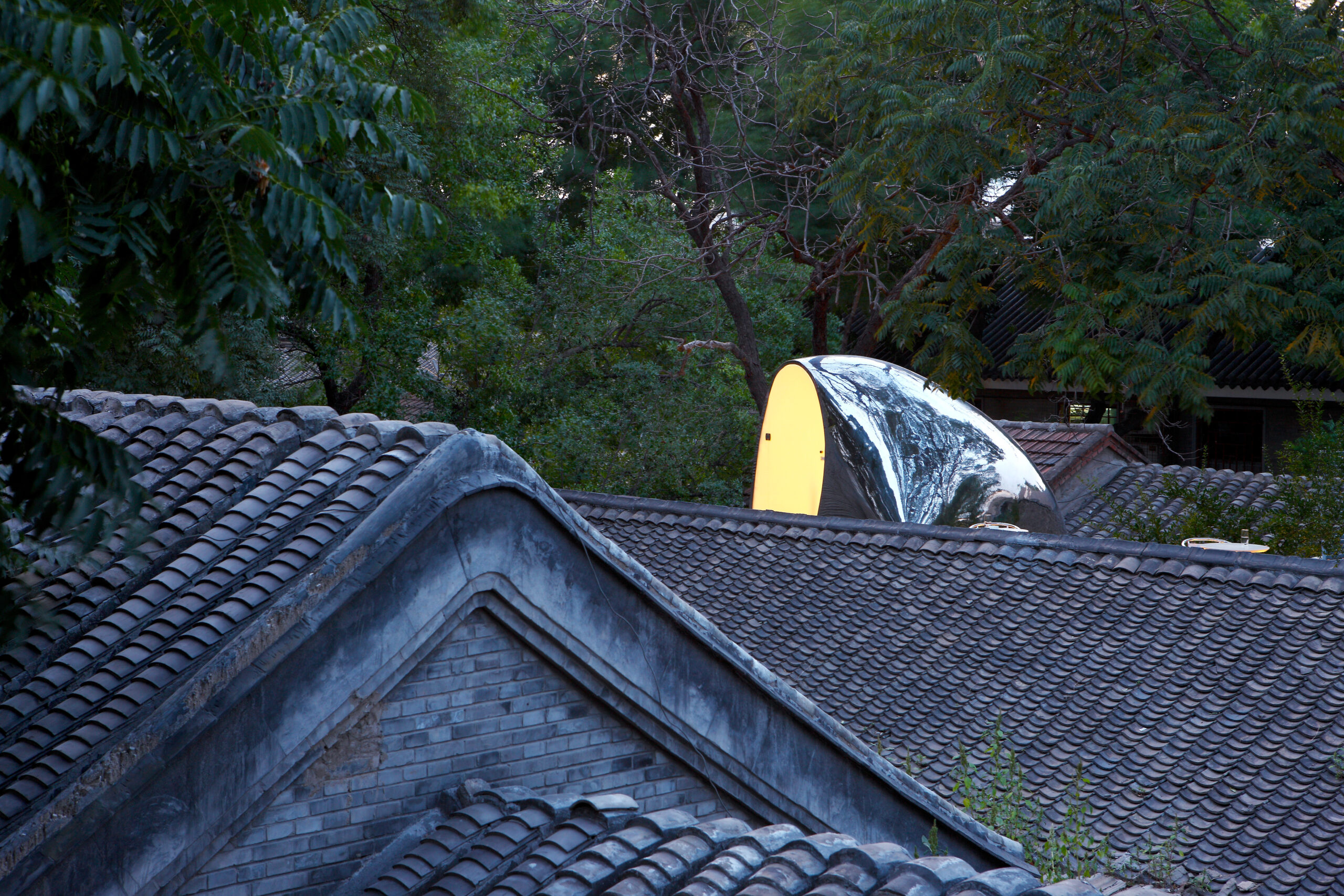
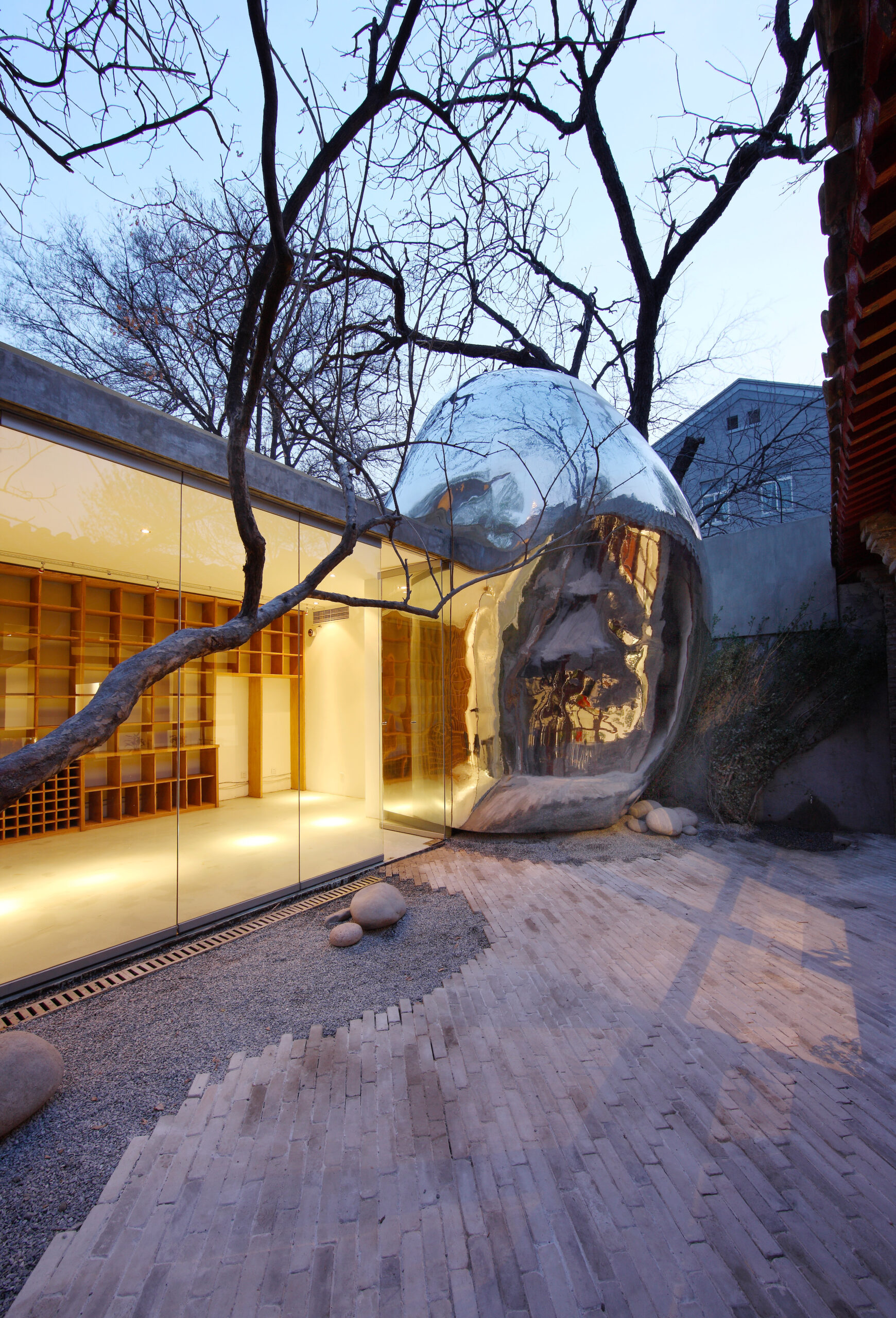
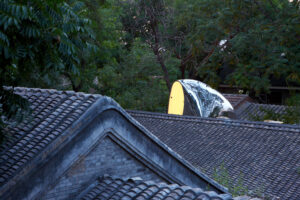
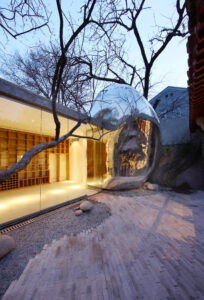
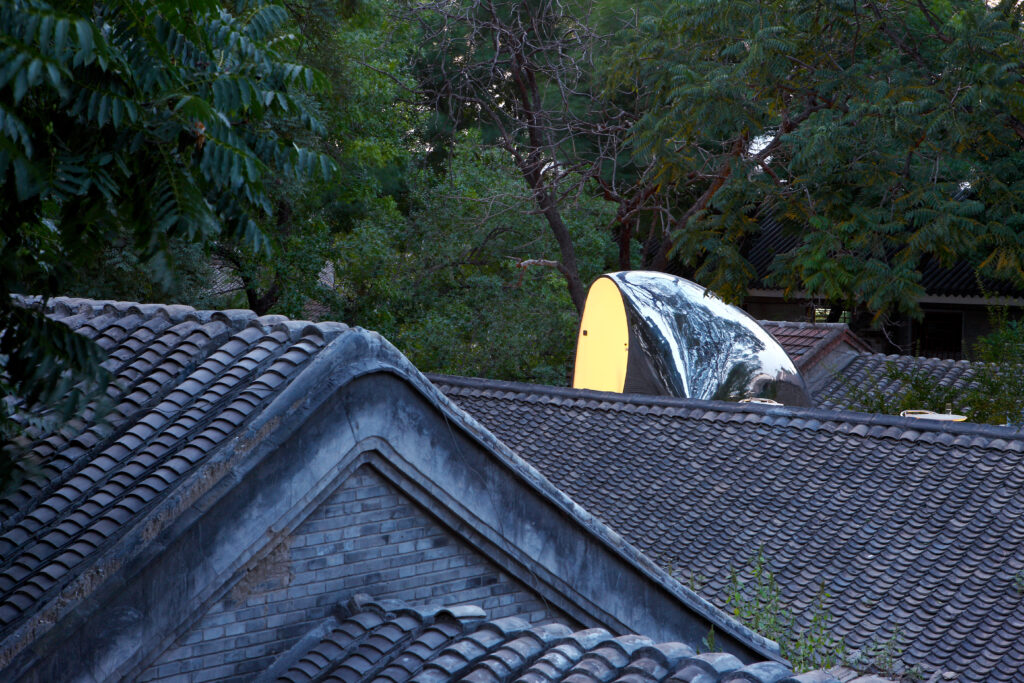
MAD is very close to this movement. Its projects, often with bold, futuristic styles, easily dialogue with the issue of the historical and cultural identity of cities, and are not afraid to incorporate existing architectural elements, enhancing them in a new context. One intervention that set a new standard in this sense is the Hutong Bubbles, stainless steel ‘bubbles’ used in the 2010s to revitalise the characteristic hutong, narrow streets in old Beijing with their traditional courtyard homes, often abandoned by their inhabitants because they are considered inconvenient and unsuited to modern life. “These homes usually require a re-adaptation, because functional spaces like bathrooms and kitchens are inadequate. This is why we asked: why not add a block that includes these functions?” D’Antrassi recalls. “We didn’t want a classic box shape, rather something organic that could speak a contemporary language and that, rather than mimicking historical architectures, was new and instantly recognisable.” So that’s what they did: the mirrored surface of the Hutong Bubbles, sitting on the roofs and terraces of the houses like bizarrely attractive growths, reflects the surrounding landscape to reduce the alienating effect of the combination.
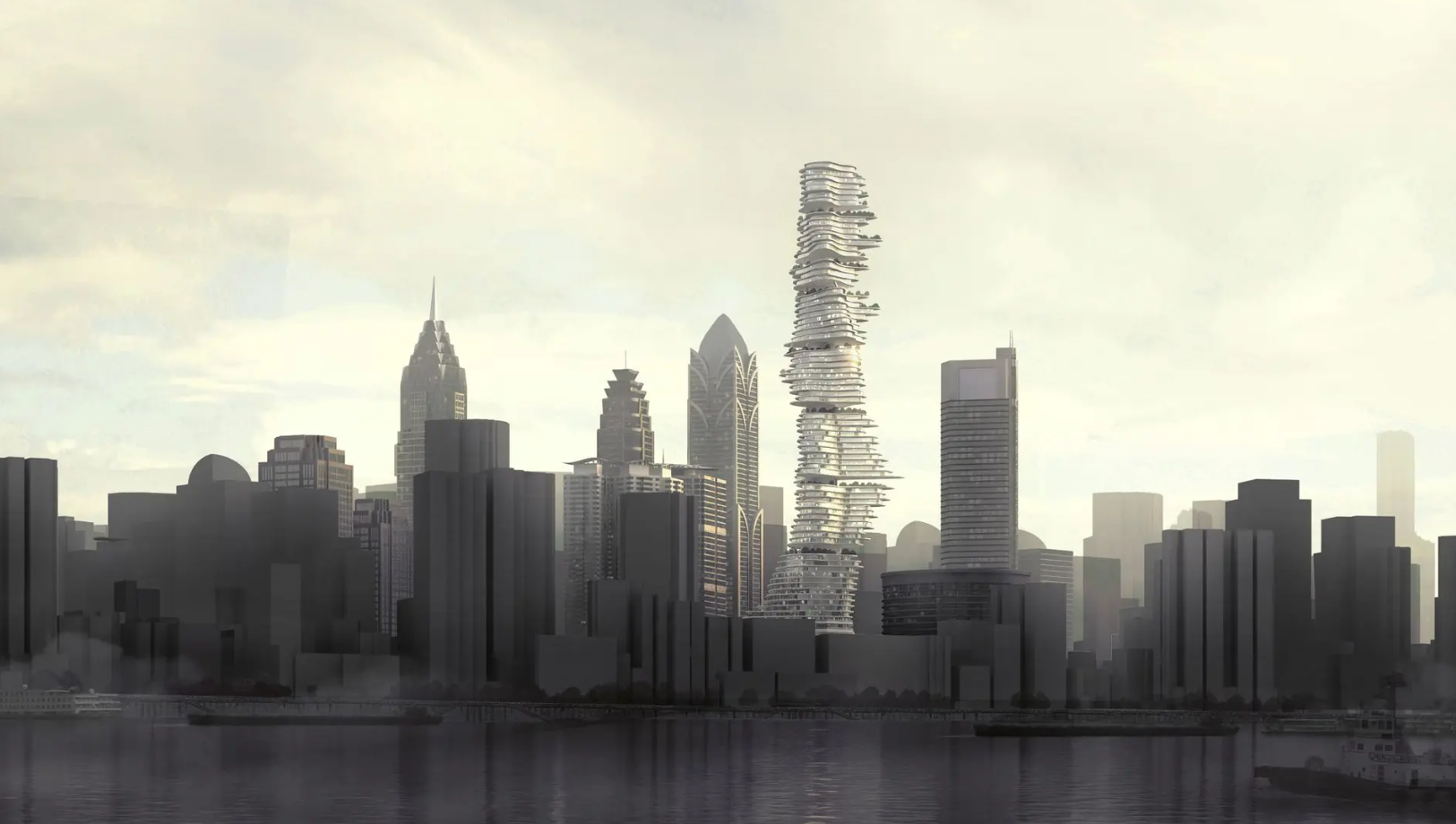
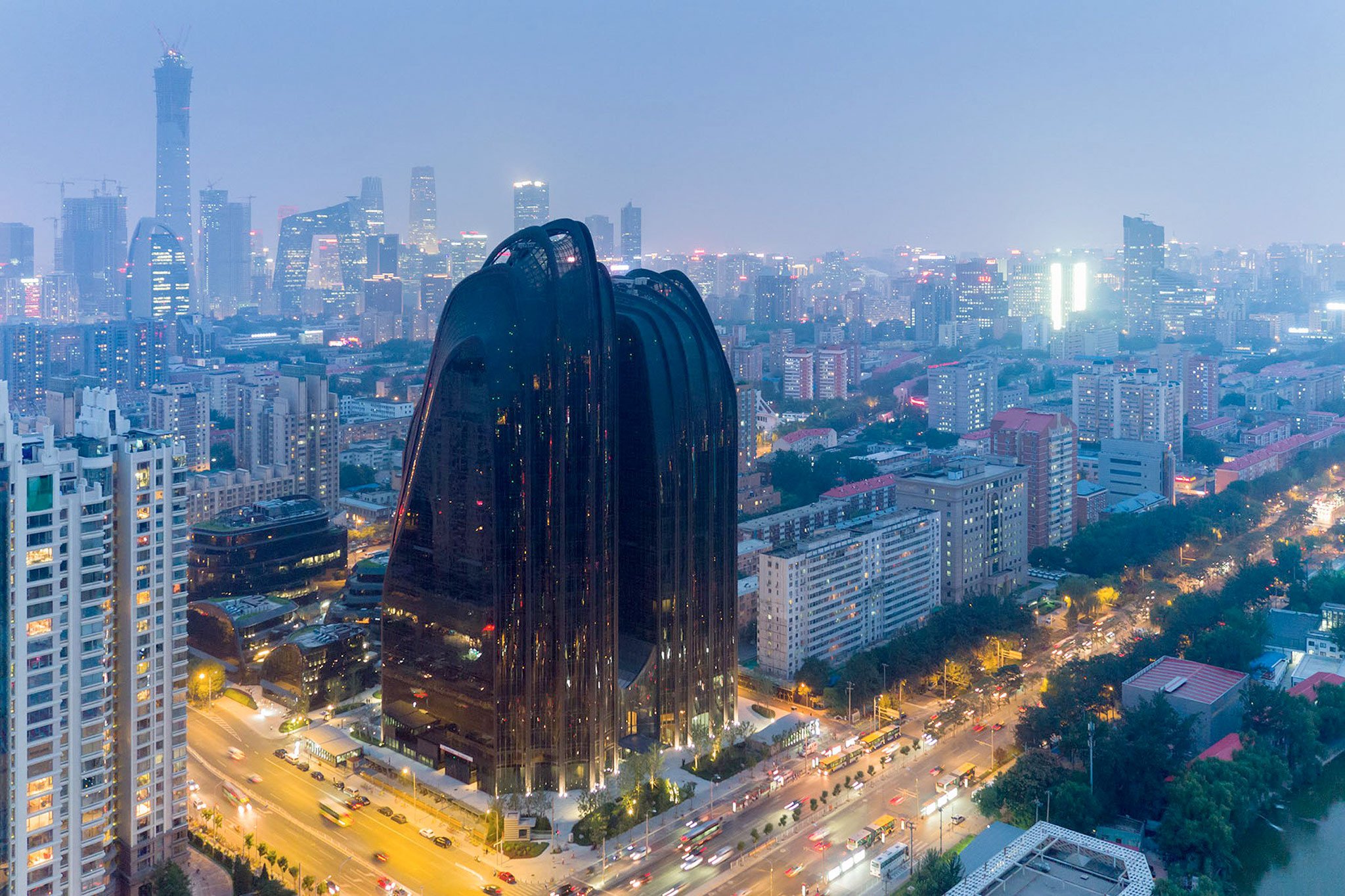
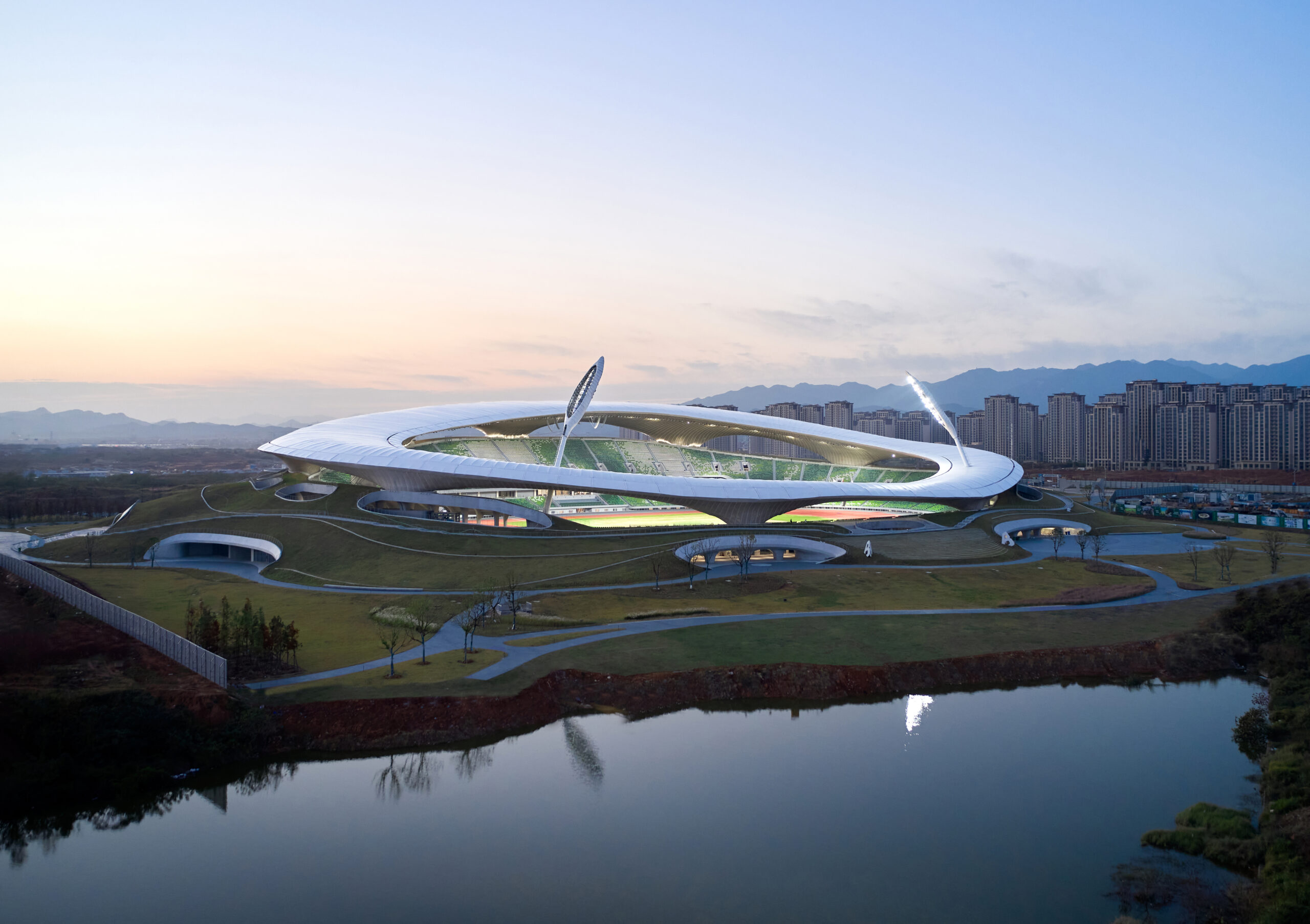
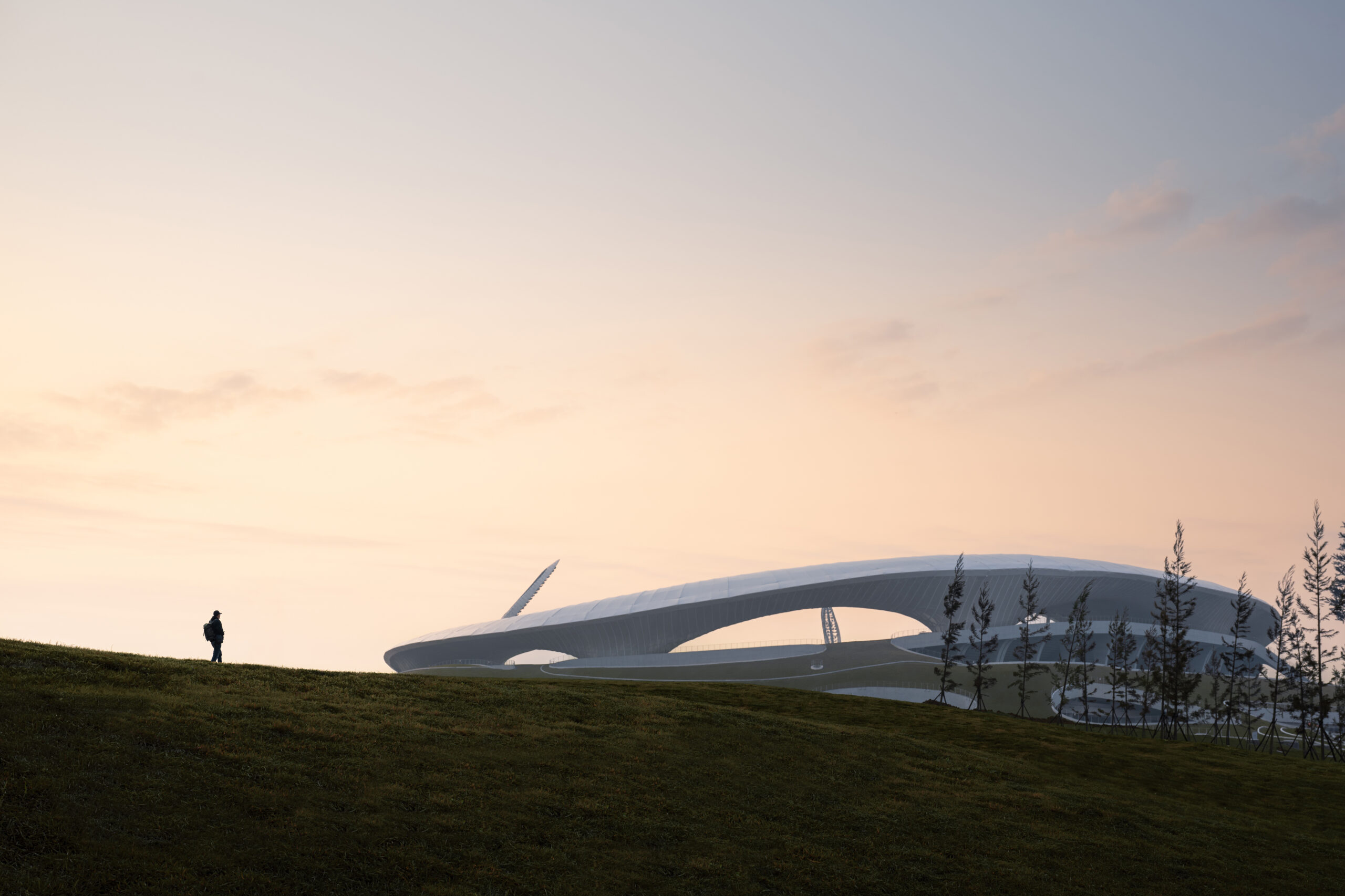
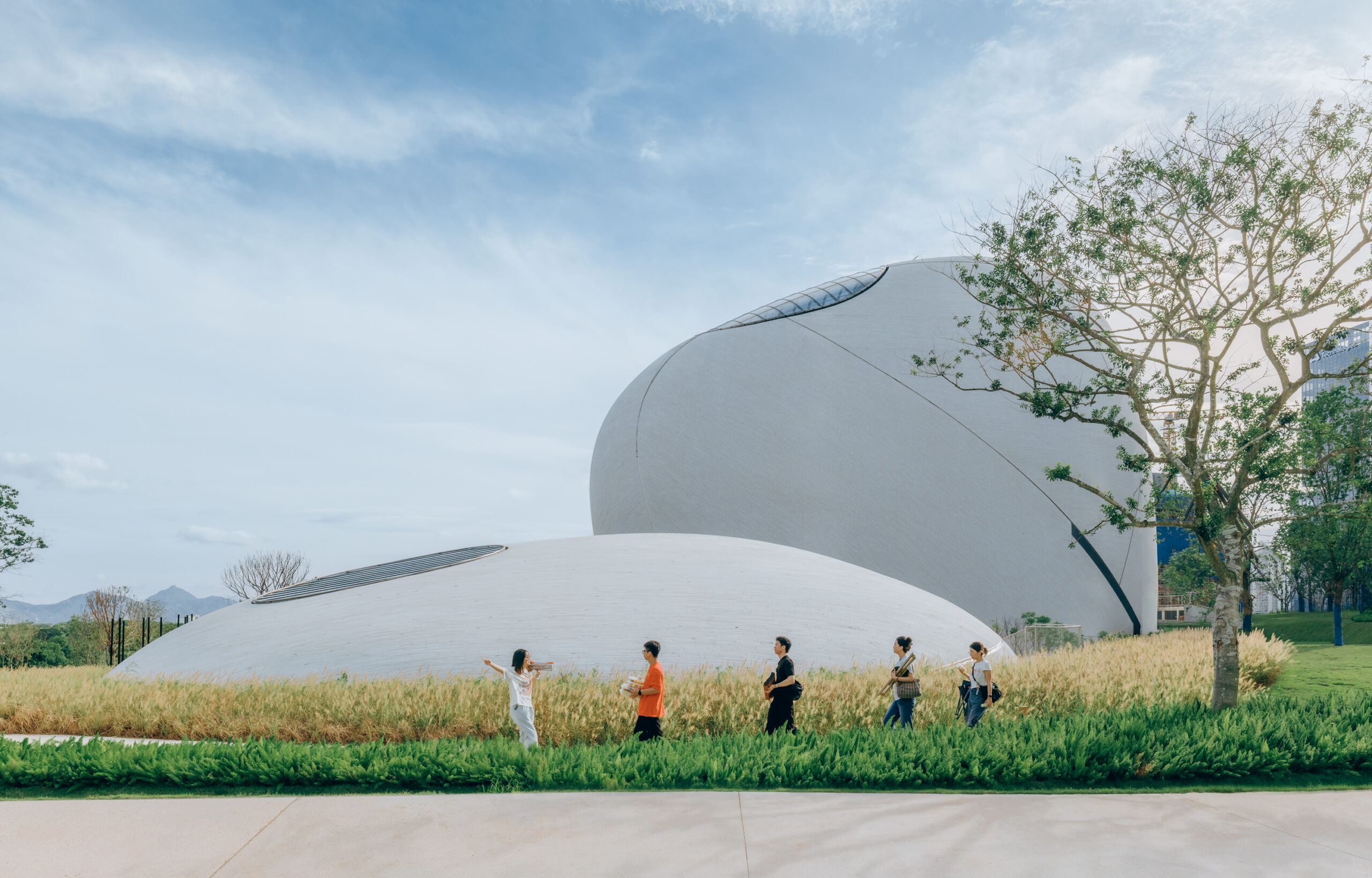
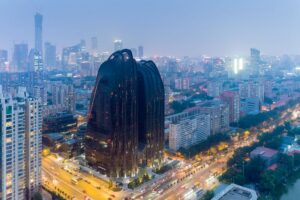
The sinuous shapes of the buildings with which Ma Yansong and his team are redesigning cities, in China and beyond, are not merely the result of a generic search for novelty in relation to the solutions proposed by Euclidean geometry or the influence of Zaha Hadid, with whom the founder of MAD worked immediately after graduating. A precise design philosophy underlies them: that of the Shanshui city, which aims to redefine the relationship between nature and built space, as far as possible smoothing out any differences between that which is created by humans and the natural landscape made of hills and rivers. “Literally, shanshui means ‘water and mountain’ and refers to traditional Chinese landscape painting,” explains Andrea D’Antrassi, who has been visiting the ‘Middle Country’ since 2008, when he worked with Massimiliano Fuksas on Terminal 3 at Shenzhen airport. “This is a poetic form that aims to reconnect architecture to the natural environment, making it smoother and more rarefied, to obtain the same effect of peace and serenity we find in those paintings. Thus, even an office tower can become one of those mountains carved by the wind and the rain.” The main façade of One River North (2019-2024), the 16-storey multi-purpose complex built in Denver, United States, is divided by a deep rift reminiscent of a canyon, offering users terraces and vantage points to admire the surroundings.
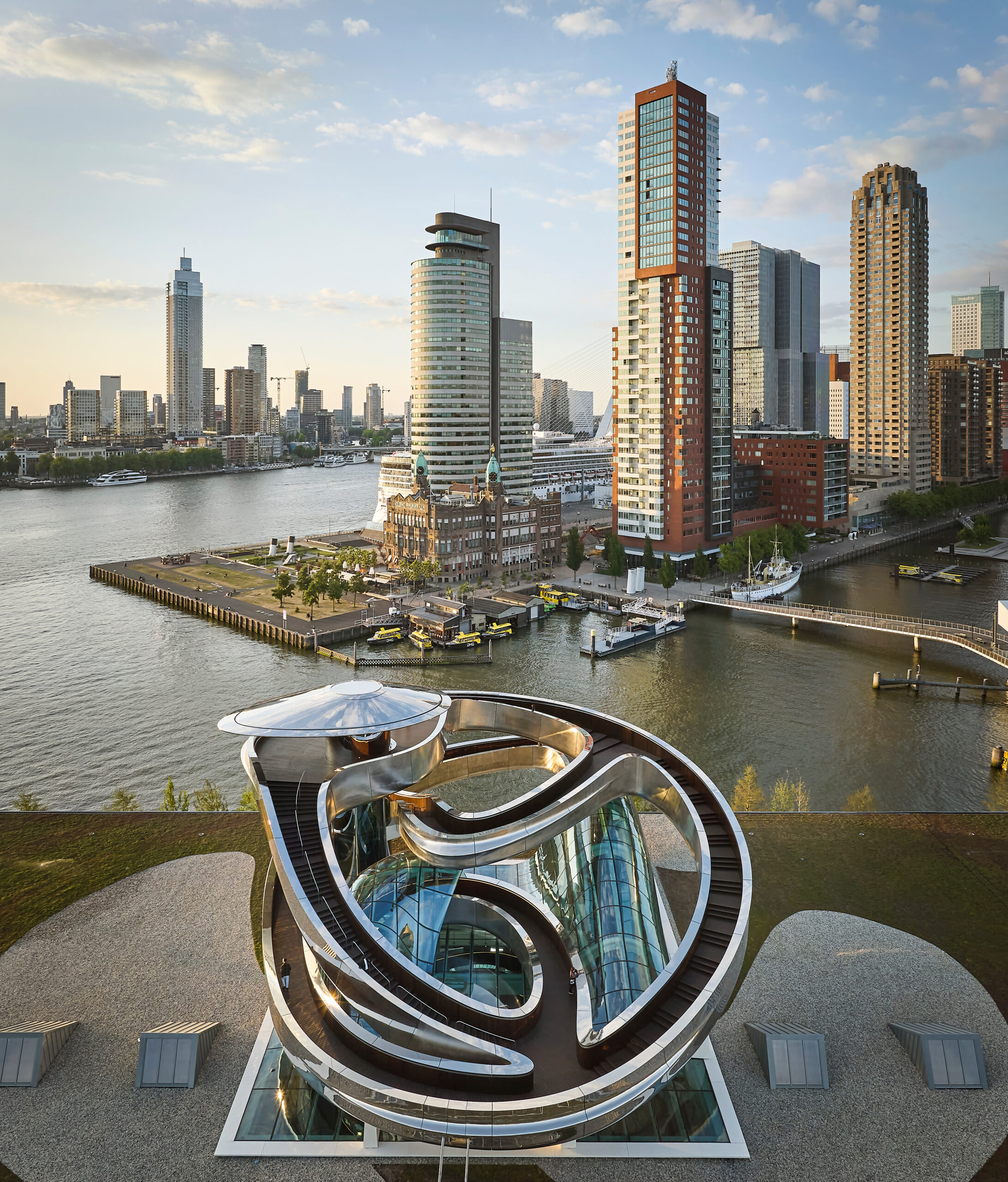
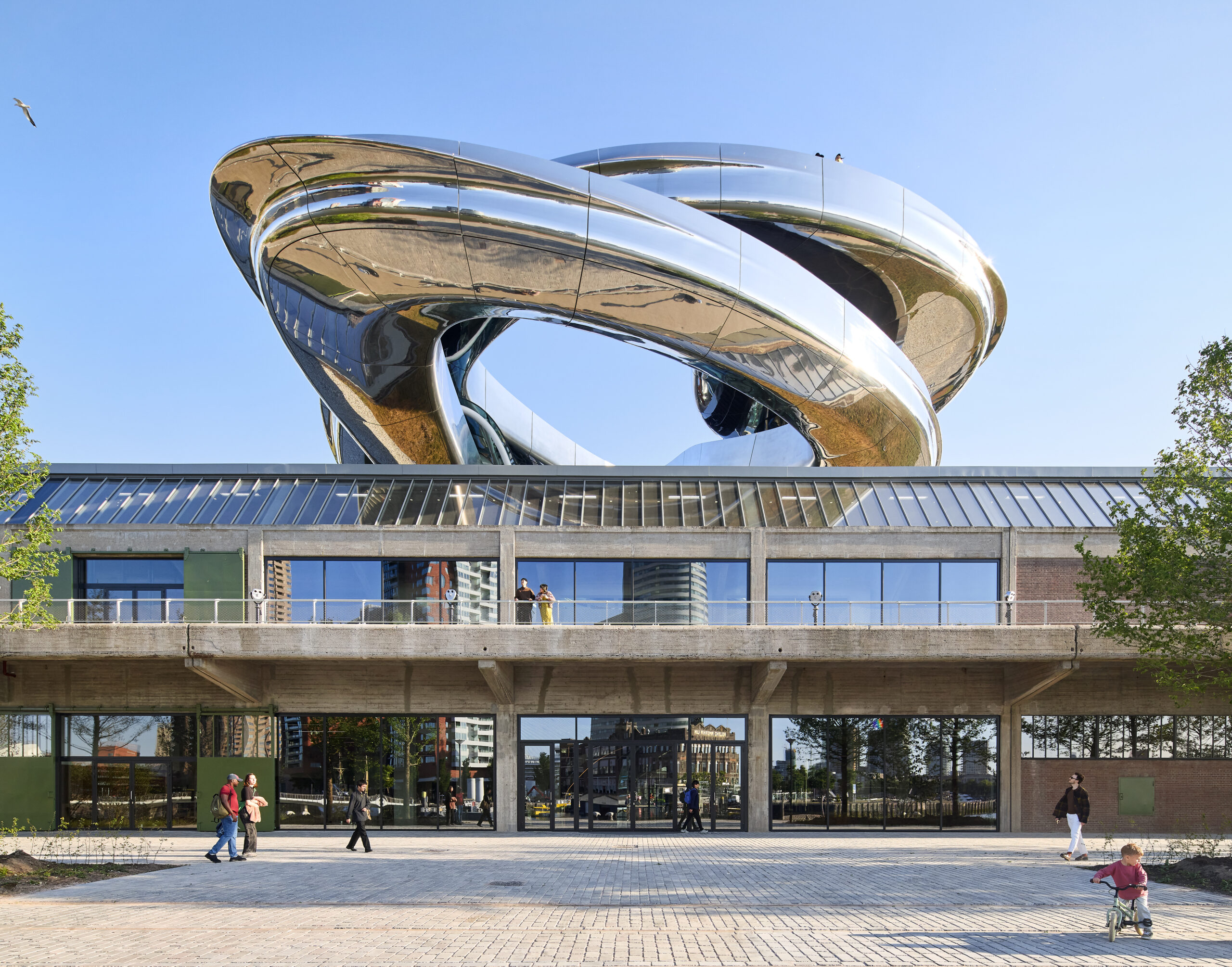
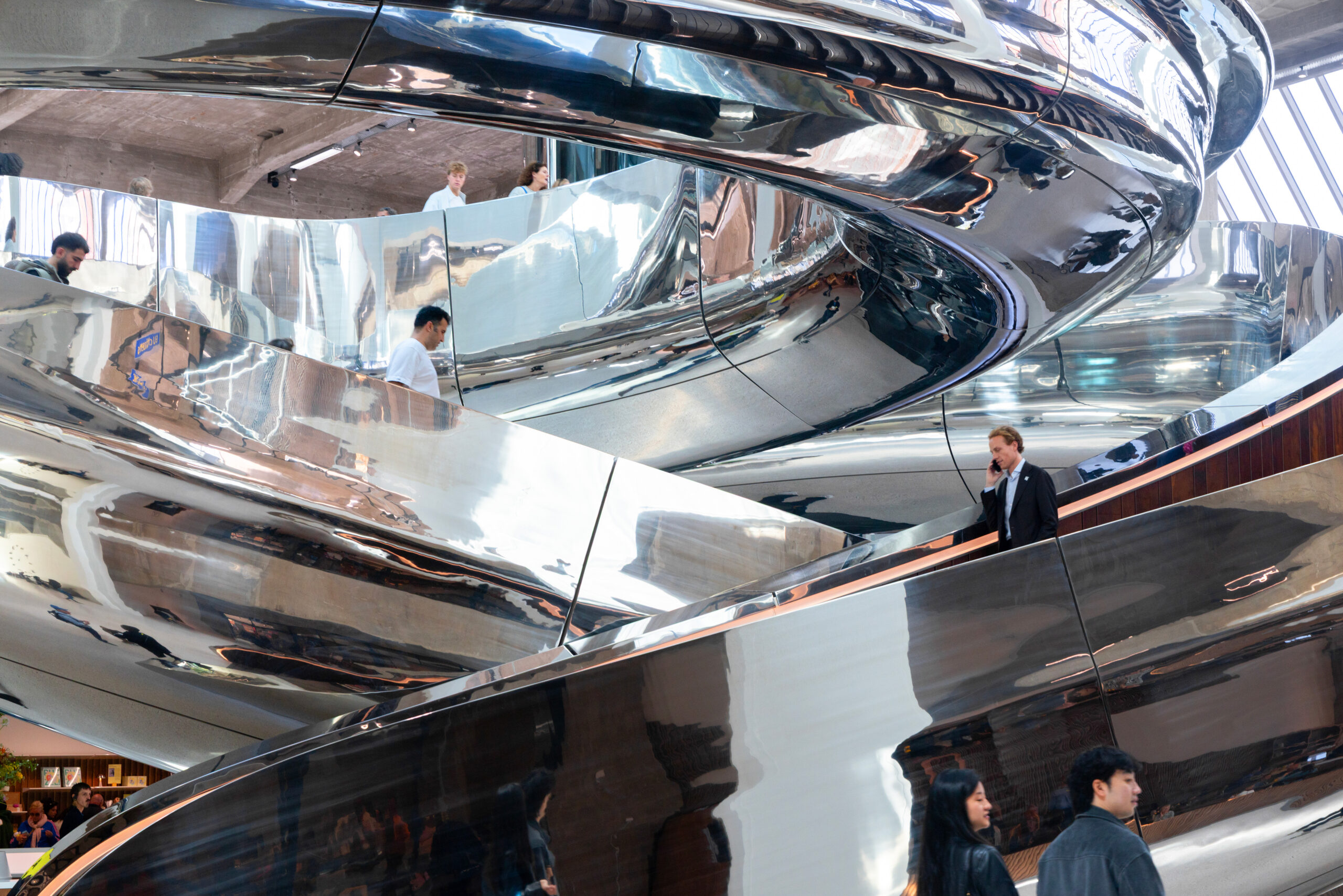
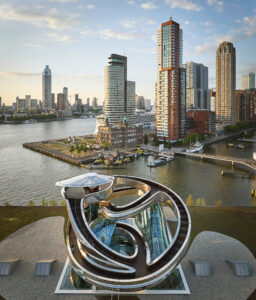
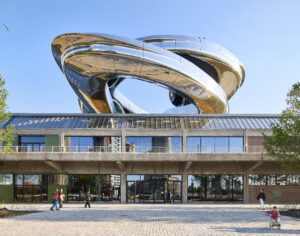
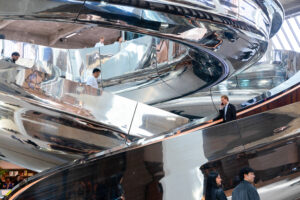
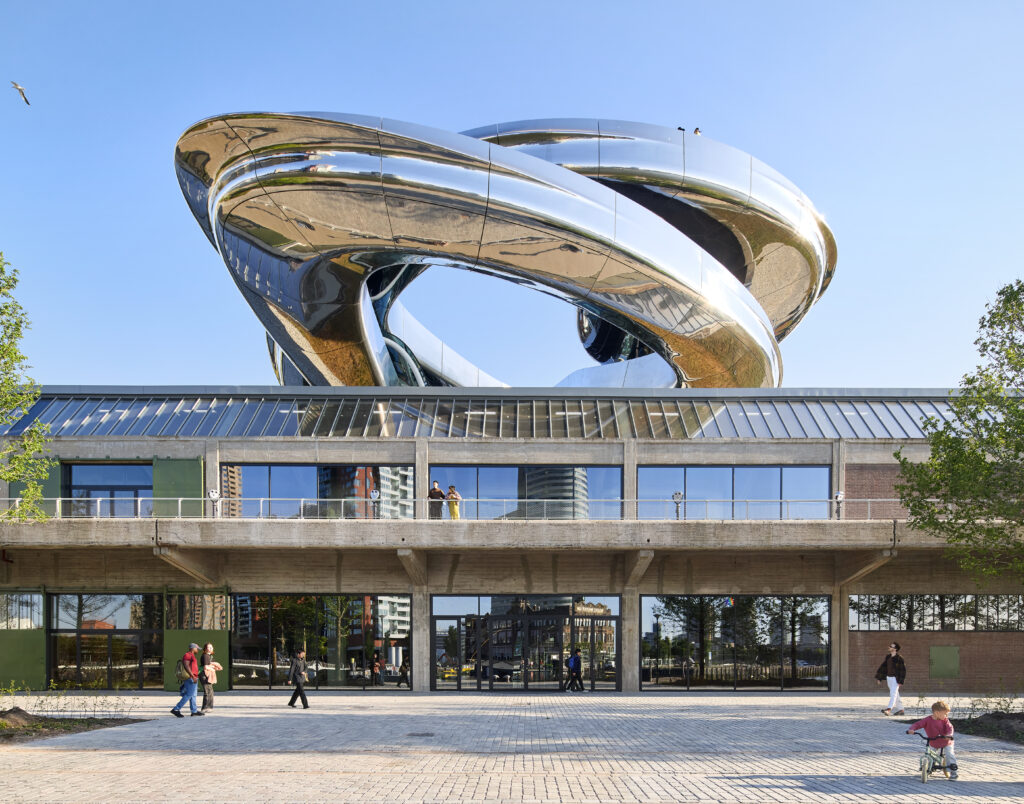
According to D’Antrassi, in charge of the Rome offices of MAD, acting as a bridge between the head office in Beijing and Europe, the approach to the study of urban regeneration also works perfectly well in the Old Continent, where the respect for historical stratification is often bound by specific constraints. “Working in historical contexts, everything passes through the rediscovery of that which the ancient peoples called genius loci: it is important to understand the soul of a place, seeking to bring new vitality without upsetting the balance,” he explains. “The Fenix Museum project in Rotterdam, that we recently managed, is a great operation of regeneration of an old 1940s warehouse turned into the museum of immigration, because that is precisely where millions of people once left for the Americas. In the lobby there is a kind of monumental spiral staircase leading to the roof of the building, which we called Tornado and which clearly contrasts with the historical architecture, creating a harmonious juxtaposition between the old and the new.”
In the firm’s first project in Italy – the renovation of a 22,000-square metre building in Via Boncompagni, Rome, adding large curved windows in continuity with the original reinforced concrete structure, we can see the same dialogue between past and present. “The building is in an outlying neighbourhood, Sallustiano, which has already seen several architectural experiments. We have to perform an in-depth analysis of the site, and it is always better to avoid strong contrasts, because the city also lives on in its continuities and balances,” D’Antrassi adds. The art of mediation is in fact what the Rome-based architect has learned to manage to perfection after many years working between Italy and China.