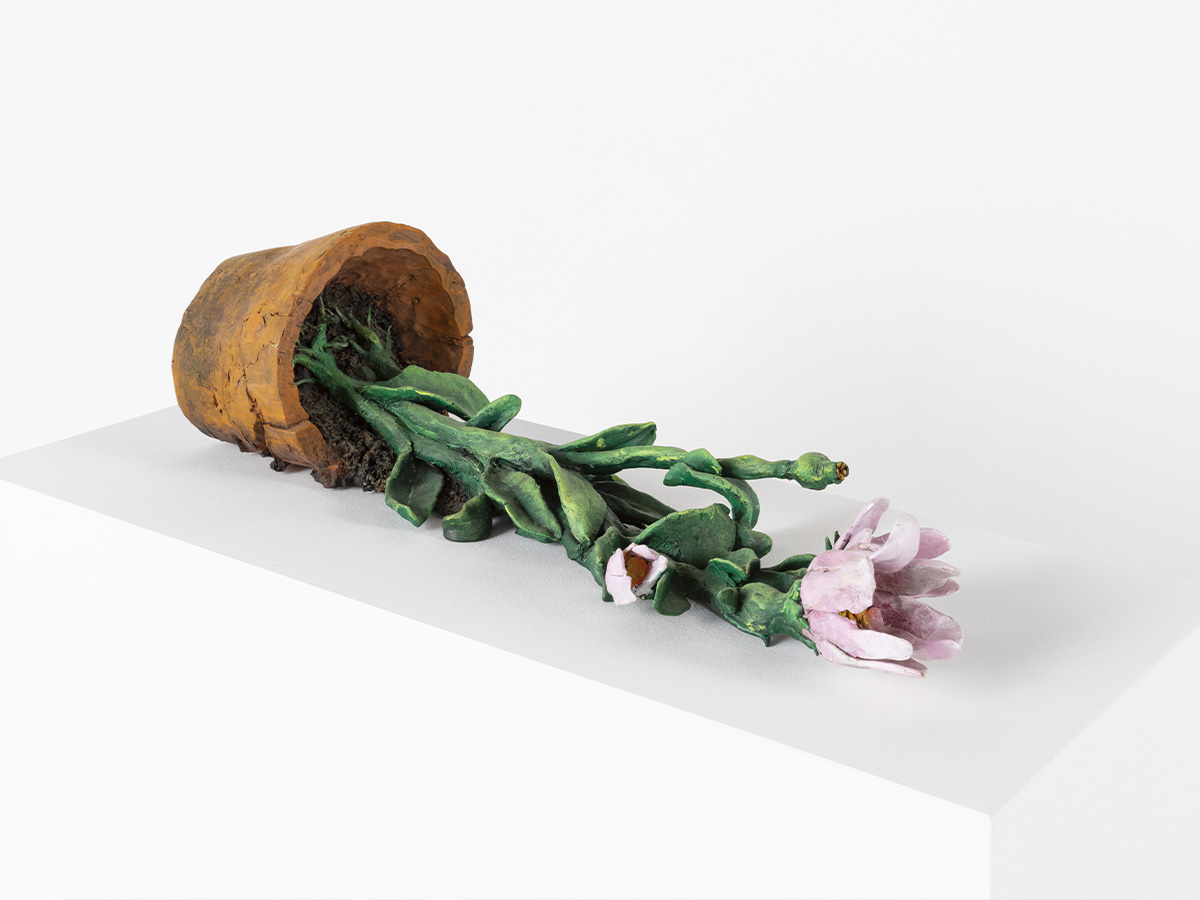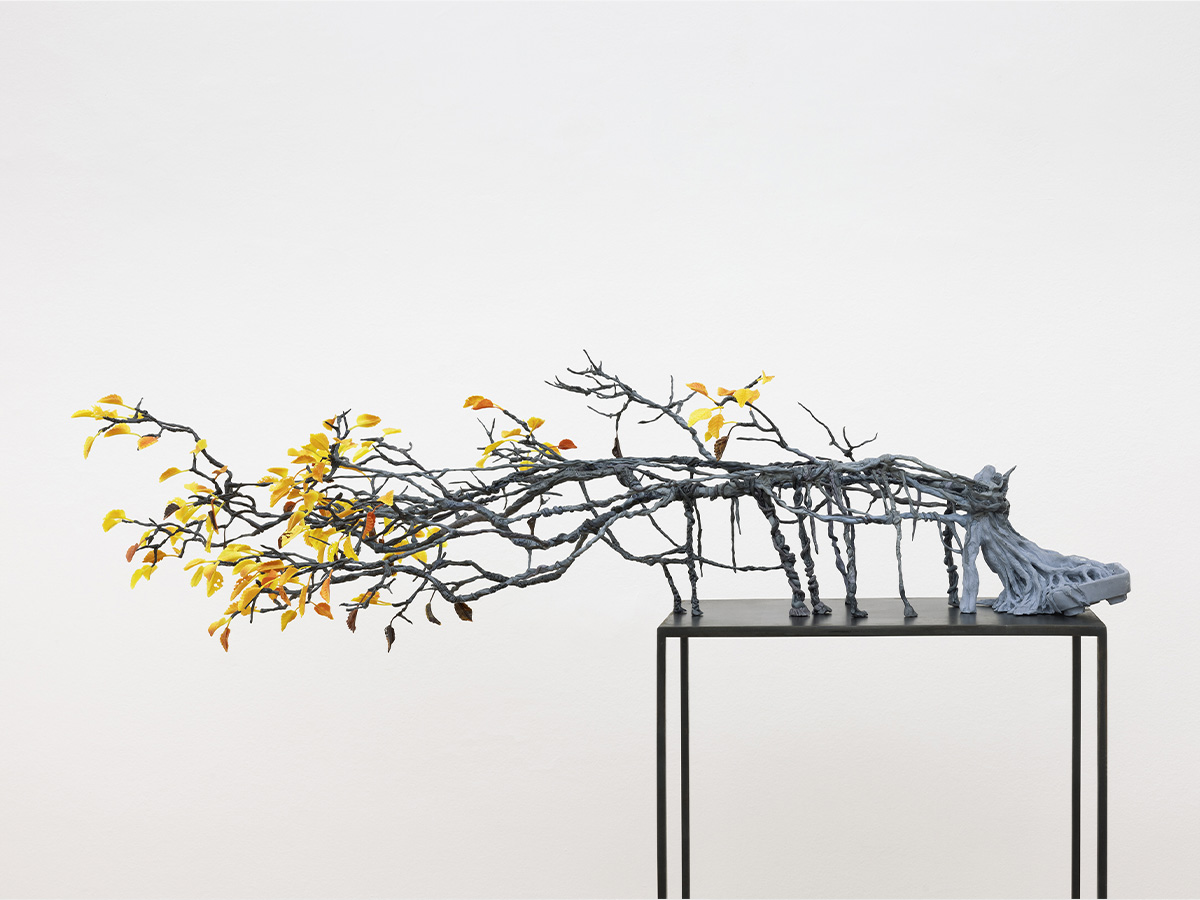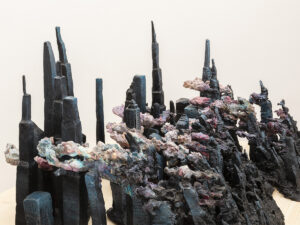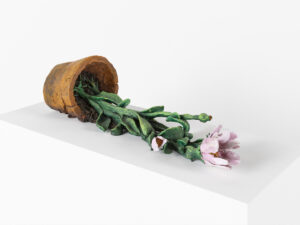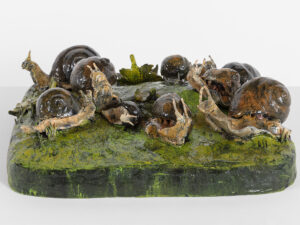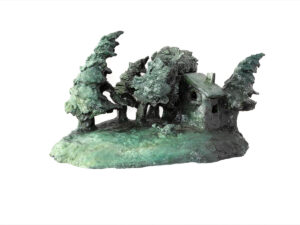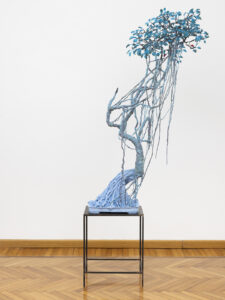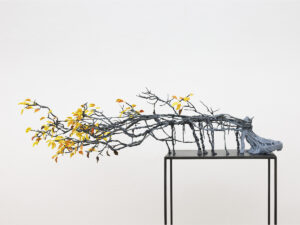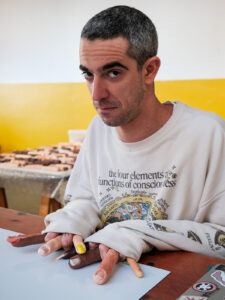


Part of the research of Federico Tosi – Milan-based artist born in 1988 – revolves around figures that evoke a silent yet deep rebellion: natural elements become symbols of resistance and transformation. Not representations of landscape but of living organisms that seem to challenge the imposed forms, seeking new ways to grow and assert themselves. You can almost feel the conflict: the risk of failure lives side by side with the pleasure of newly found freedom. Free of constraints and impositions, Nature becomes an independent and ironic voice that breaks free from all that previously restricted it. Among his most recent personal exhibitions (2024), Falling asleep on a plane, a site-specific project for the Morpho Refectory in Antwerp, where he explored the transitional states of consciousness between wakefulness and sleep, and Bonsai Riot, at the Galleria Monica De Cardenas in Milan, with rebel bonsai sculptures inspired by a trip to the tropical forest on an island in the Philippines. We talked with Tosi about where his ties with the forest came from and how, through the evocative power of the natural world, he expresses a profound need for rebellion and change.
You have been travelling deep into unspoiled forests for a few years now. If you agree, we’ll start here. Why do you feel this need?
Unspoiled is a word to use with care. If you look at the map of Borneo you can see huge swathes of greenery and image that it is unspoiled nature. But if you look closer, you will see how everything is actually geometric and segmented, a vast grid drawn in pale greens dotted with a few irregular patches of darker greens here and there. The pale green grids are huge masses of palm oil crops and the small darker irregular patches are what remains of one of the planet’s oldest forests. Seeing this, we understand that the portion of forest we have been left today is something torn, a fenced-off reserve of our past where we can pretend to admire the wild animals.
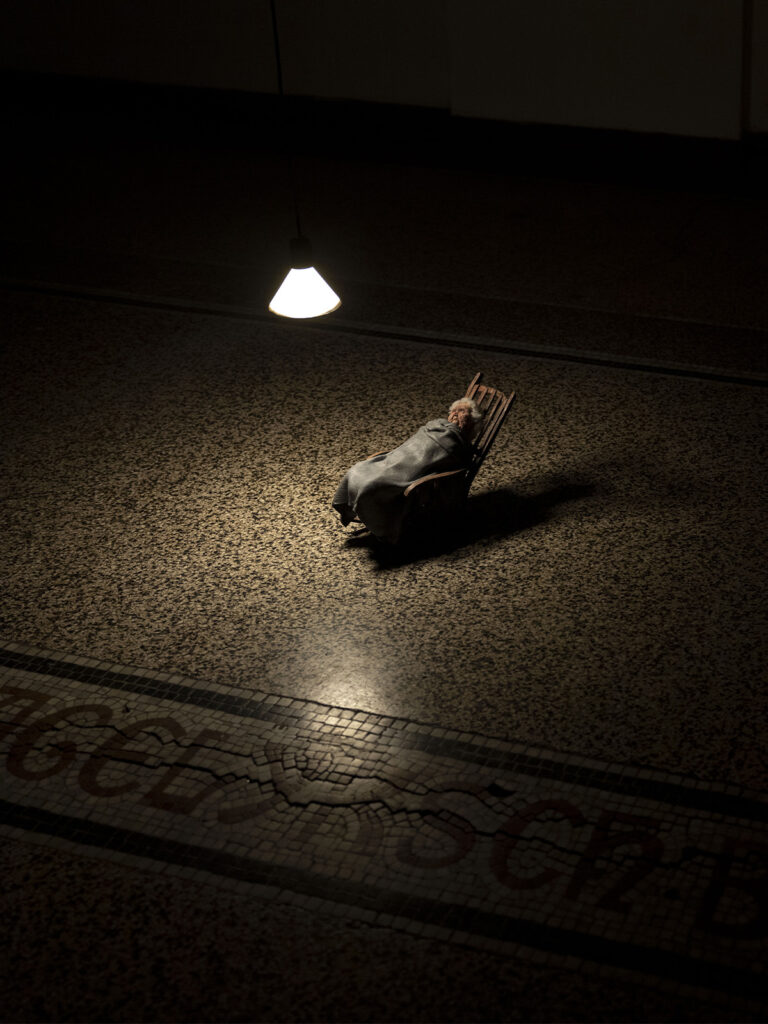
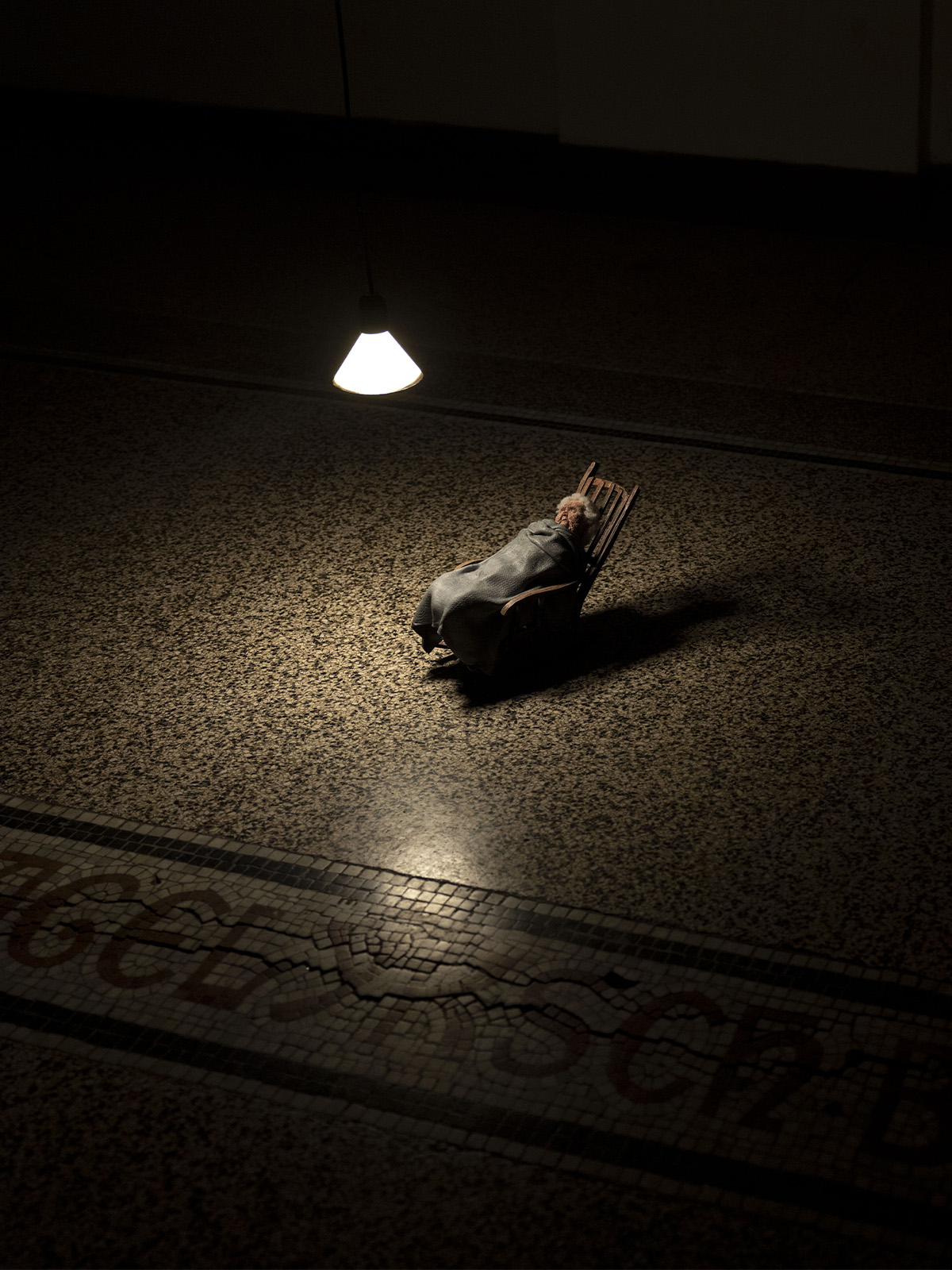
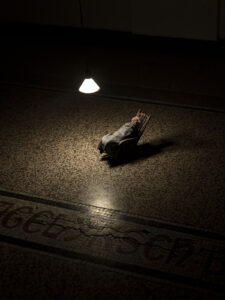
In Falling asleep on a plane, how did you decide to give a small sleeping grandmother the sound of a storm in a forest?
I think that Nature is indispensable. The system we live in has worked to outmatch an ancient balance in favour of personal needs that drive us further and further away from the starting point, demanding that the life of a tree or a cow is somehow less important than our own. There are a few ideas about how the Anthropocene started; personally, I think that the point of origin can be found when homo sapiens began to kill off other species, so around 70,000 years ago, in the Middle Palaeolithic. Since then, there has been an irreversible process of totally unaware transformation and domination, at least initially.
The sculpture of this grandmother, resting peacefully but from inside producing the sound of a storm that rings out across the whole room, is somehow telling us how the outside is inside us. With this small sculpture, I wanted to suggest the idea of hearing an ancient memory, a presence that has dominated our lives for much longer than contemporary life is doing today. We built a roof to protect us from the rain, which doesn’t mean that it has suddenly stopped raining.
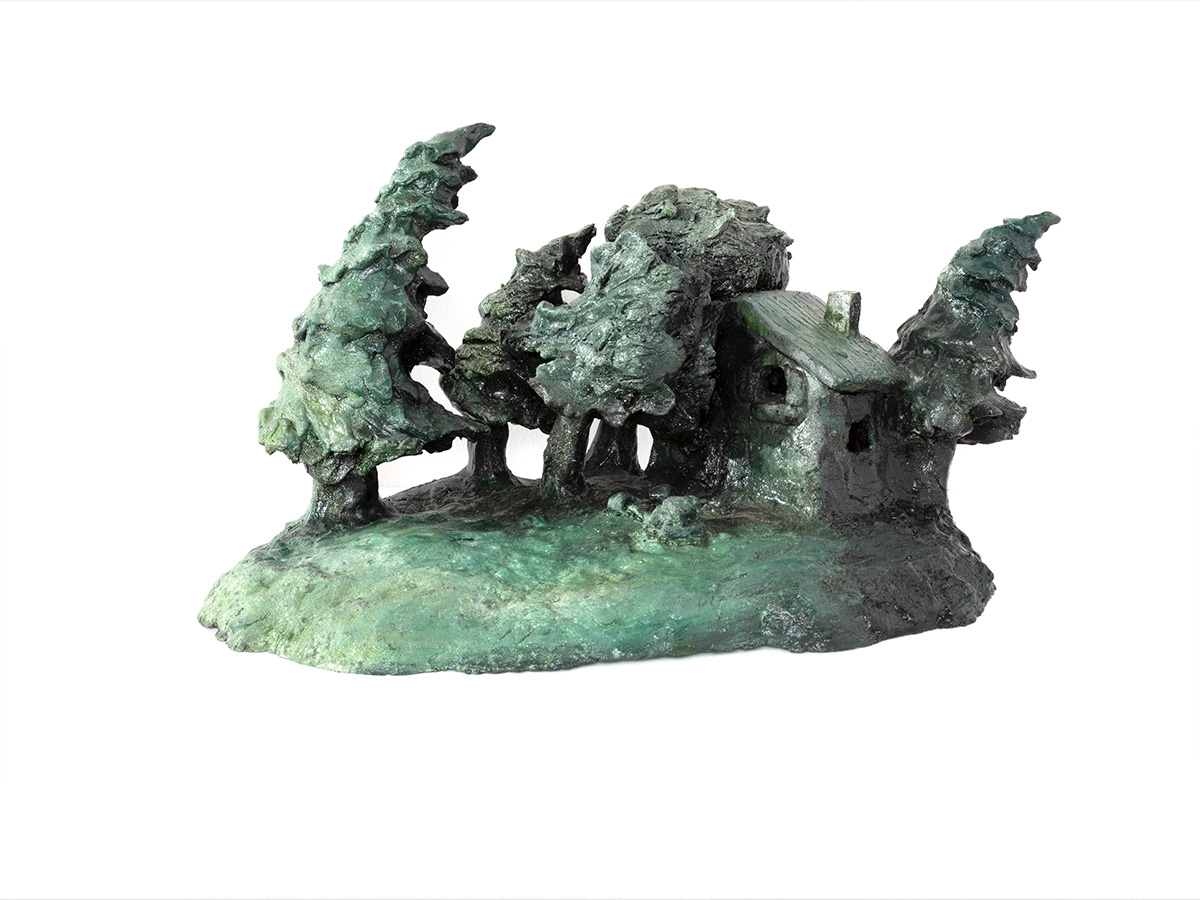
In your works we perceive a constant sense of threat of nature. Is this something that also touches your relationship with the city? I think for example of the city of Vento Forte.
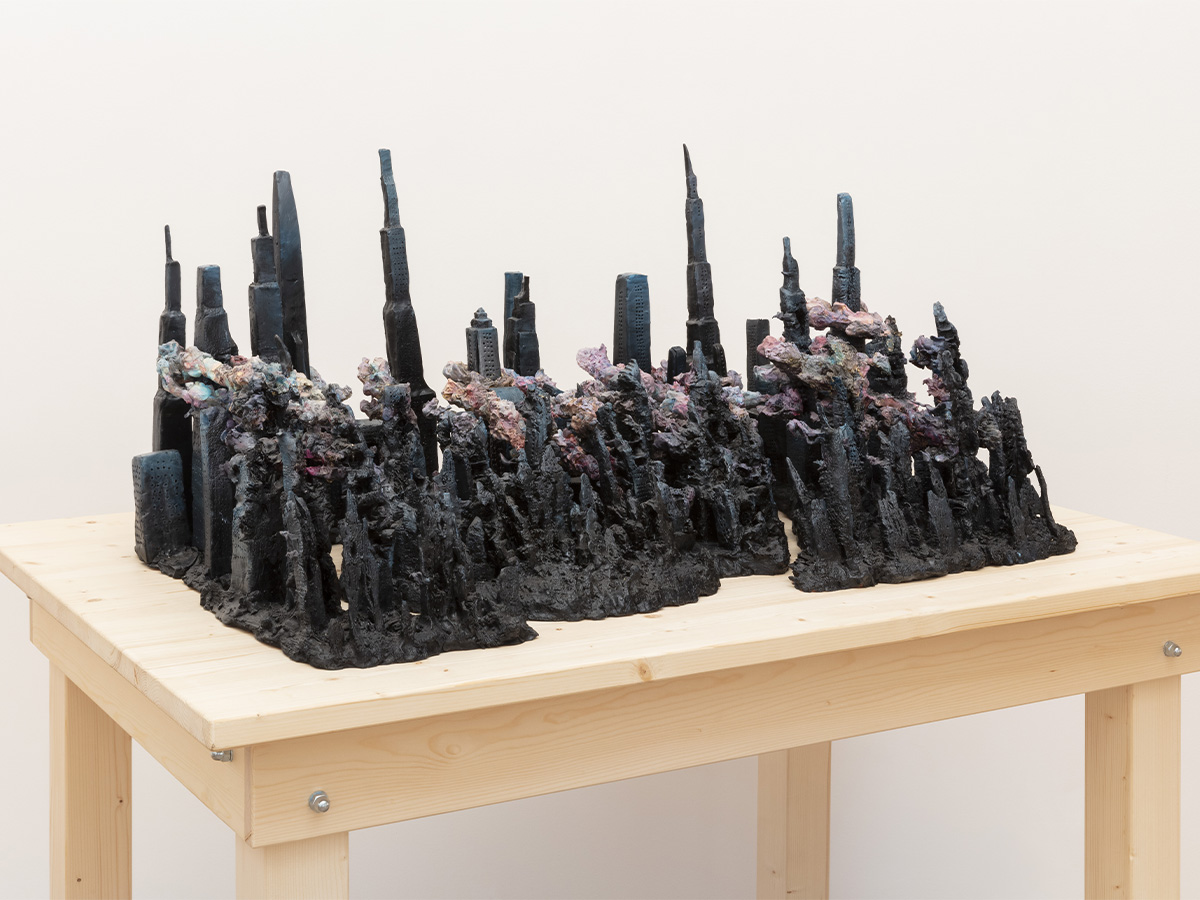
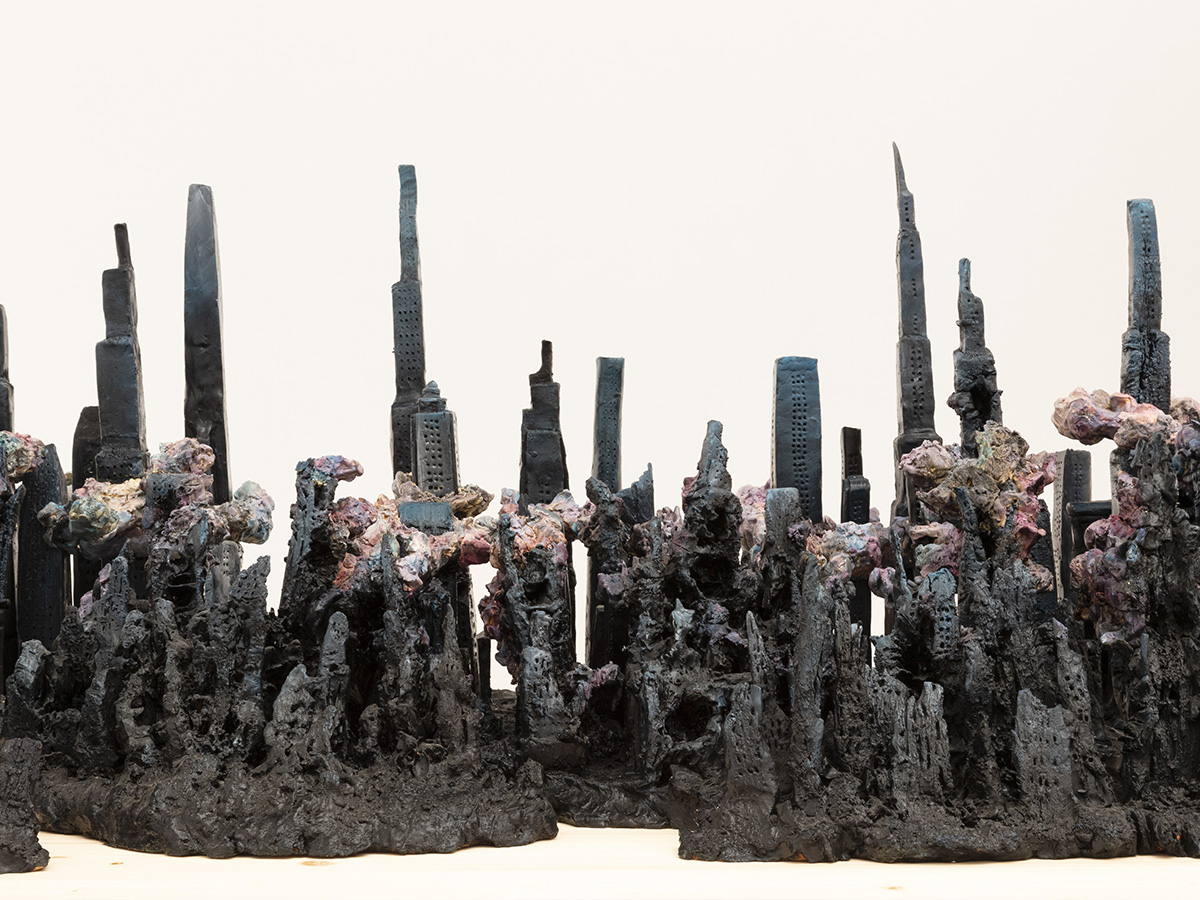
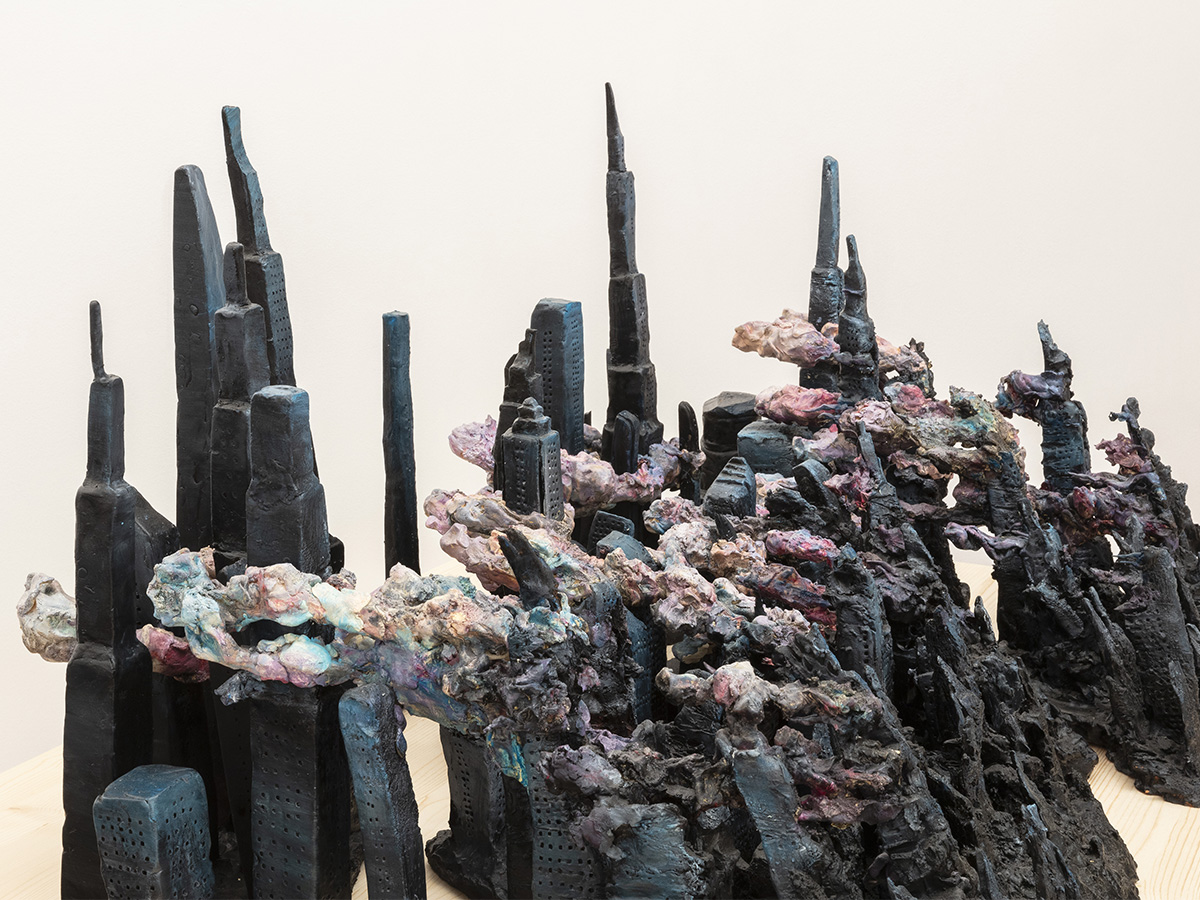
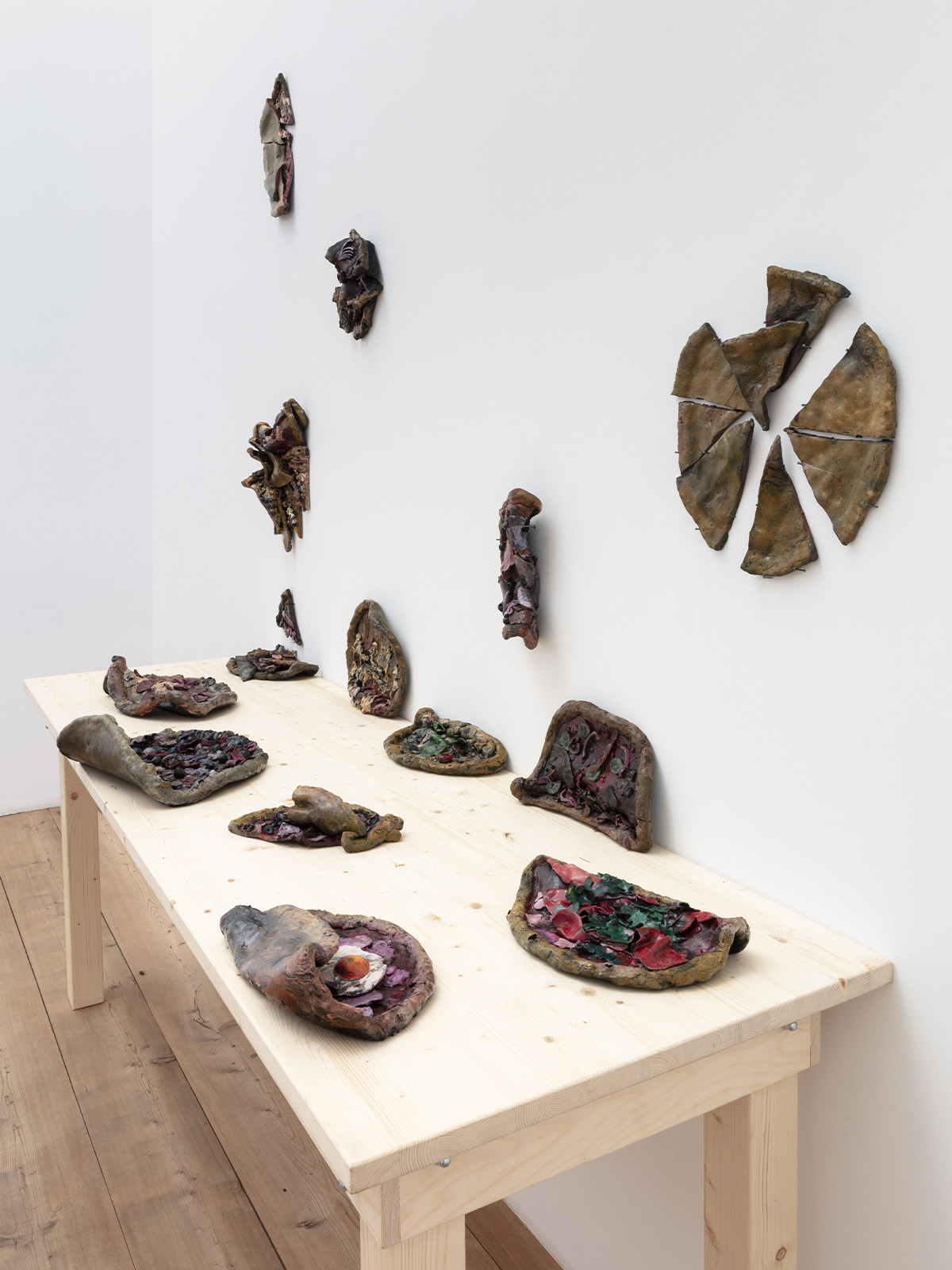
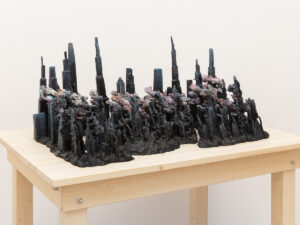
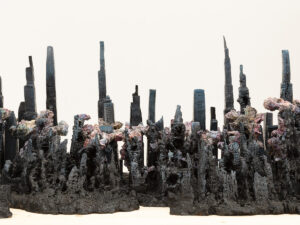
Years ago, travelling in the Philippines, I visited a beautiful island called Palawan and spent a few days in a town called El Nido, the name of which has a very interesting history: the place was very popular among Chinese merchants in the 18th century, and they discovered some edible birds’ nests on the island, and these nests were considered aphrodisiacal. In the 19th century the island was invaded by the Spanish, who called it Bacuit, but when the Philippines gained independence, they named it El Nido once again, in reference to the trade of these edible nests. I thought that the name came from the idea of a safe, protected place like a nest: how naive … It was actually the name of a group of houses that lived off the destruction of these nests. So this story is what the city symbolises for me. In 2021, during the pandemic, I worked on a series of terracotta sculptures that I called Vento Forte. These terracotta sculptures told of an explosion in an undefined place that affected all the sculpted subjects: homes, cities, a meadow, snails, pizzas in a restaurant… These ill-fated subjects were impacted by the explosion more or less intensely, depending on how far they were away from it. For me, this is Nature.

And I think that this also leads us to wonder whether your works inhabit the Prehistoric era or the Apocalypse. Is it in some way linked to the materials you select and use, like earth, but also resins?
I like to place my work in this strange limbo, which for me sounds almost like a comfort zone: we start to accept that the future will bring radical changes, like all the huge natural upheaval there was in Prehistoric times. I feel that we have created a kind of unconscious cycle in our perception of time, an awareness that change has already occurred traumatically, and perhaps the idea that it can be repeated doesn’t really scare us much. With the Bonsai Riot I liked the idea of associating a tree, the shape of which is a coercion of nature, with a material which in turn did not exist before us, plastic. Plastic is oil-based, and oil comes from the incomplete decomposition of organic remains accumulated over millions of years. There are really ancient marine organisms in the material we are burying the planet in. And this concept is fundamental in my Prehistoric-Apocalyptic vision. The false narration starts from mixing terracotta and plastic; the vase and the trunk are made of earth, while the rest of the plant is made of a steel frame and resins. The vase and trunk are as if they are melted together, while the rest of the plant weaves around false, sinuous forms. In Bonsai Riot I went back to the memory of the huge plants I studied when exploring the jungles – unspoiled and not – and felt a strange nostalgia, that hits you in the throat and never leaves you.