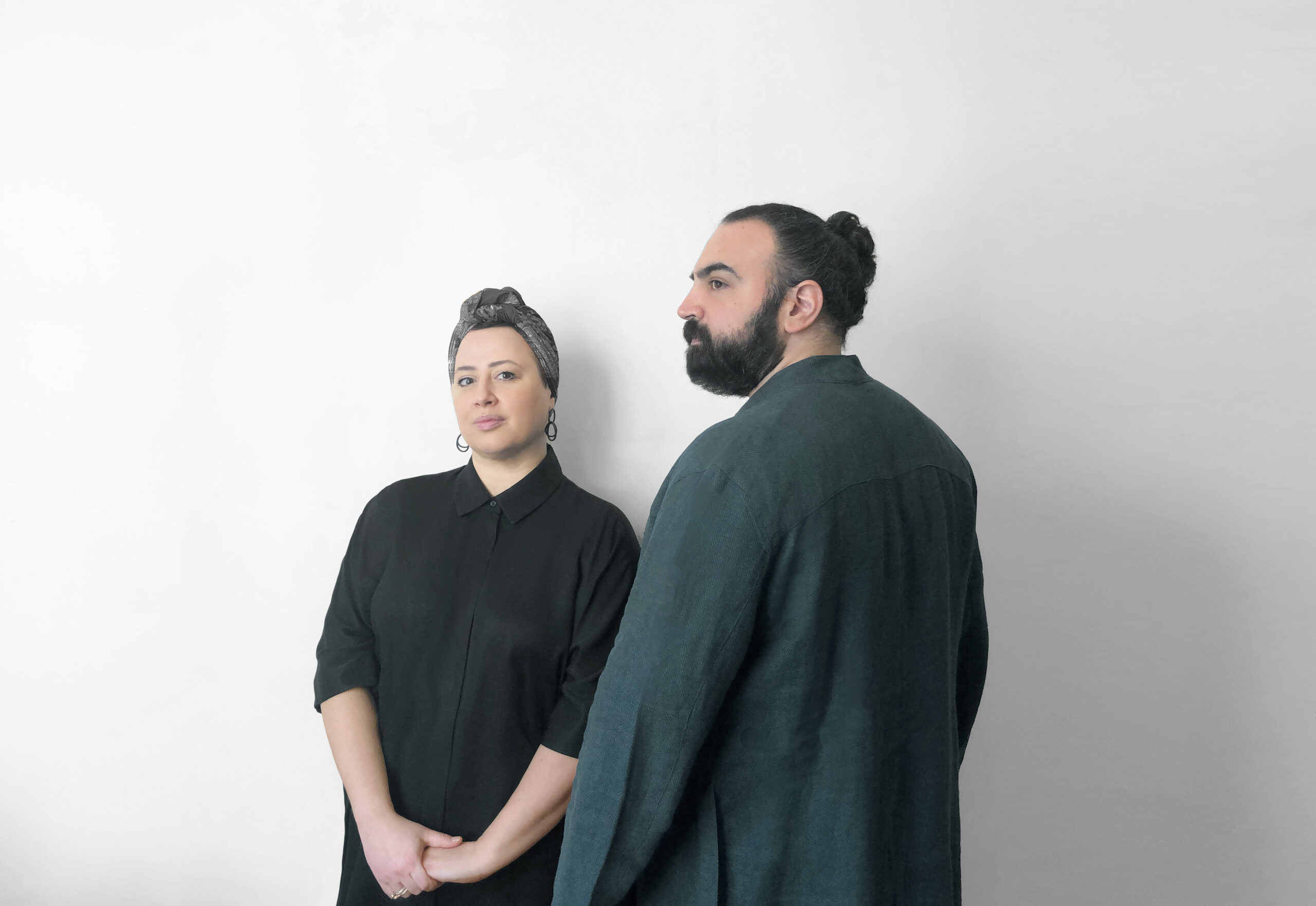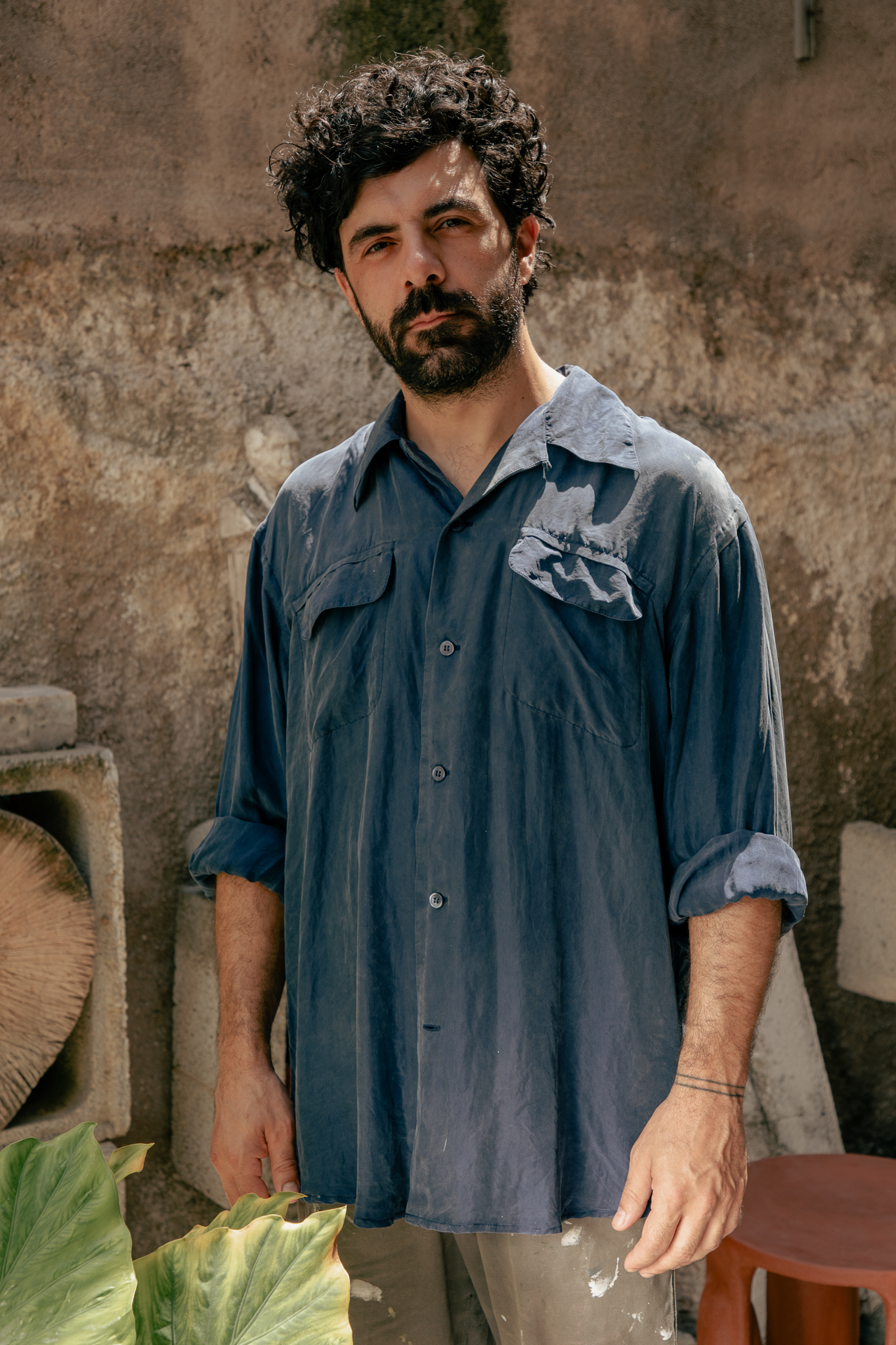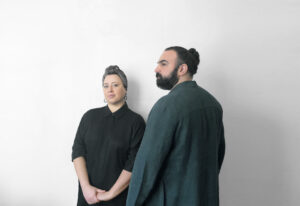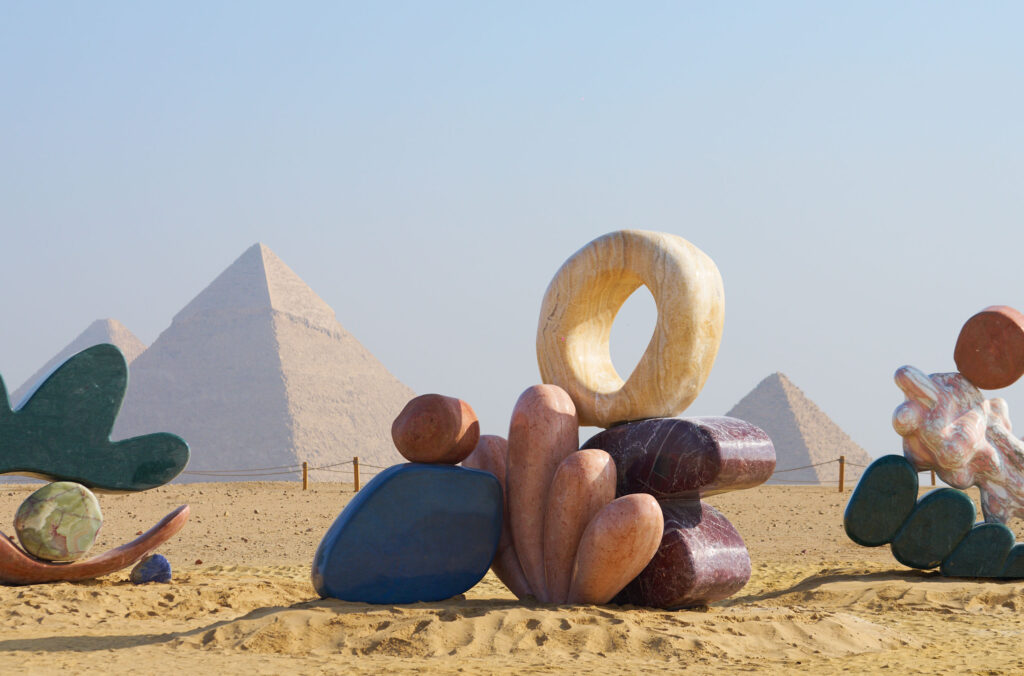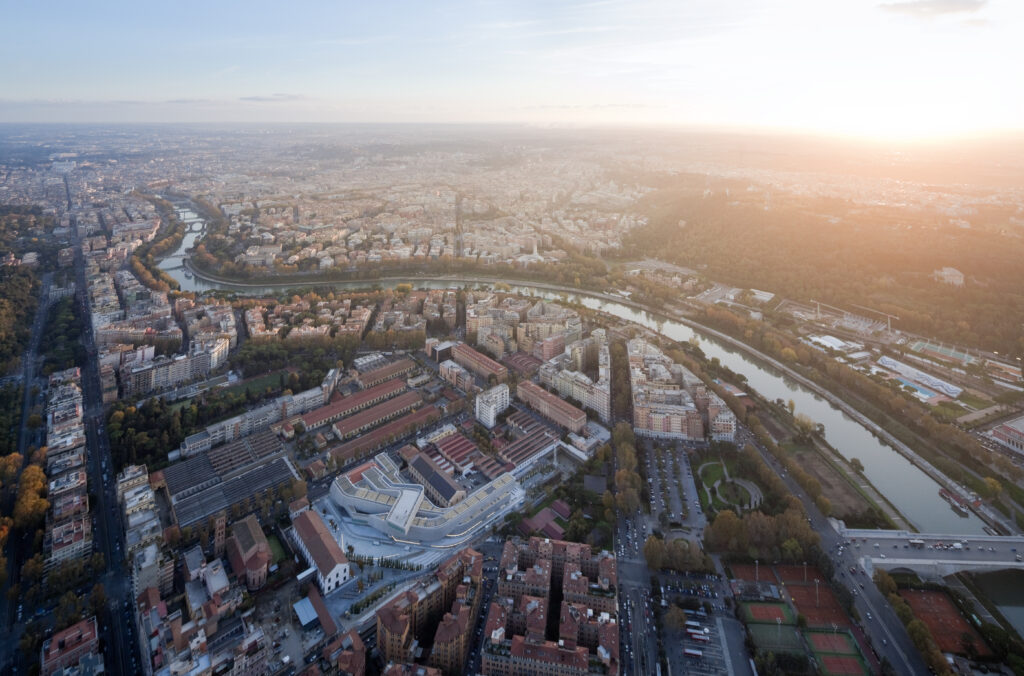


History is a constant and practically inescapable presence in cities like Rome and Athens. Their inhabitants are surrounded by all kinds of traces, and walk through open-air museums, on ground that holds millennia of stratifications. For design professionals, this relationship with the genius loci of the city means working daily with a huge archive of shapes and forms, leading to questions on how to tap this heritage and, more generally, what is the correct relationship between the classical and the contemporary. The designers Eleonora Carbone and Alessandro D’Angeli live in Rome, where in 2020 they set up the firm Næssi, pooling two already launched careers in architecture and product design. Since then, they have been designing consumer goods and small series for collectors, producing graphic works and set-ups, with two constant features: a passion for cross-connections (the name Næssi alludes precisely to this, the connections of concepts and people) and a commitment to identifying formal solutions that speak the language of today while exploiting the lessons of the past.
Right from the outset, it was impossible for them to ignore the special features of their own city. “Setting up a design firm in Rome somehow implies a dialogue with an overpowering, extraordinary yet also engulfing genius loci,” Eleonora Carbone explains. “You can work in three ways: refusing, and going beyond; literally reproposing universally-known stylistic features and concepts; or it is also possible to relate to and recognise the past, but from just the right distance to avoid getting trapped in it. We are following this third path.” Ancient Rome can be found in several projects curated by Næssi which, not by chance, have Latin names, and indeed their Roman-ness goes even further.
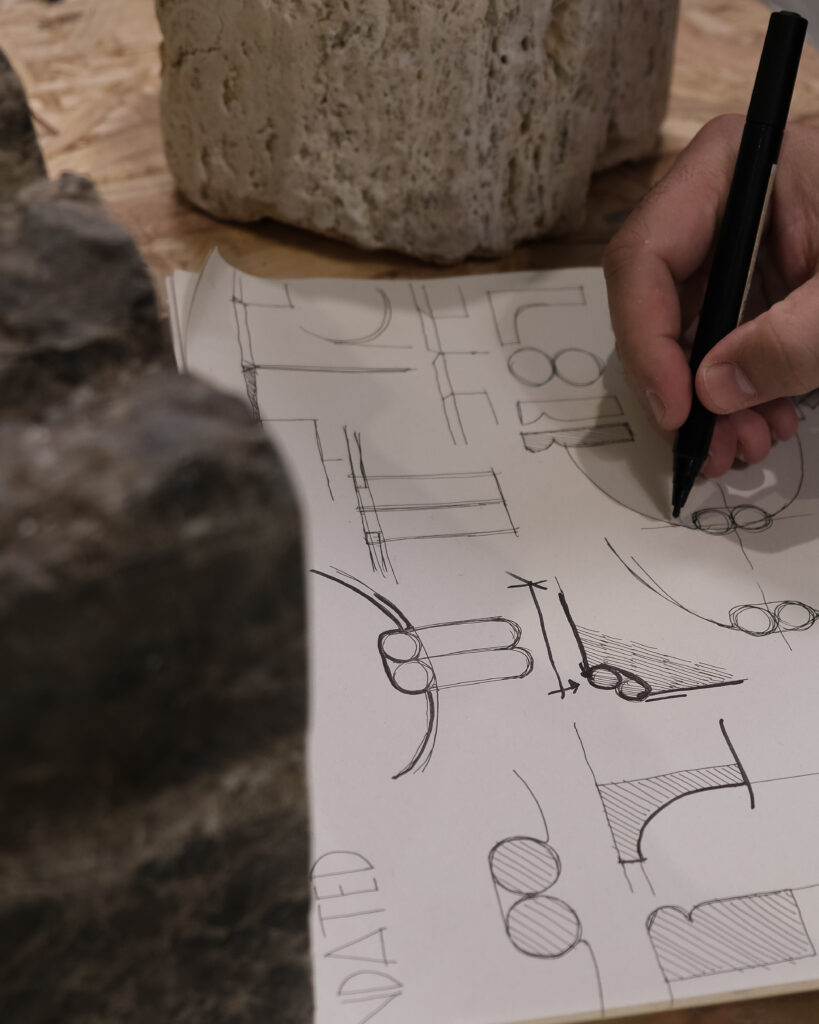
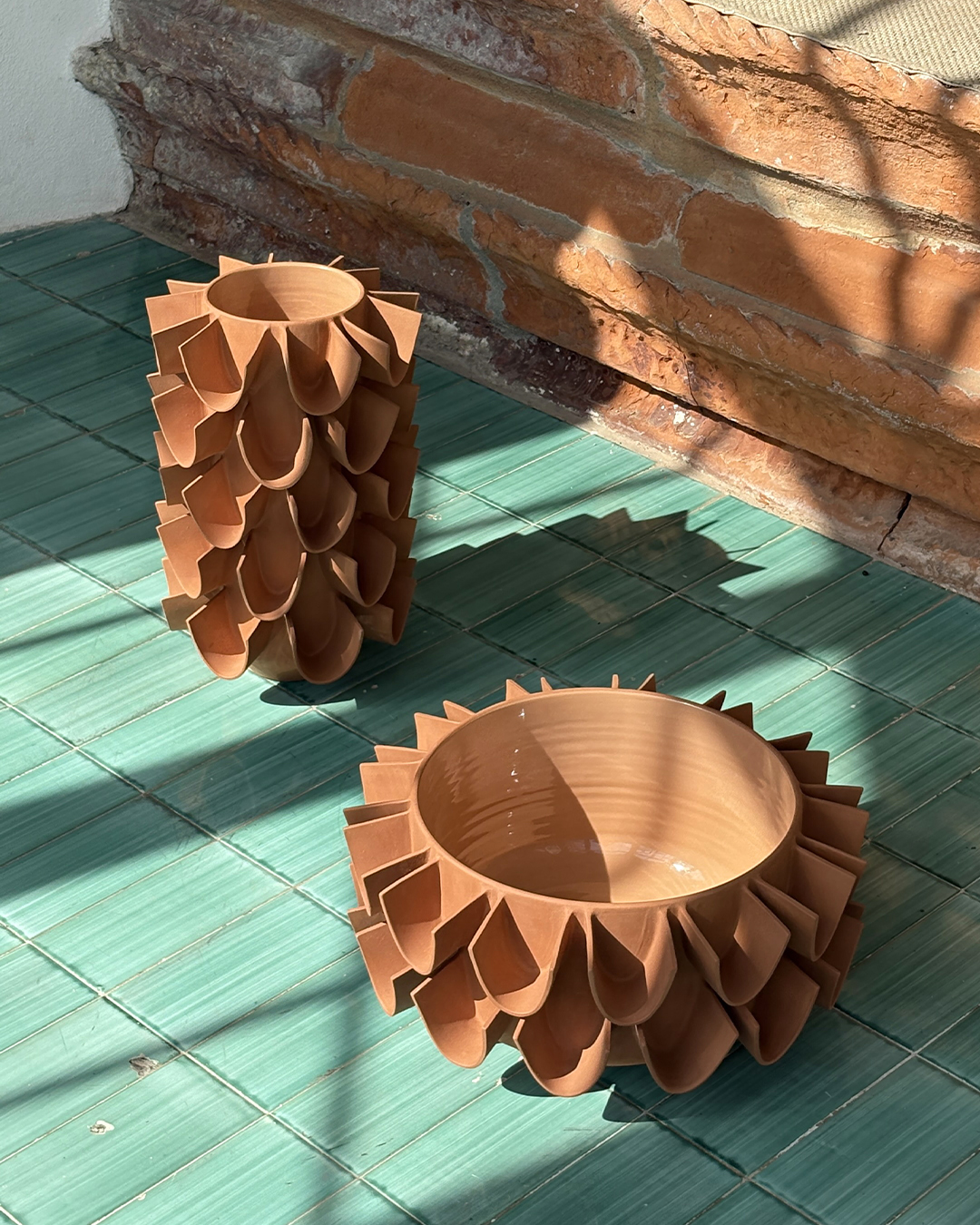
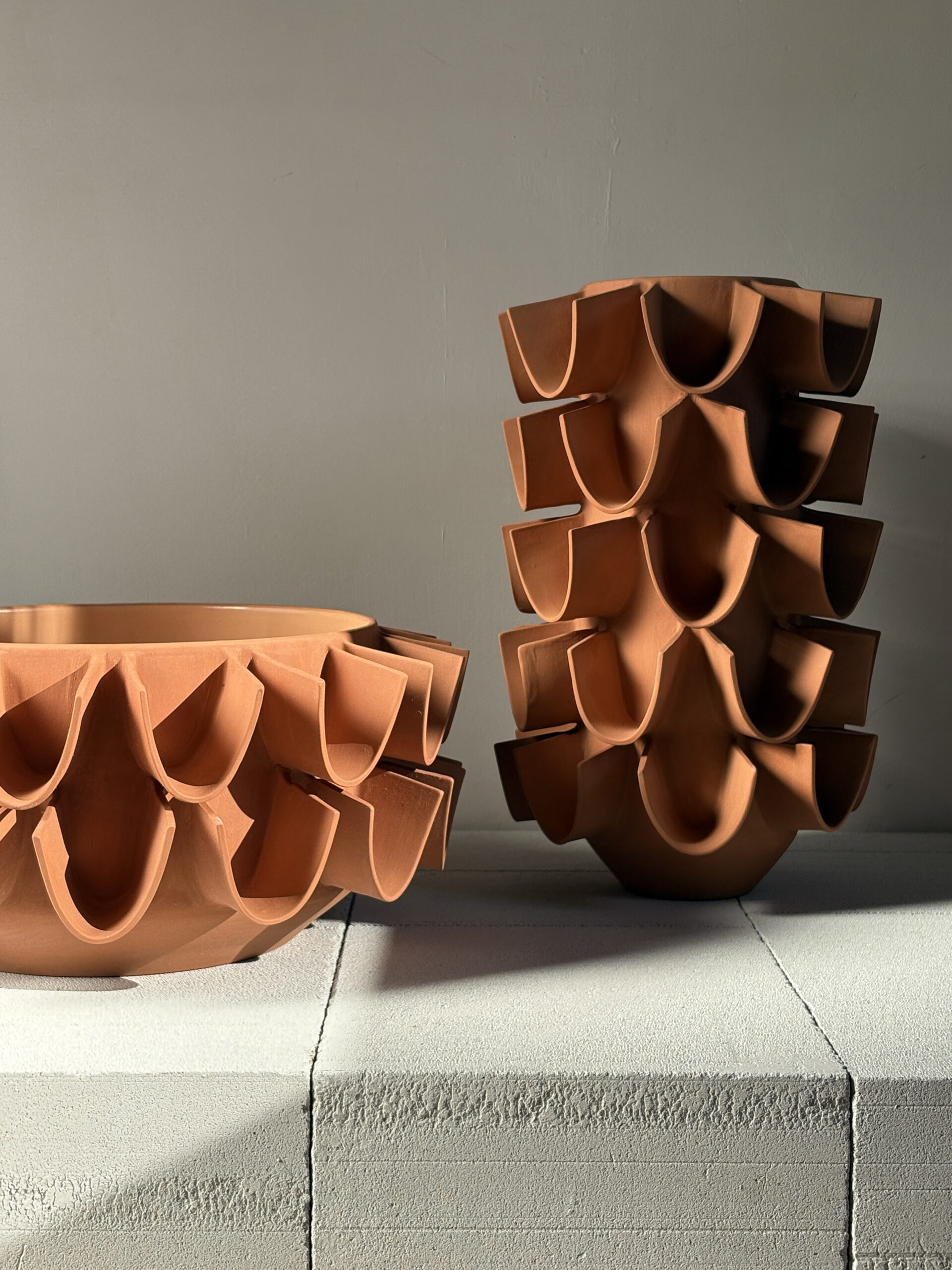
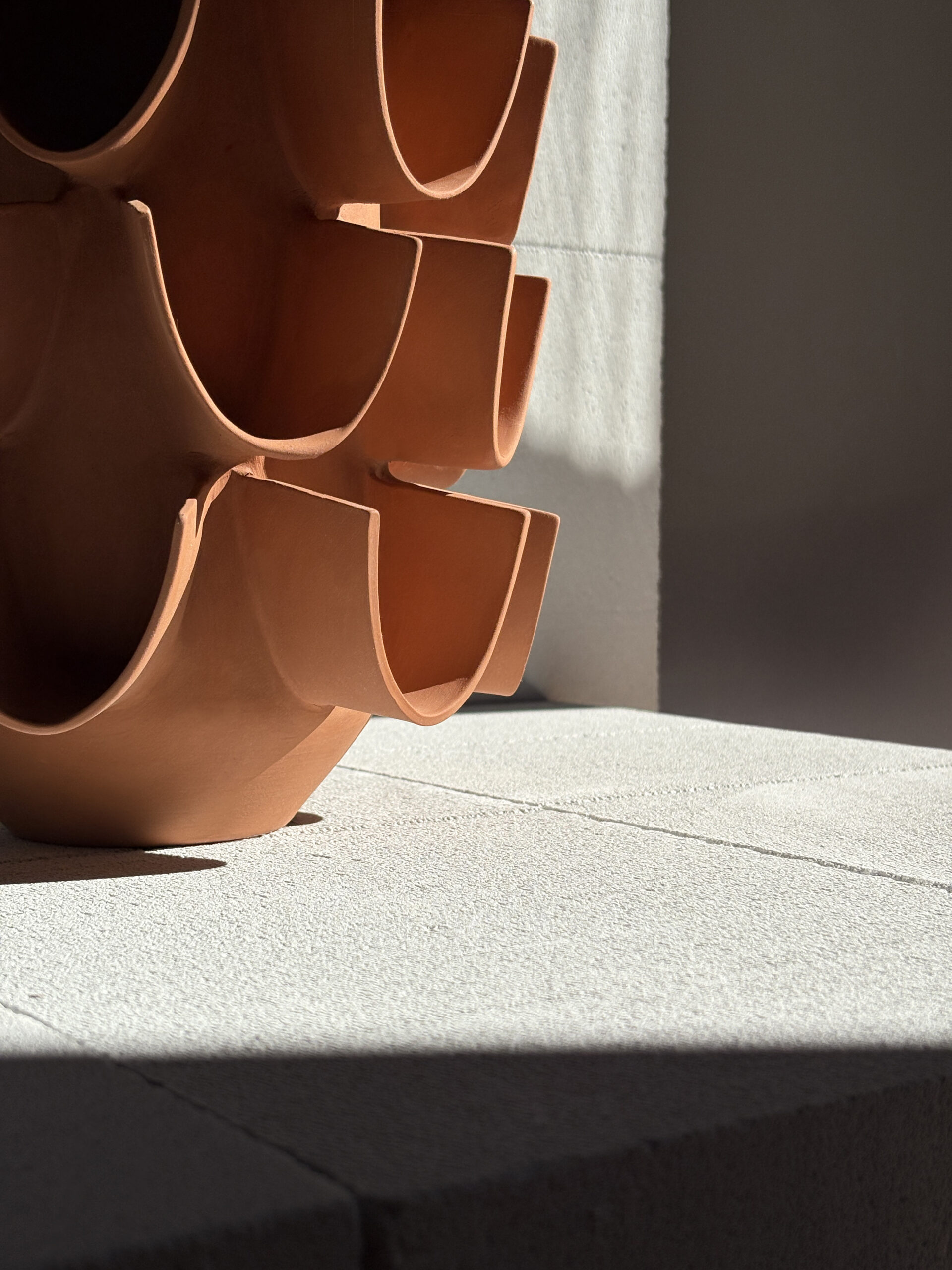
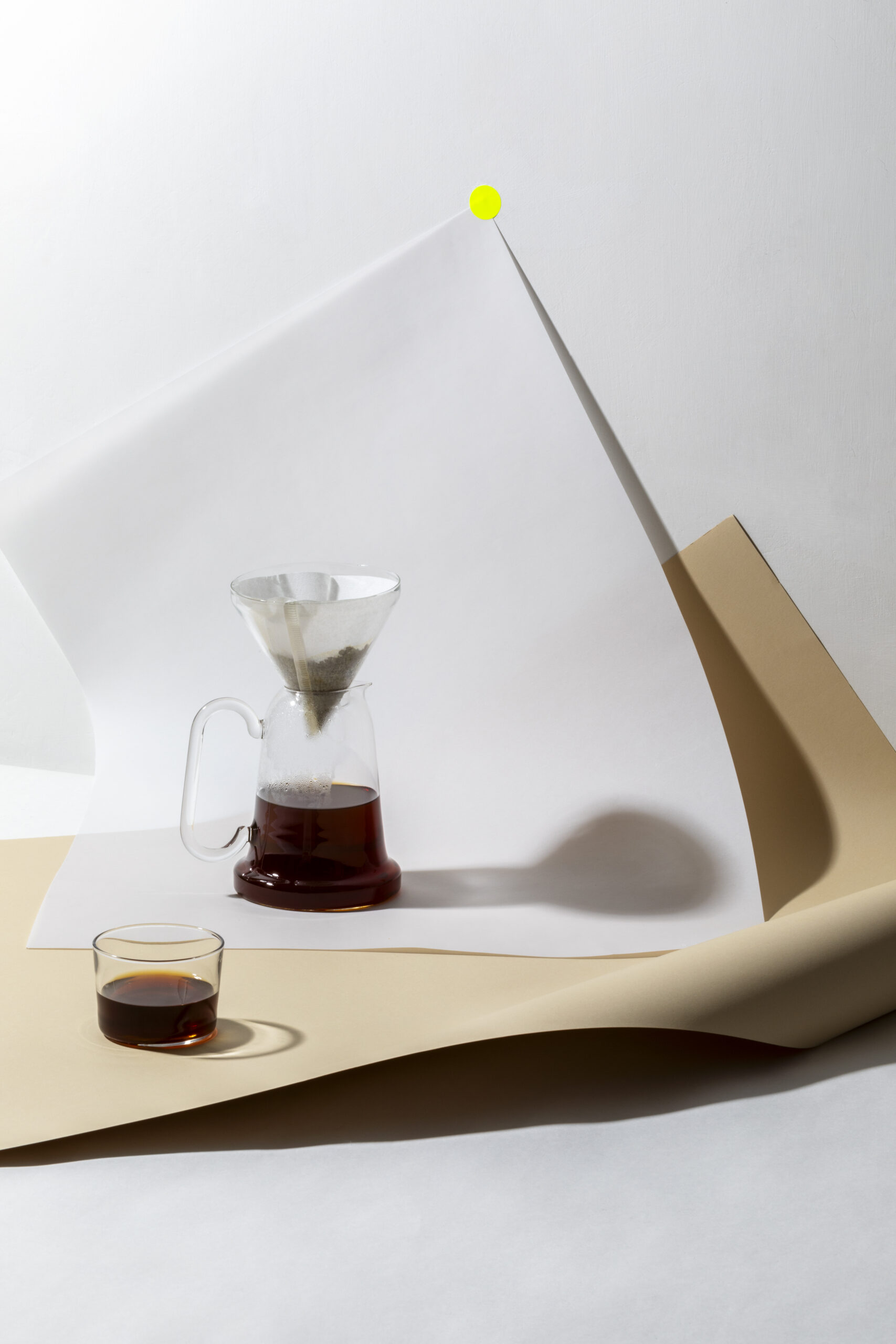
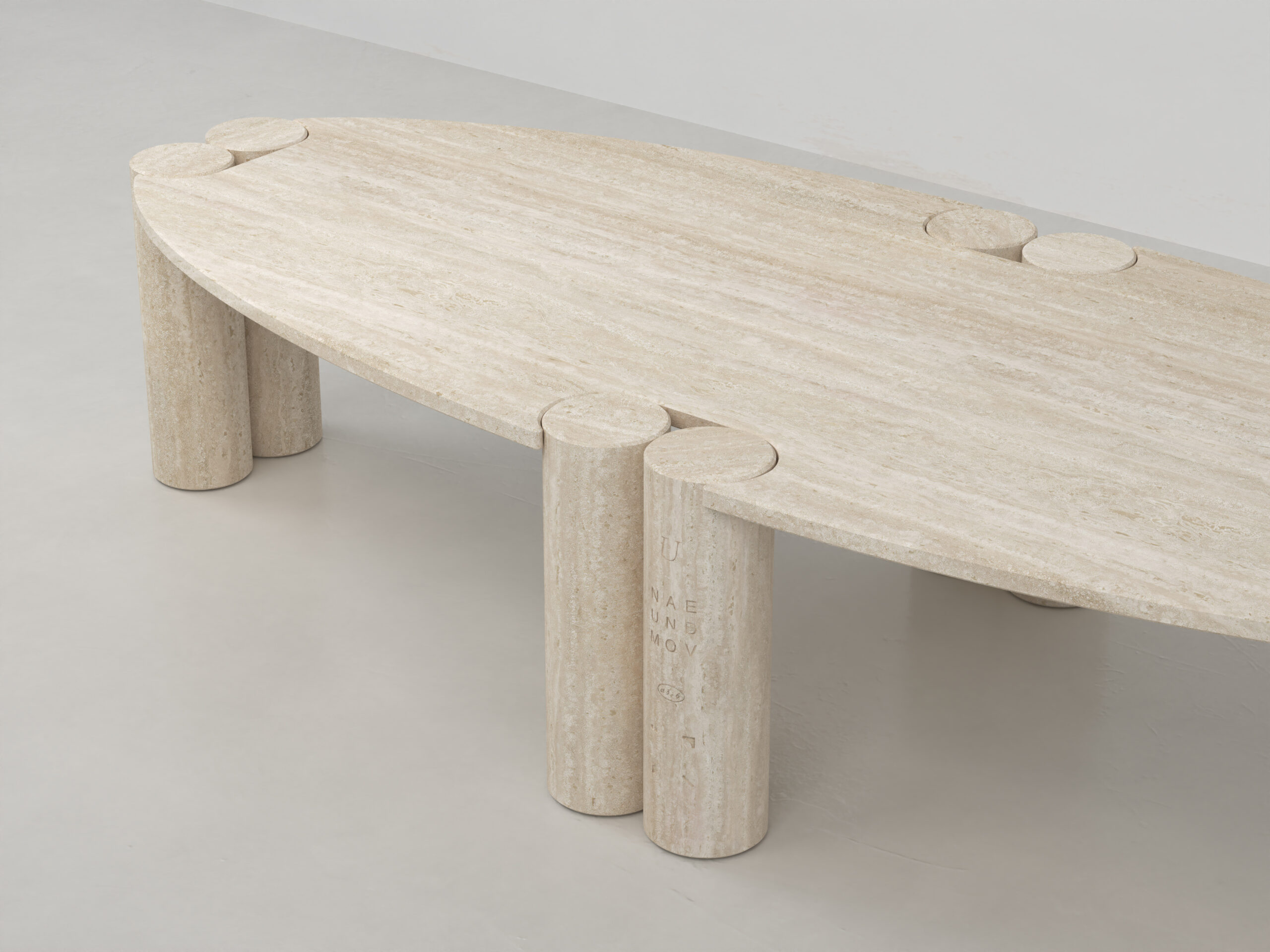
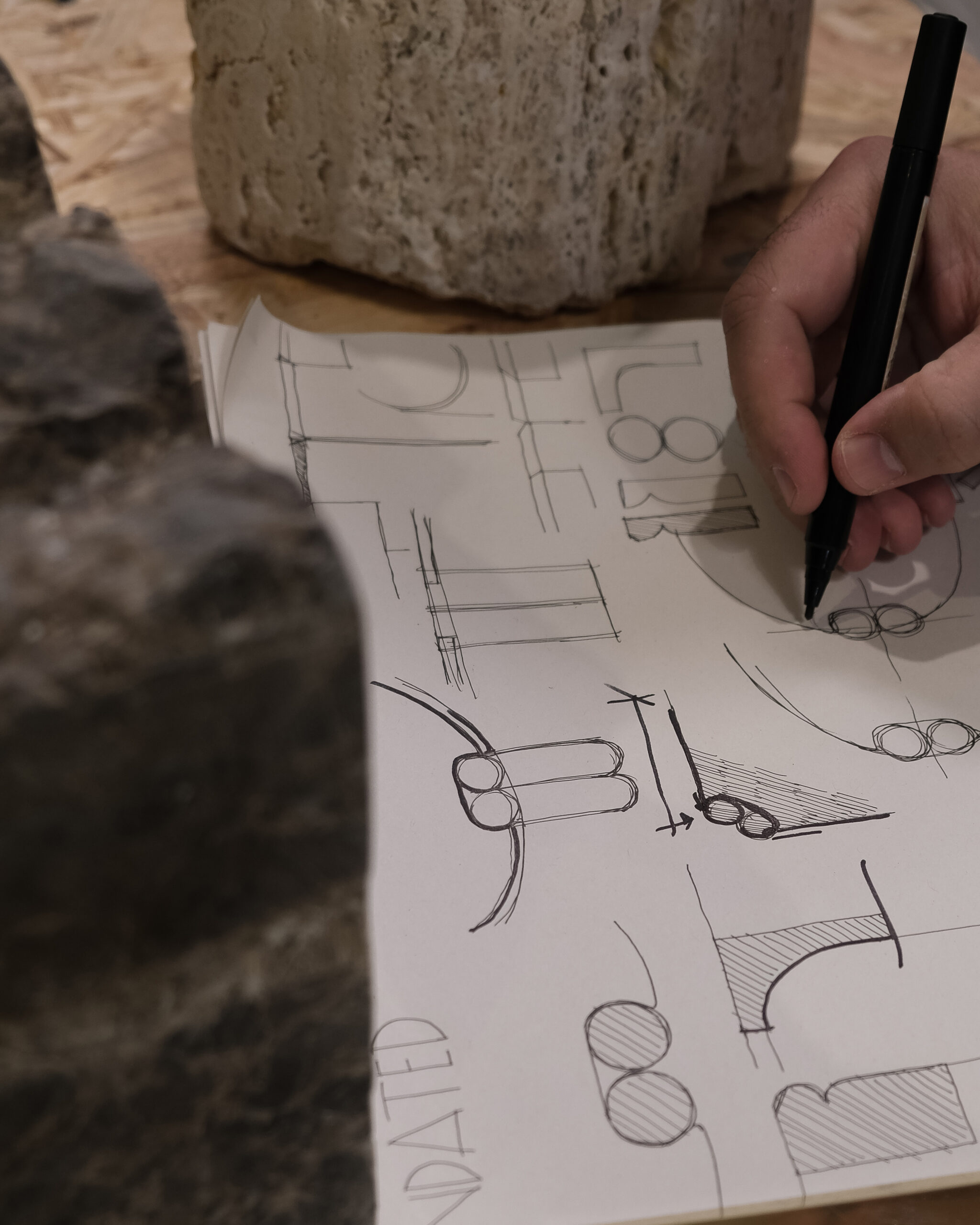
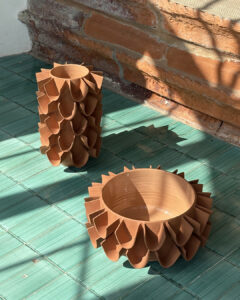
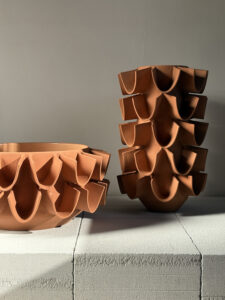
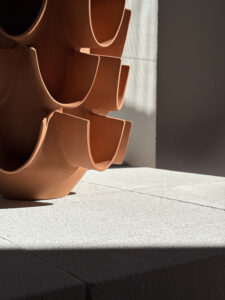
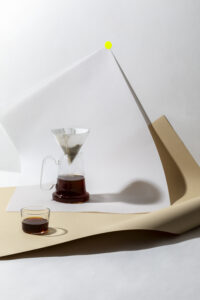
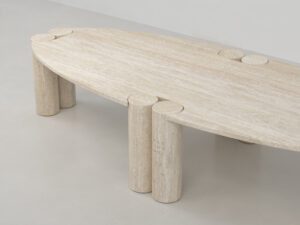
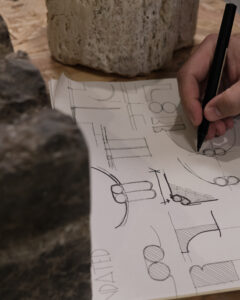
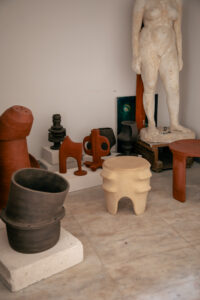
The Otium coffee pot collection designed in 2023 (Ichendorf Milano), for example, ideally reconnects to the shapes of Etruscan and Roman containers, but also to the Latin concept of idleness as productive stasis, the elevation of the spirit while performing a simple gesture, like sipping a drink. The Testae vases (2025) on the other hand are the result of the exploration of a very specific place: Monte Testaccio or ‘monte dei cocci’ (‘the mountain of broken pieces’, an artificial mound built during the Roman Empire from broken amphorae which there, near the port on the Tiber, were emptied of their contents and then broken and discarded. Selected and multiplied, the terracotta fragment becomes the starting point for a new object with a contemporary language. The Undated marble tables (2025), designed for the Milan-based Movimento Gallery, have a rigorous, solid structure reminiscent of ancient buildings supported by massive columns.
“We like to think of the classical not only as an legacy of the past but as a vital element that can contribute to the present and future: every day we add new items to our shared list ‘Roma. Da visitare’. But the conversation between us and the ancient is circular: there is no observed and observer, no material for inspiration and inspired material, no start and end. It is more a continuous ping-pong of research, development and, subsequently, new developments of the same material,” the designer explains.
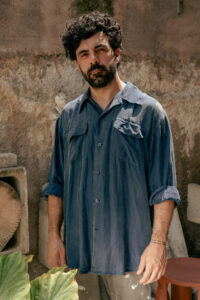
While Eleonora Carbone and Alessandro D’Angeli were studying in the Eternal City, in Athens Harry Rigalo began to focus on architecture, from an unusual vantage point: the building sites that sprang up across the city ahead of the 2004 Olympics, forced to stop every now and again due to archaeological finds. Working among scaffolding and bags of cement, Rigalo taught himself the language of materials, for example understanding how metal is bent or what characteristics a structure needs to stay upright. An education made of trial and error, but of course also of encounters. “I met people who did everything to find a creative dimension in their work,” the former labourer – today a designer and sculptor – recalls. “Sometimes the only way to cope with pressure, fatigue and the feeling of having to tackle a task ‘too big’ is to try to transform your own part of the work into something beautiful.”
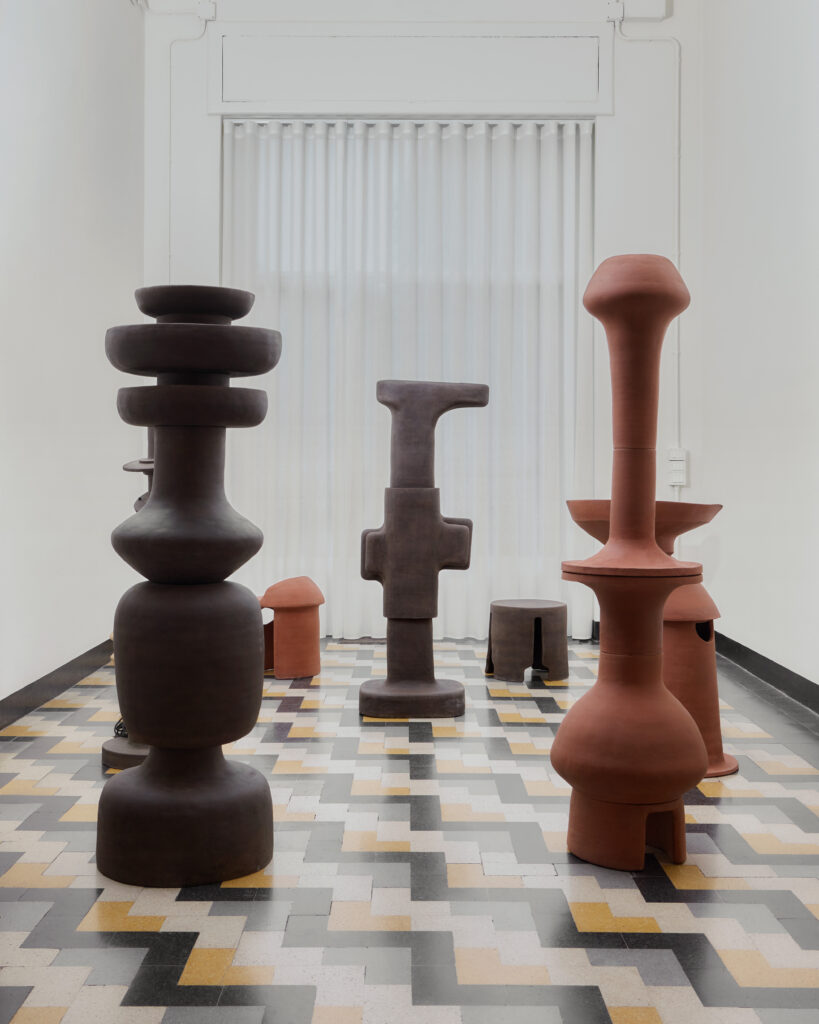
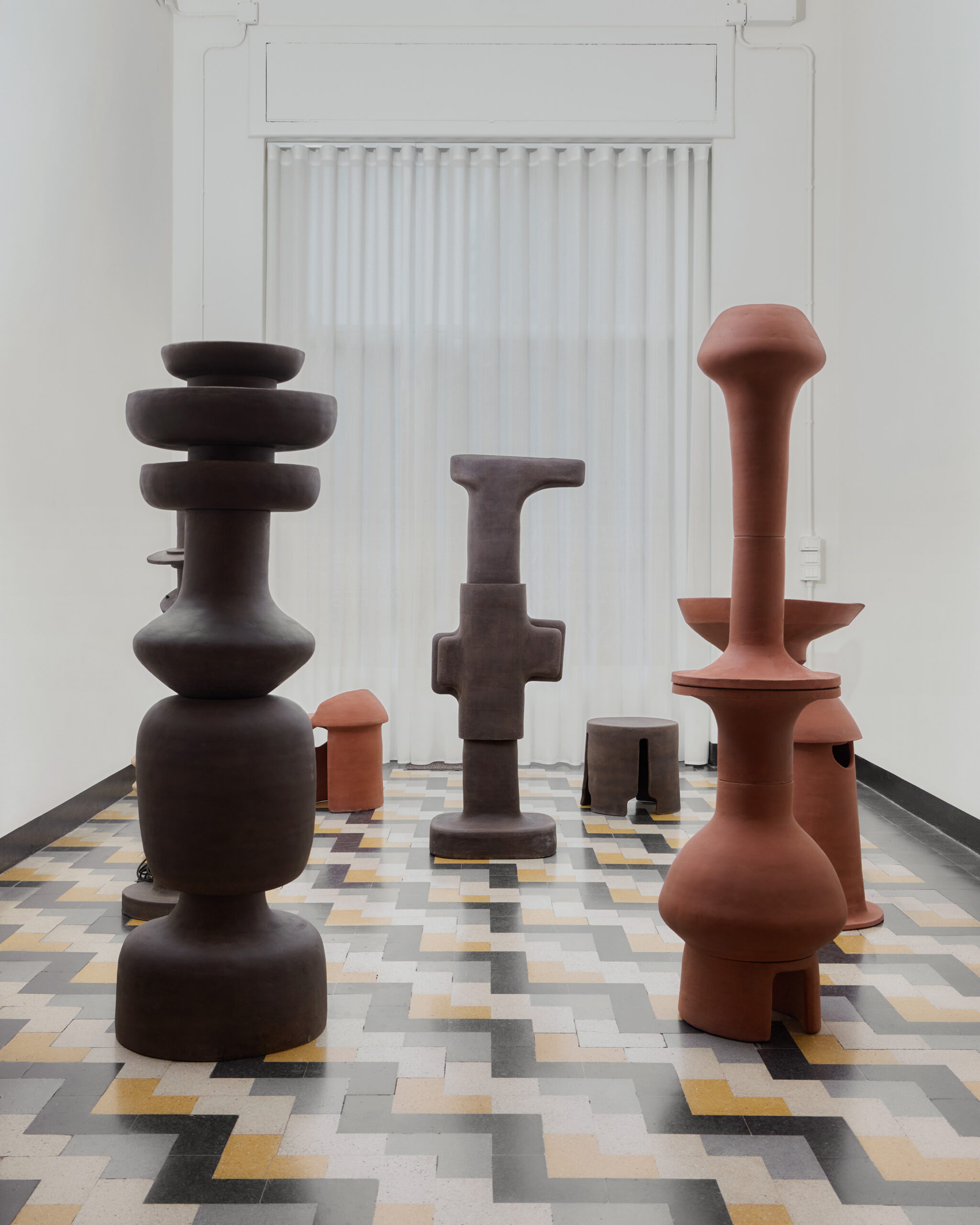
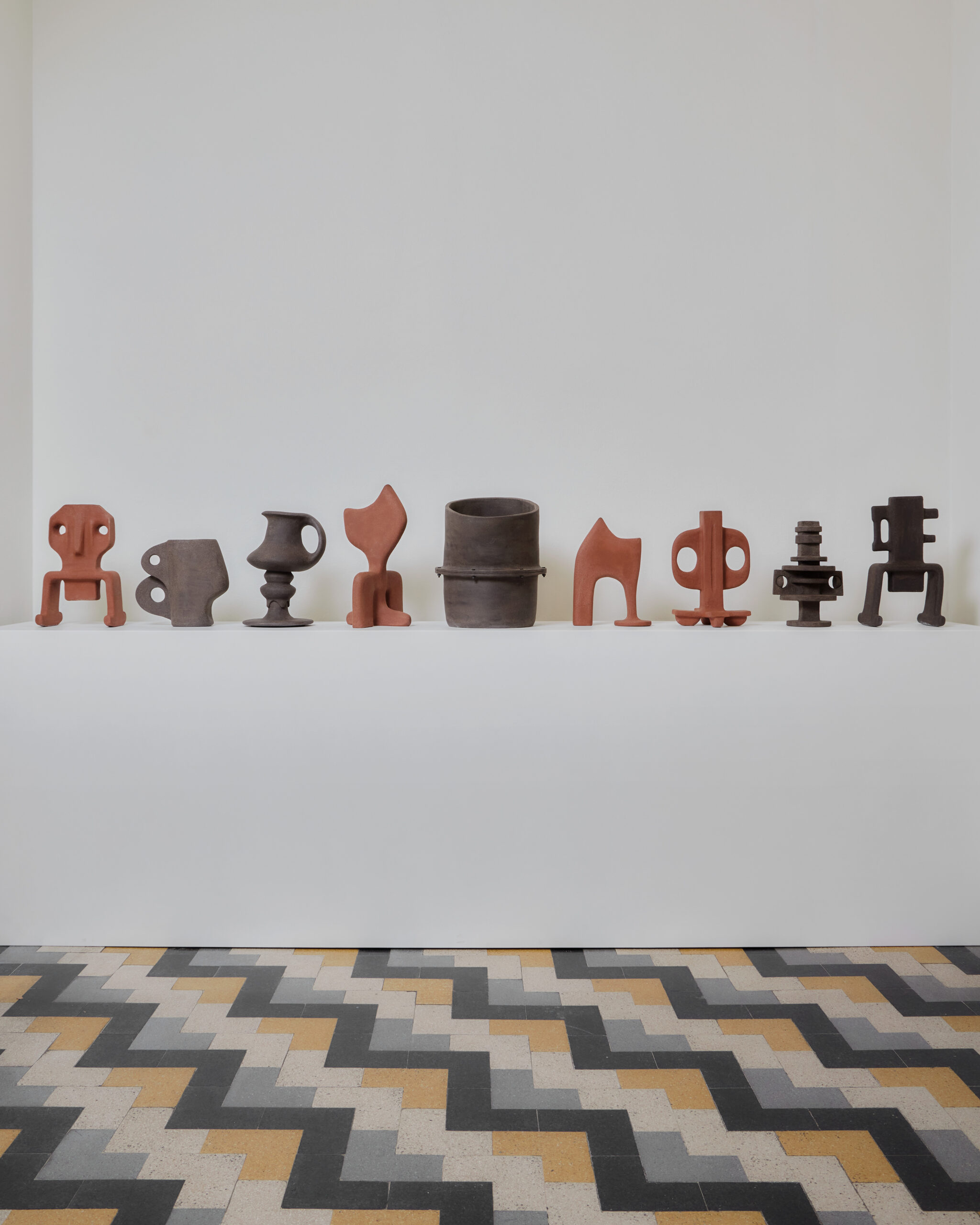
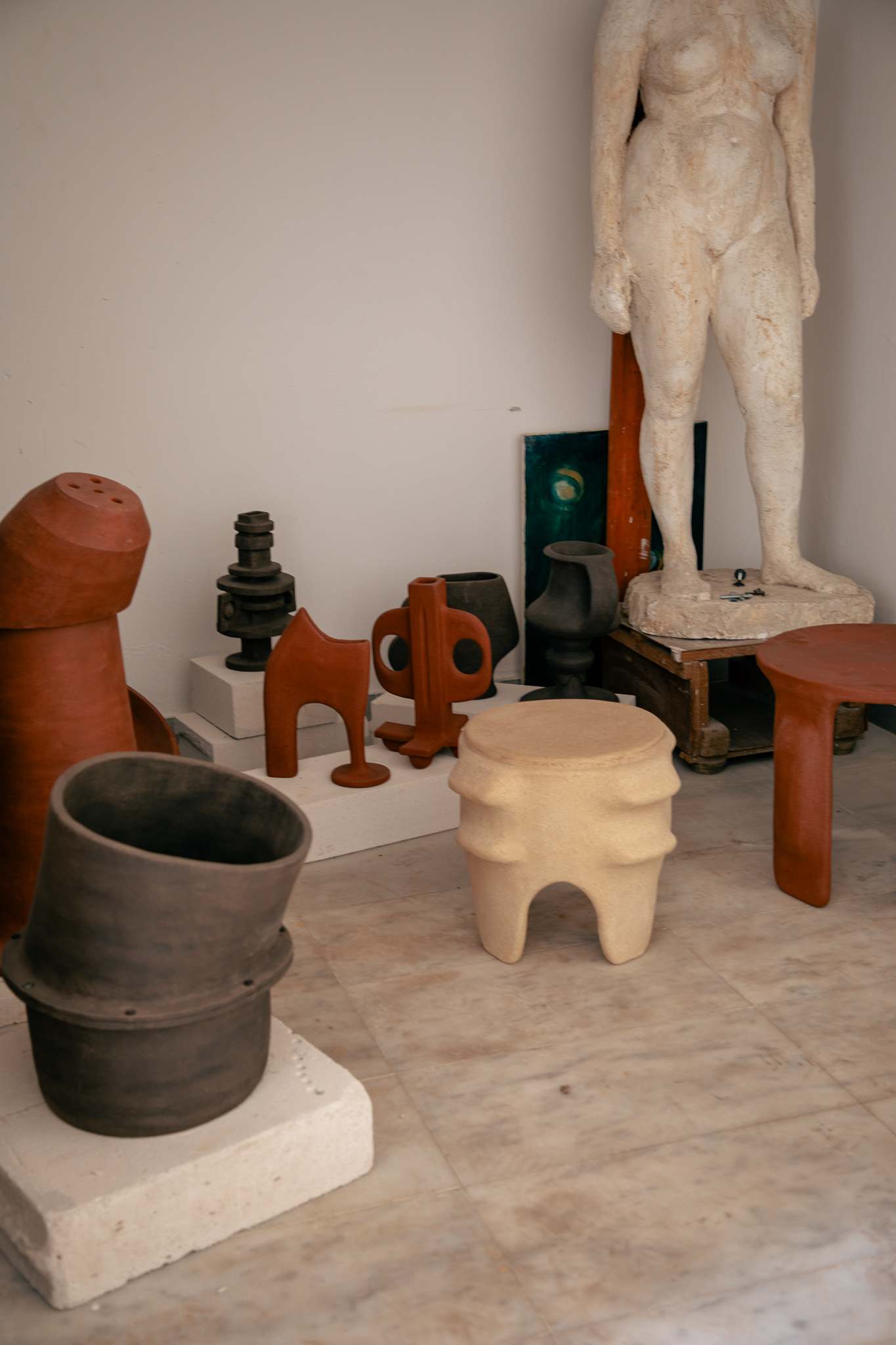
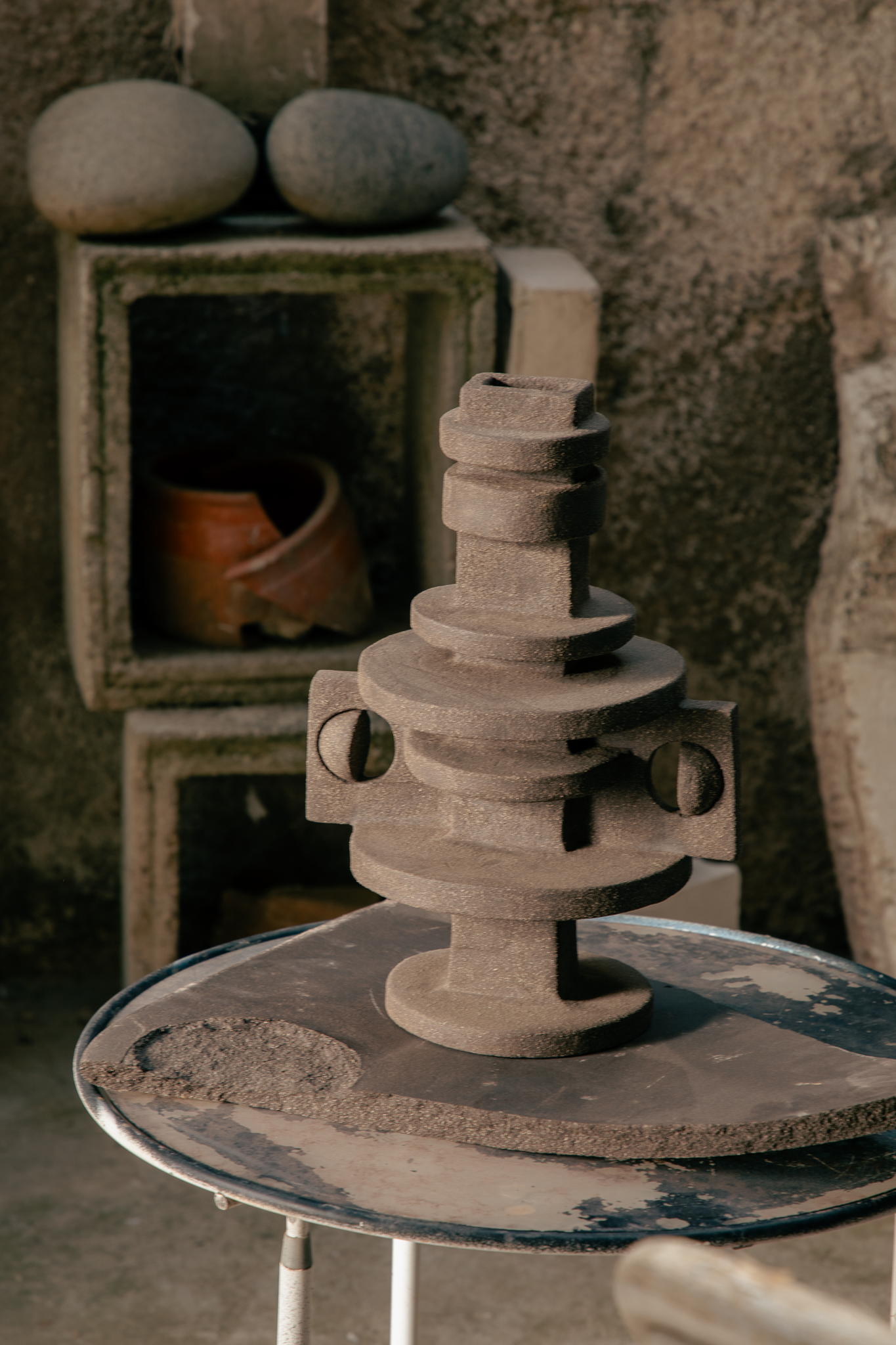
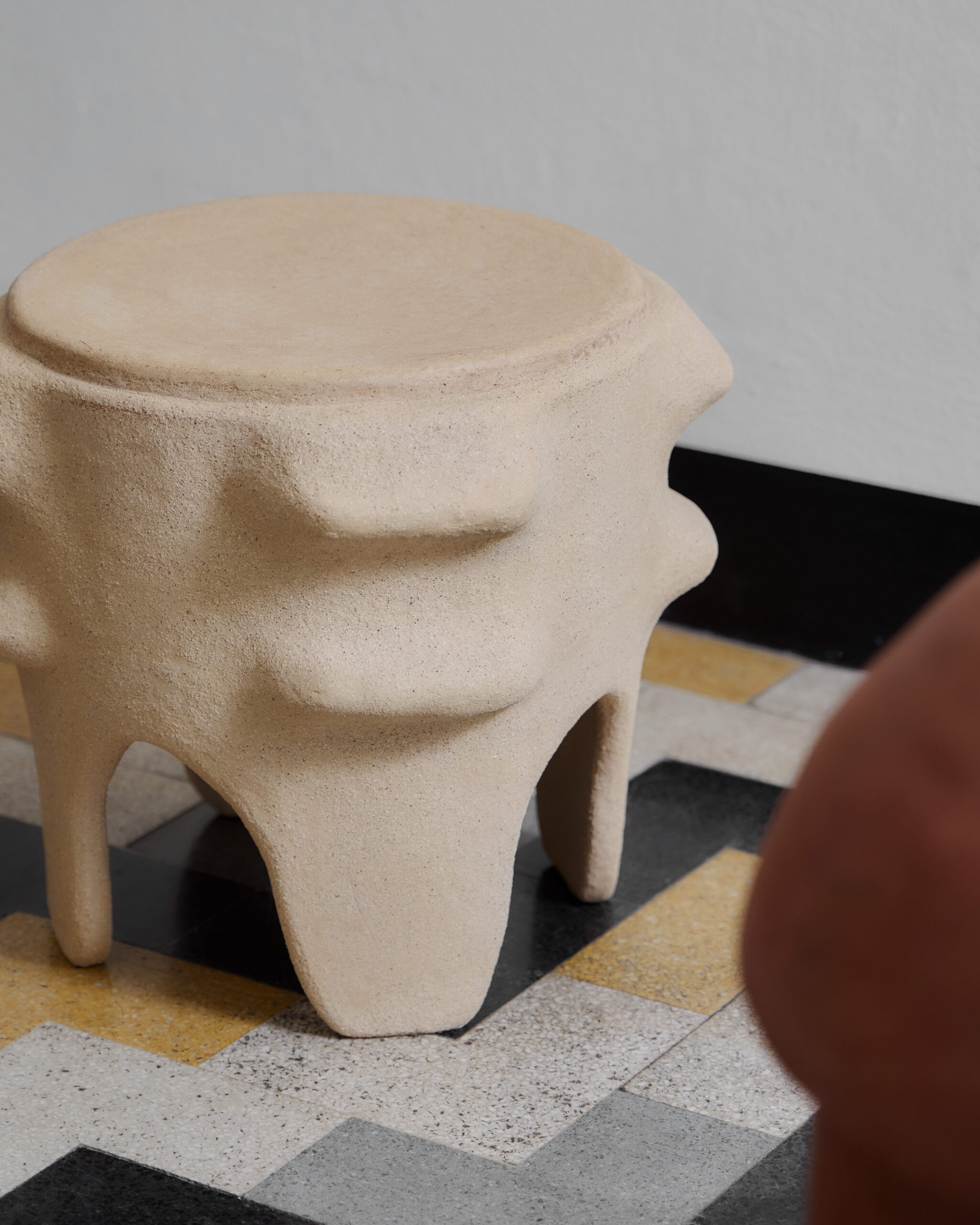
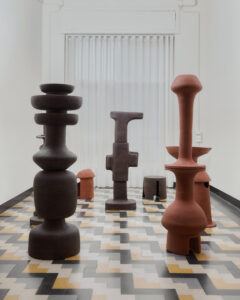
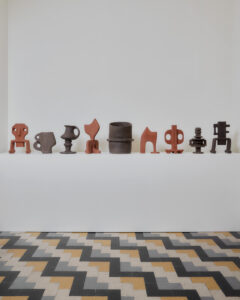
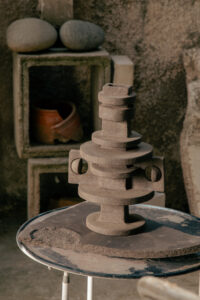
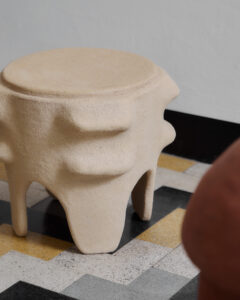
Rigalo’s creations, recently displayed in Milan at The Great Design Disaster gallery, confirm his close attention to the behaviour of materials and production processes. Designed as totem-objects in raw clay, some of which are almost two metres high and only in some cases wink an eye at function (stools, coffee tables or vases), have smooth, primordial shapes and references to the classical world. Their names too – Helmet, Isofagus, Tetrapous for example – seem to evoke the Greek atmospheres in which the tales of mythological creatures and semi-gods mix with childhood memories. But it would be simplistic to interpret only that: “I grew up in a place where history is very much present, often full of implications, yet in my practice this is not a point of reference,” he explains. “I am interested in creation as active participation in the world’s movement, rather than as a representation of an already narrated past. My work doesn’t feed off specific forms or historical lexicon, but begins with the process itself, with research, through direct, physical relationships with the material, an idea of beauty that may have existed and has been lost or dismissed. Where affinities with the ancient world emerge, I see them more as the result of a timeless tension towards beauty that has always belonged to humanity”.