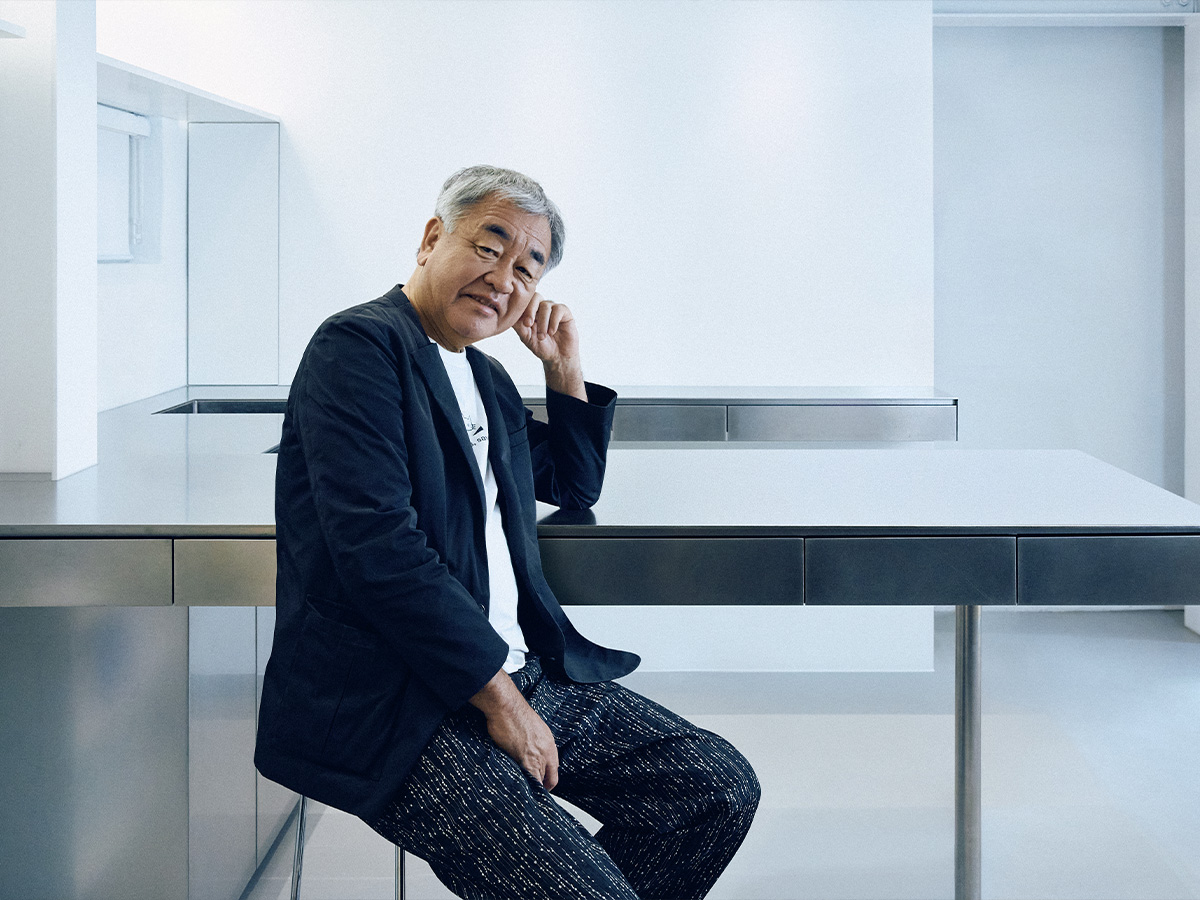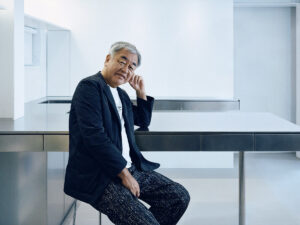


“The memory of humanity has a connection to the forests”, states Kengo Kuma, world-famous Japanese architect who has made wood the subject of some of the most influential research works of the last decades. Talking to humus, Kuma illustrates Domino 3.0: Generated Living Structure, a recent and paradigmatic project that renews a dialogue with nature and history. In his works, from the monumental Yusuhara Wooden Bridge Museum in Japan (2010) to the Albert-Kahn Museum in Boulogne-Billancourt, France (2022), over the years Kengo Kuma has practised a continuous exercise of memory and relations, in which wood is understood as an archive of time and landscape.
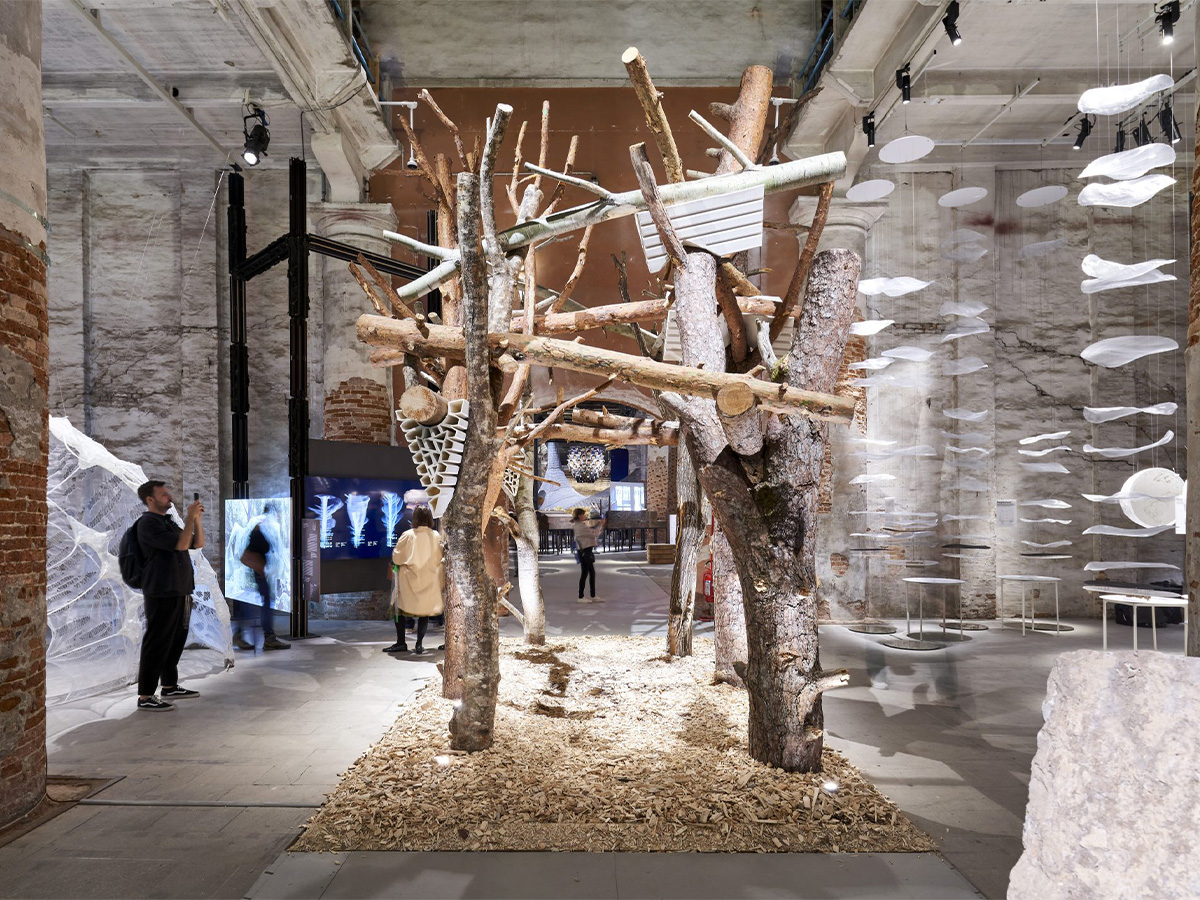
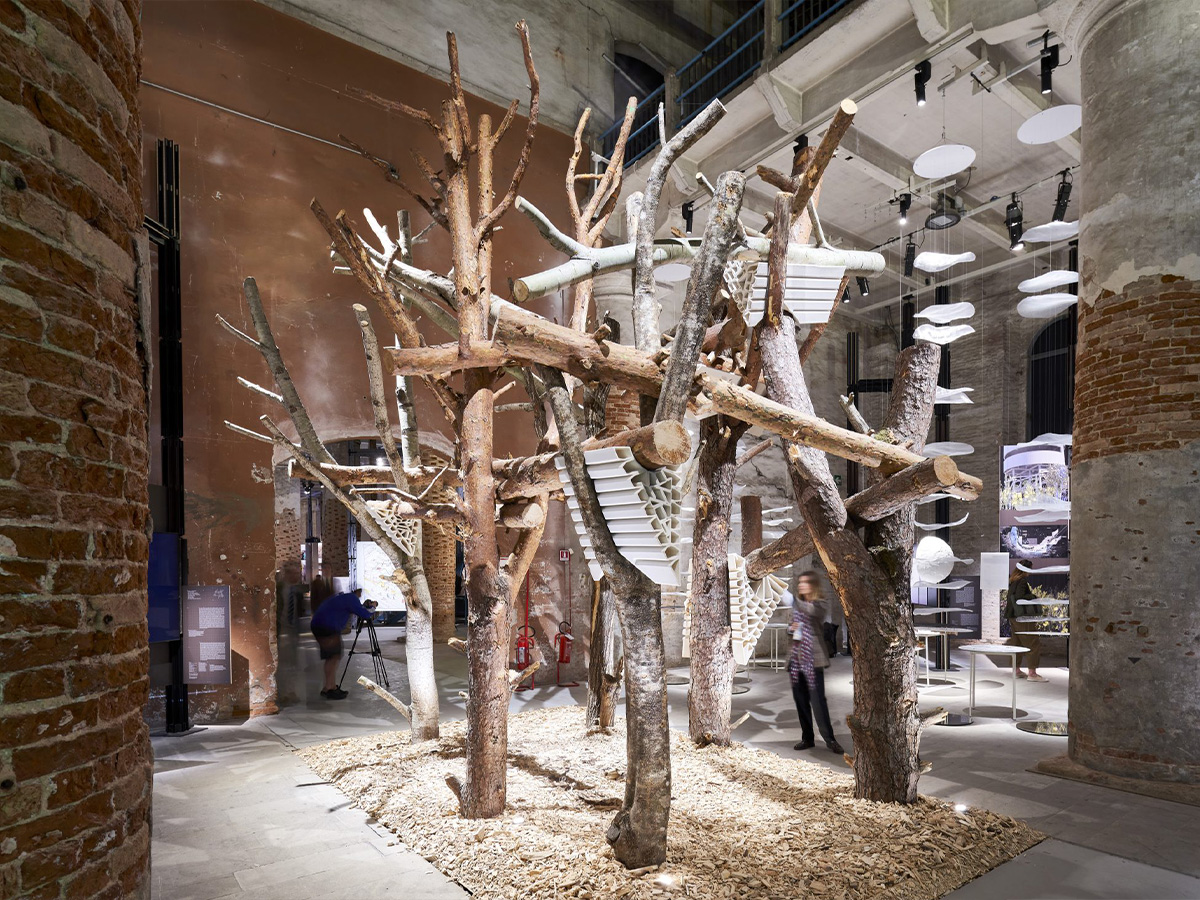
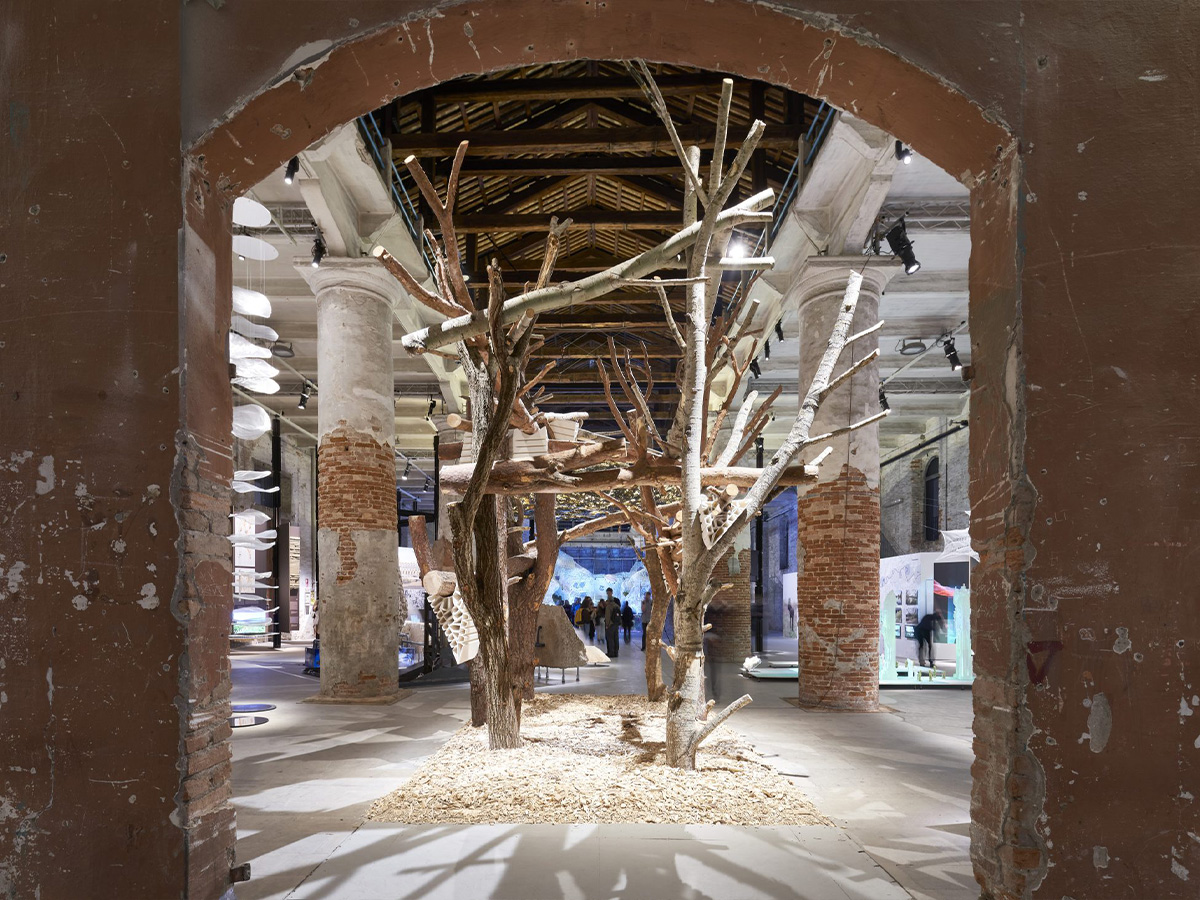
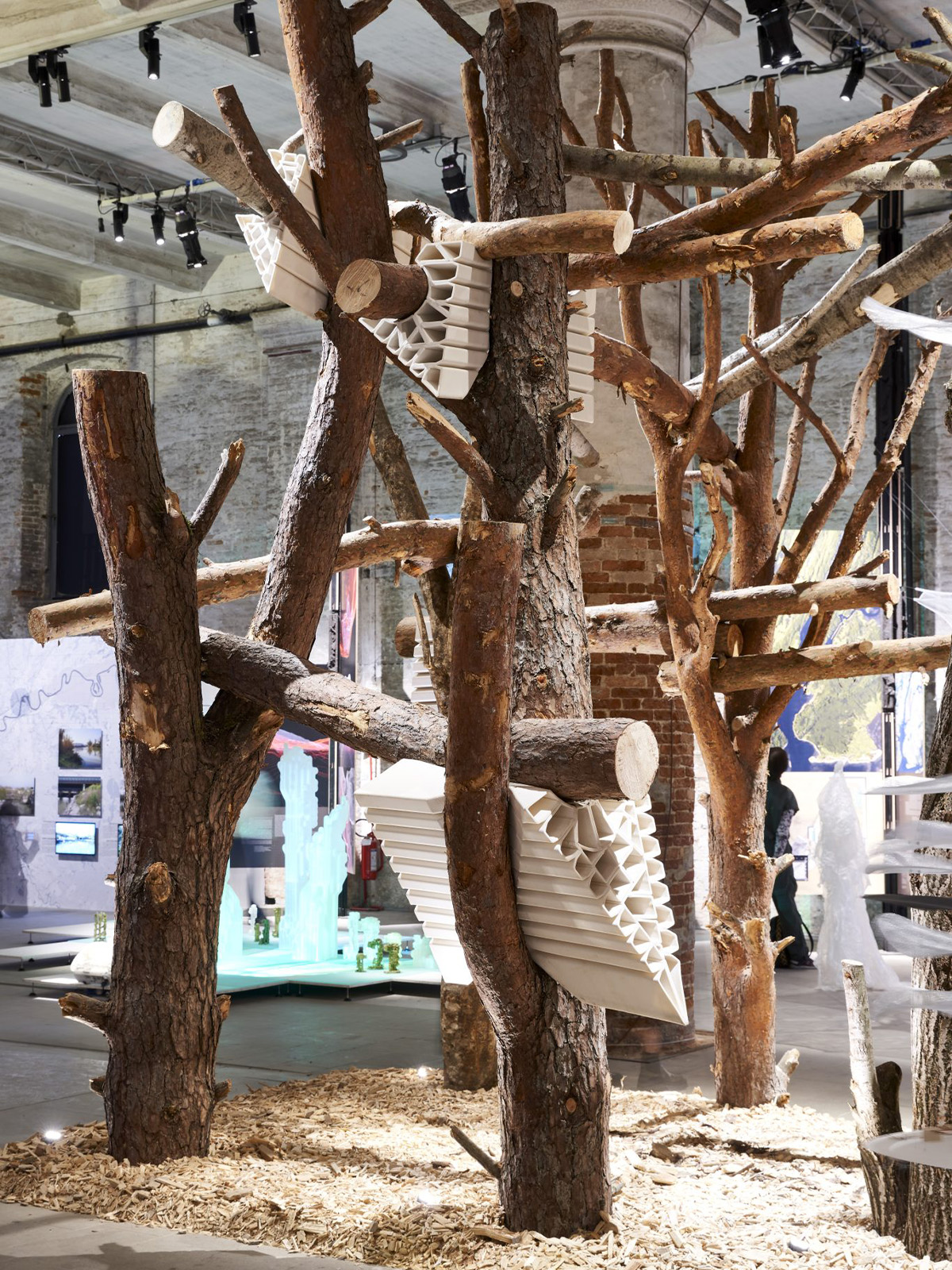
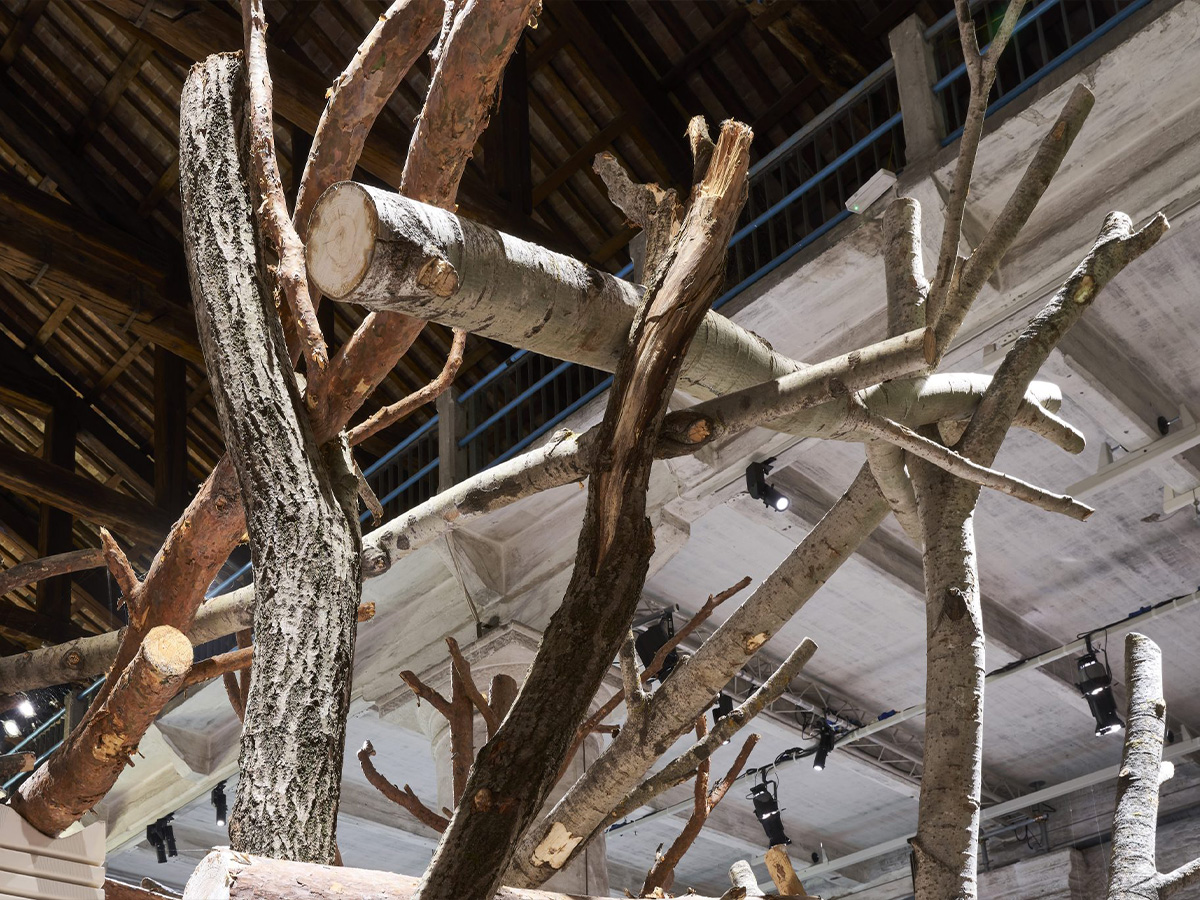
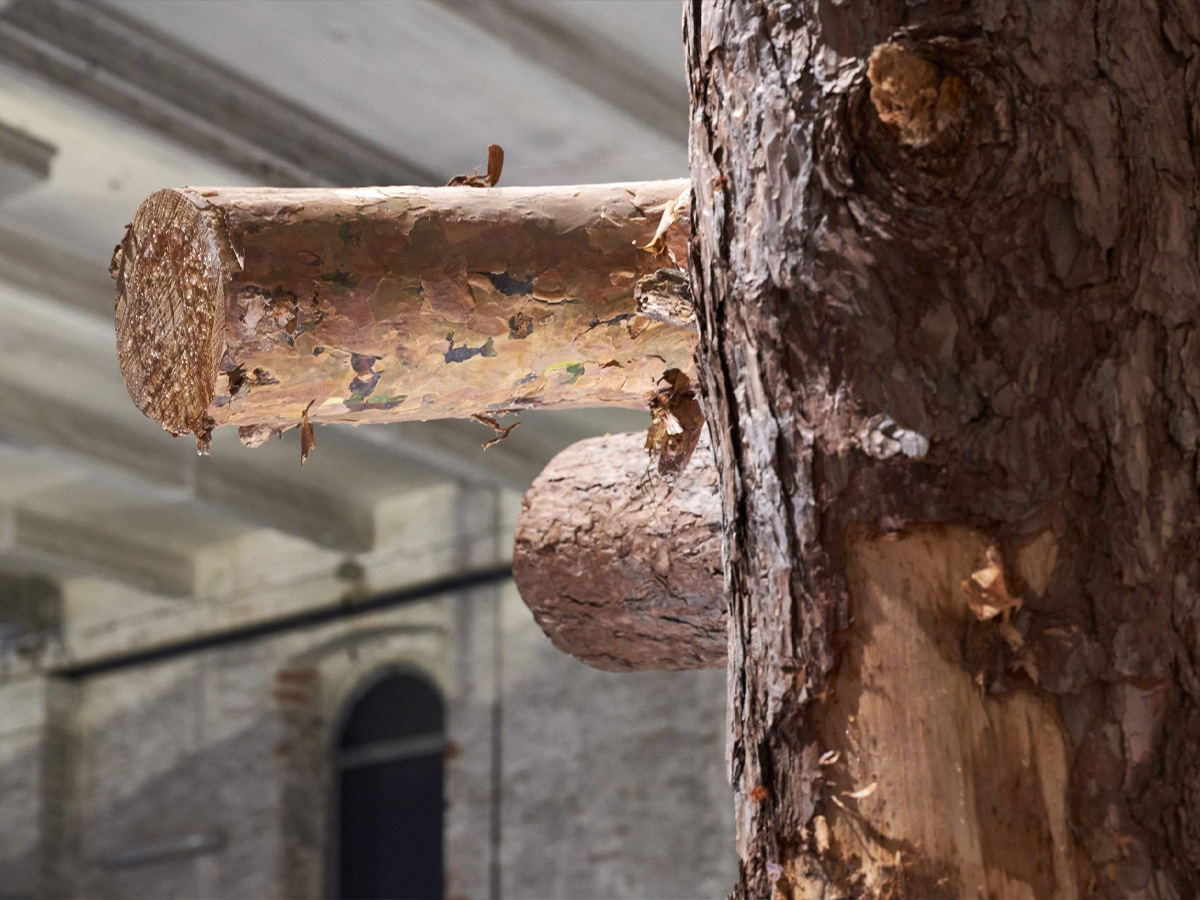
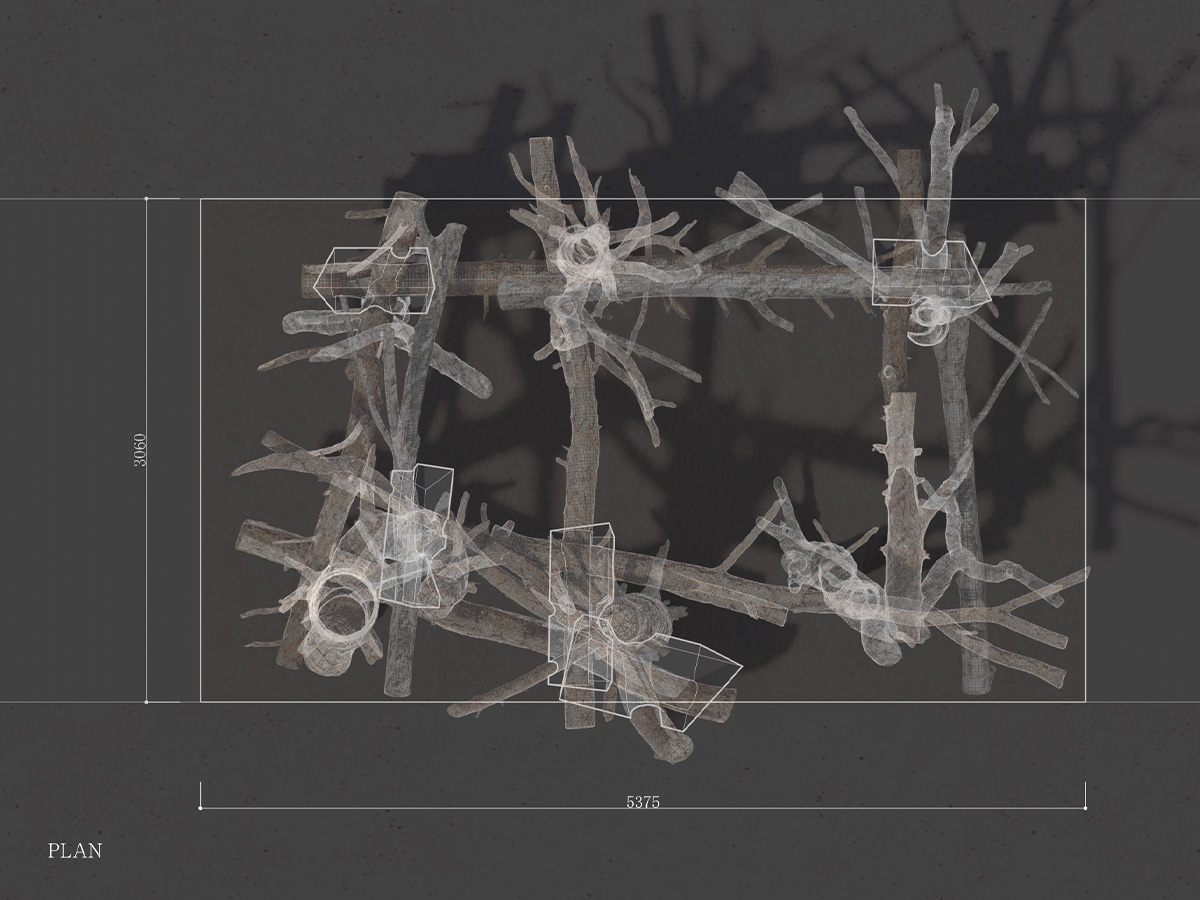
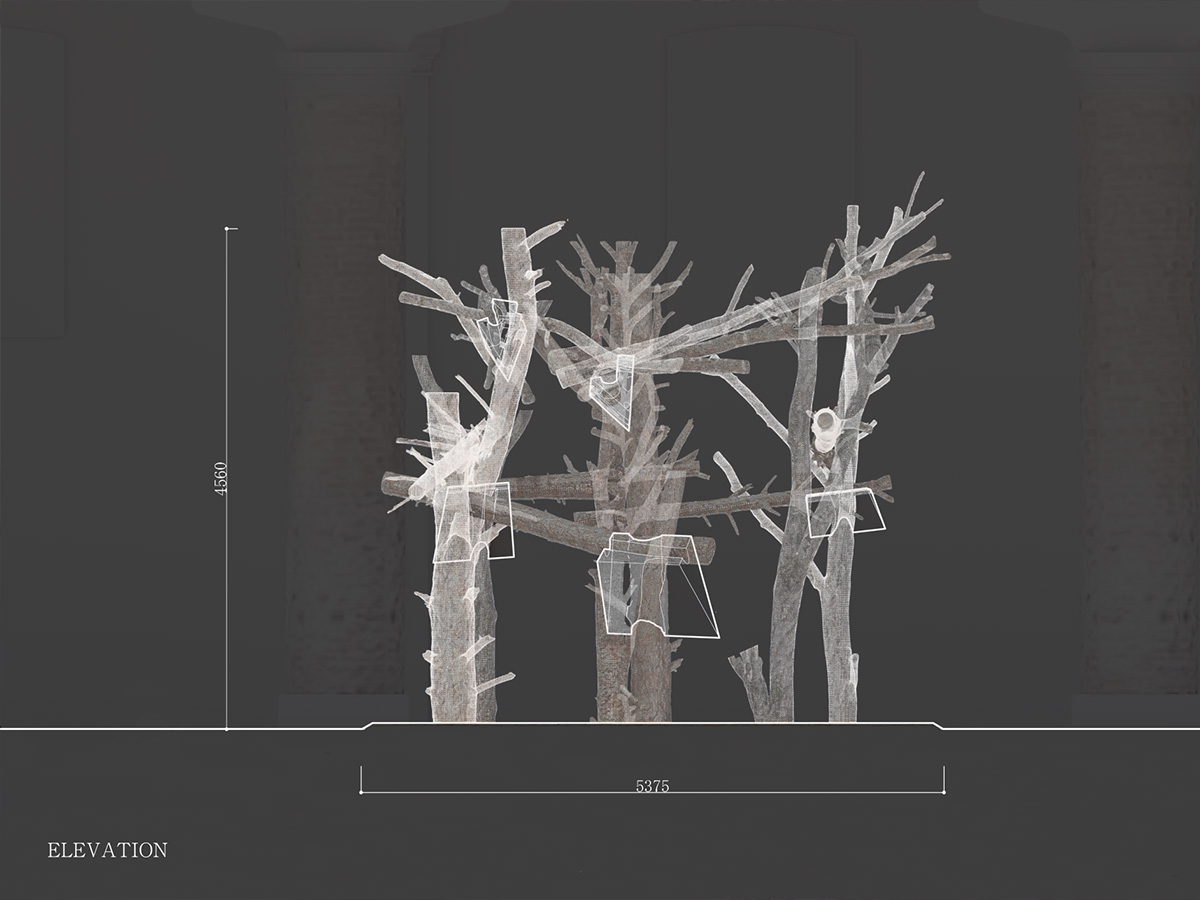
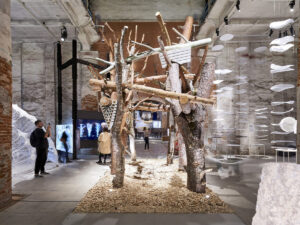
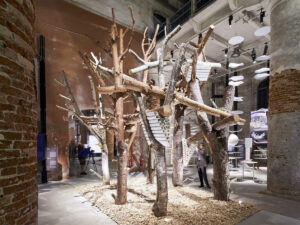
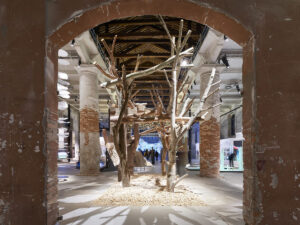
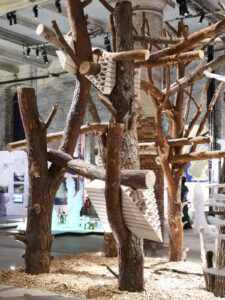
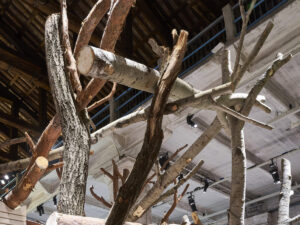
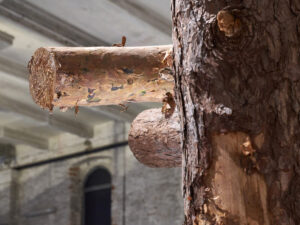
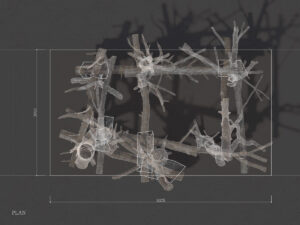
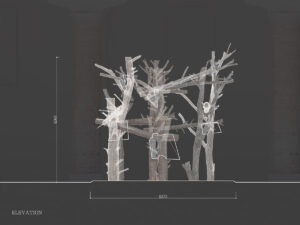
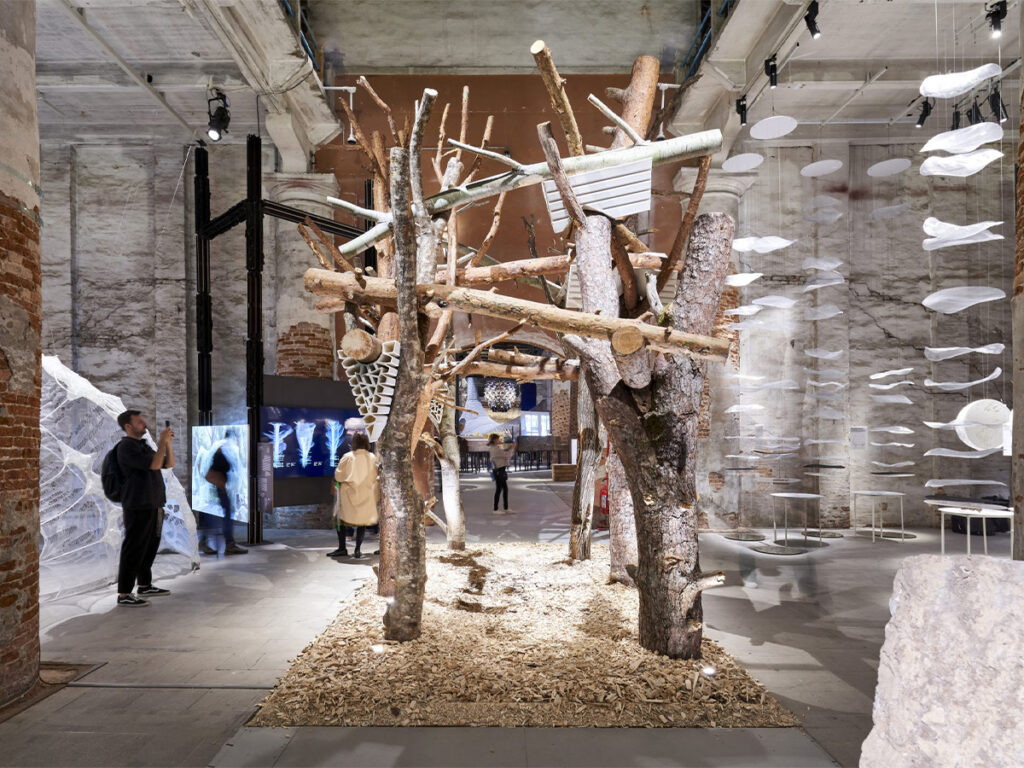
This sensitivity also underlies the project Domino 3.0, a temporary installation that translates Kuma’s vision, curated by Ryo Saito, Chief Project Manager at the firm Kengo Kuma and Associates and on display at the 19th International Architecture Exhibition at the Biennale in Venice (running until November). While in 1914 Le Corbusier’s ‘Dom-Ino’ house marked the start of modernity and the promise of artificial living, with Domino 3.0 Kuma offers a radical re-reading: the archetypal home is upturned, imagining a return to the forest, a house built with the trunks felled by Storm Vaia in 2018, 3D-scanned and re-assembled as a living structure. “Initially human beings were forest creatures. I think this is where we should return, and that is why I undertook this project,” Kuma explains.
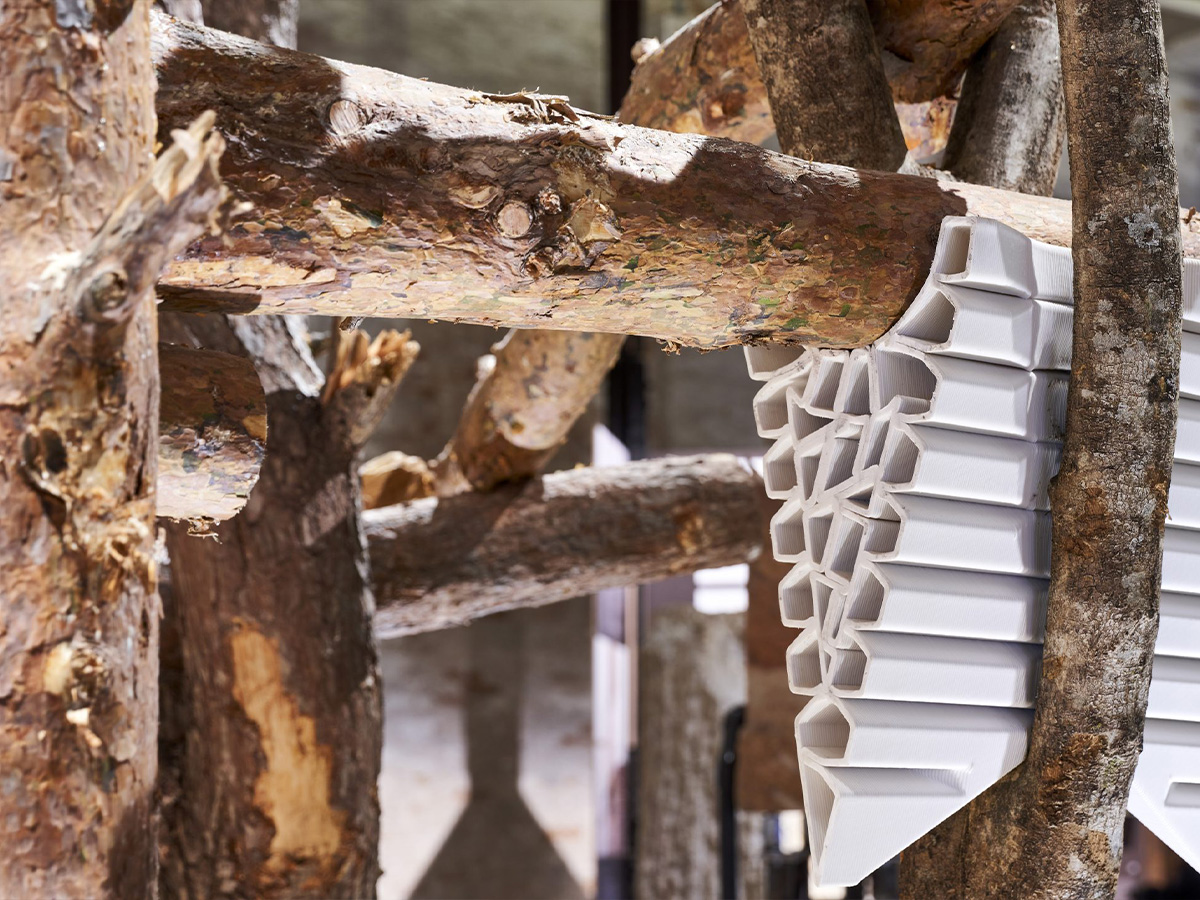
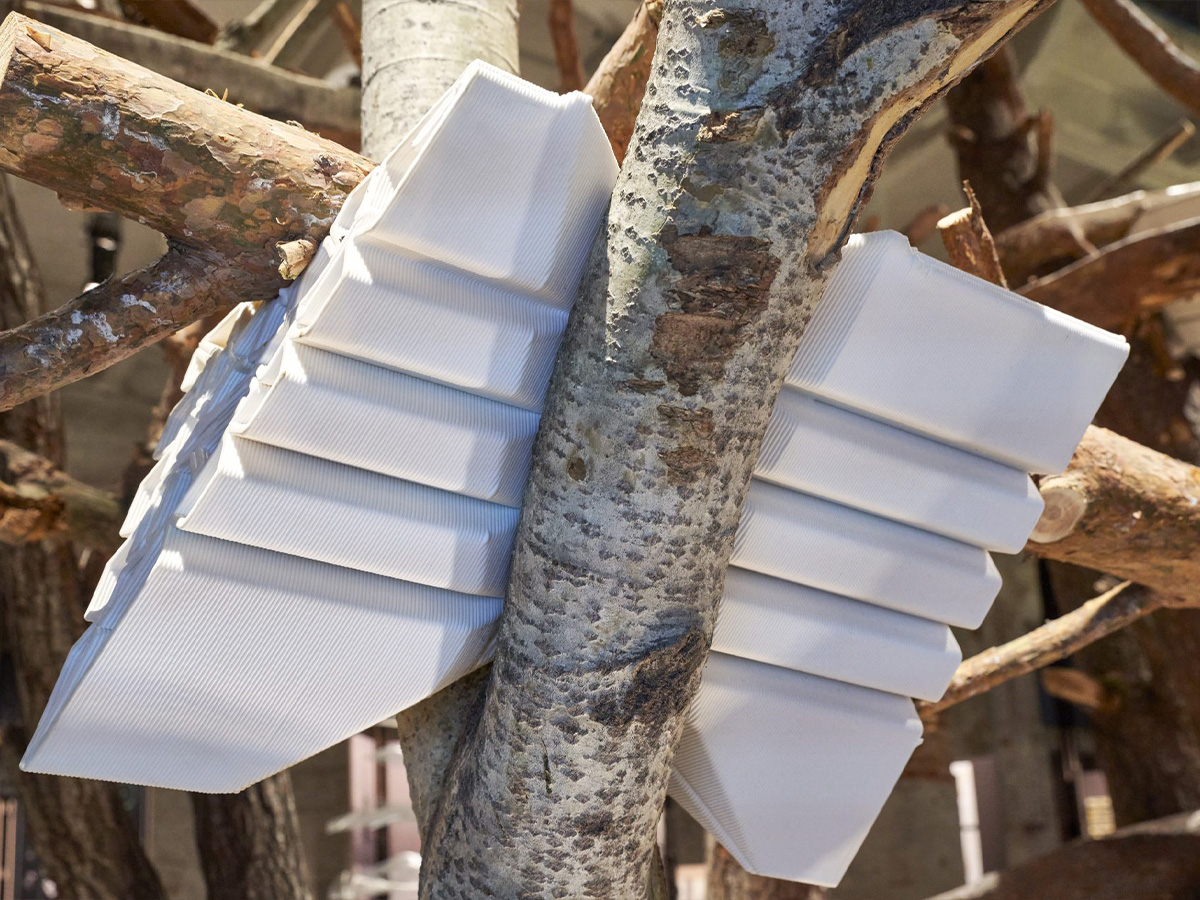
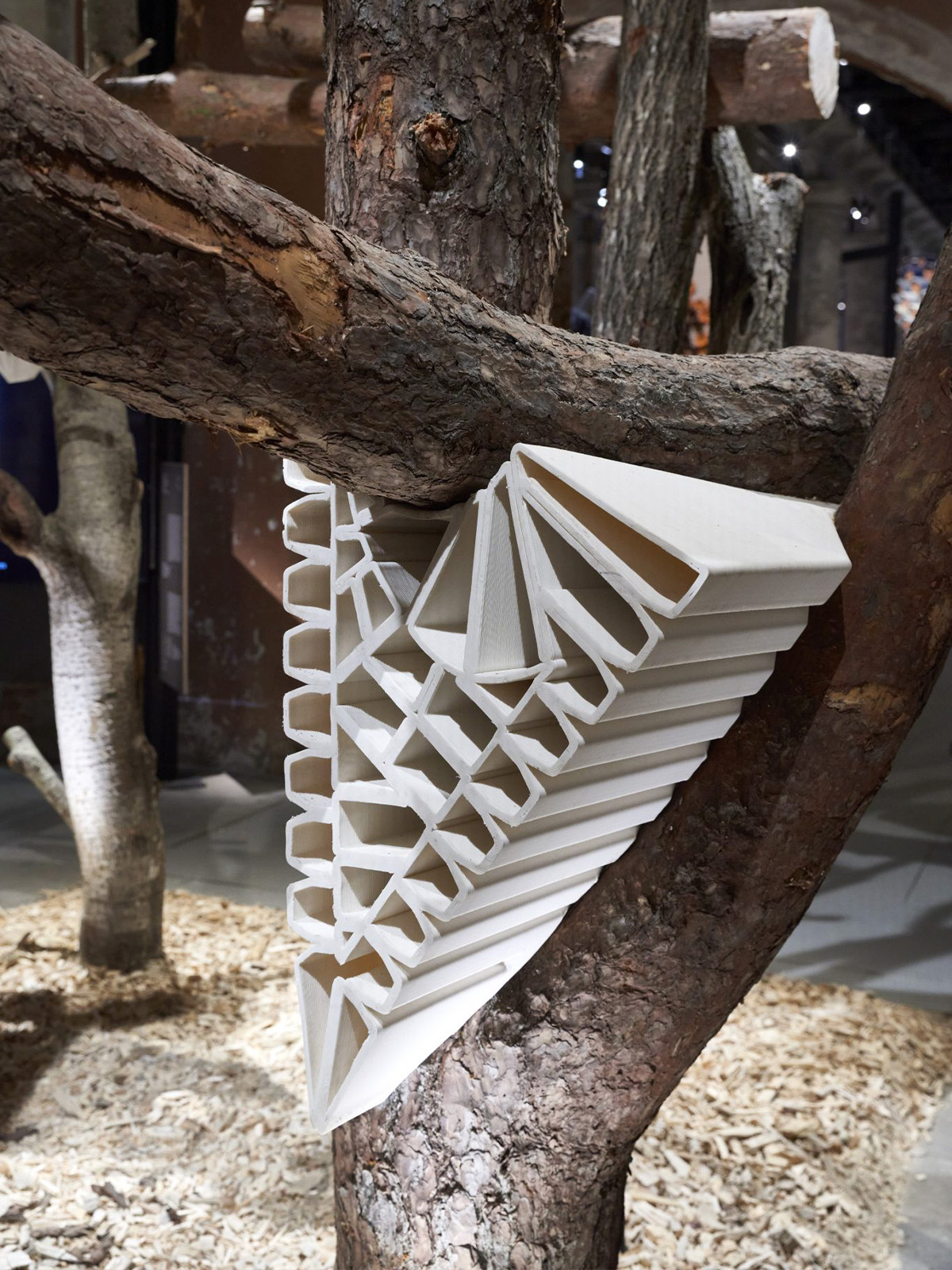
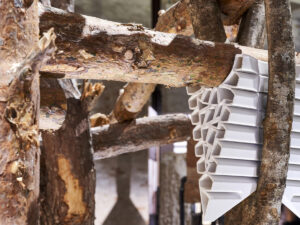
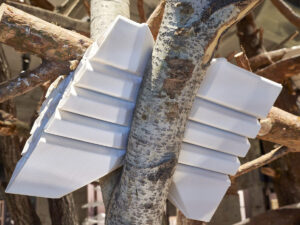
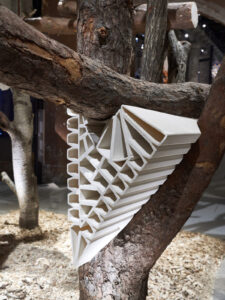
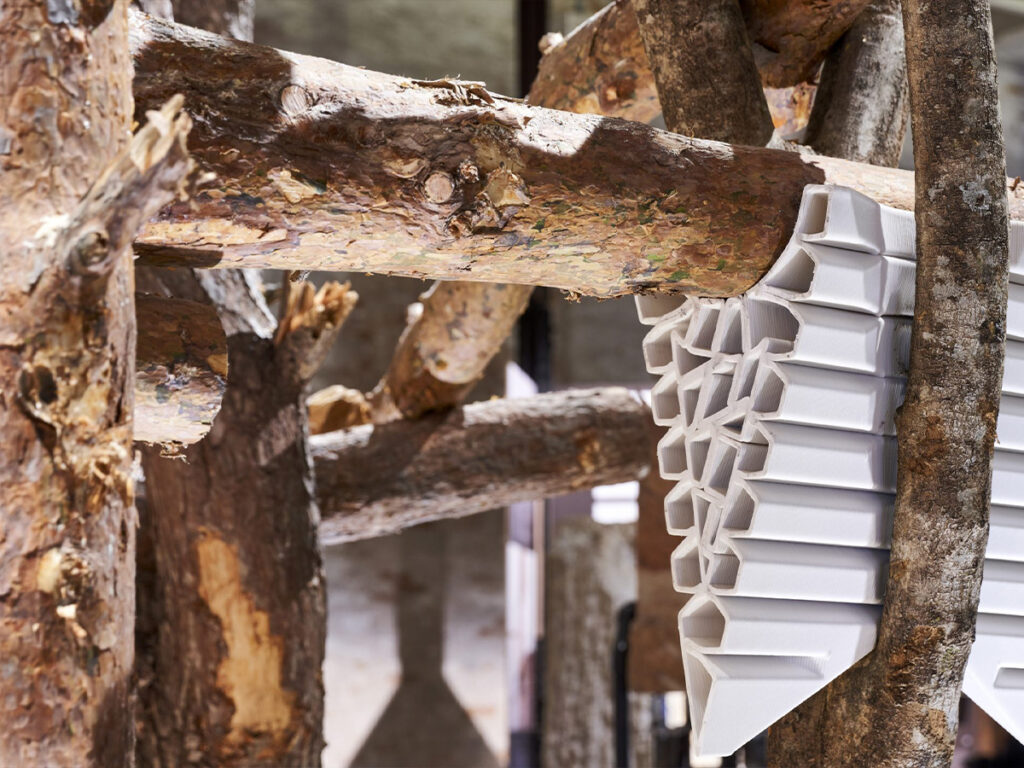
Technology becomes a part of this mediation: the trunks were put back together using computers, which defined the best position for ensuring stability, while 3D-printed joints were used to connect the branches, leaving freedom of movement. “Organically connecting nature and human life is possible if we exploit new technologies and new perspectives on nature. We are trying to create a design that connects these two elements, at the same time maintaining the autonomy of the natural landscape,” Kuma continues. A subtle balance, in which technology does not impose but accompanies, acting as a bridge between all things natural and all things human. “Ideally, trees and human beings should become a single organic entity, like when humans lived in the trees. Trees should be closer to humans, and humans should adapt in order to connect with the trees.”
In this perspective, artificial intelligence – often considered far from the sensory and ecological dimension – also takes on a different meaning here: “I believe that an extensive use of AI in the design process offers human beings greater freedom and subtlety. Without AI, sums and calculations sometimes lead to approximative or unforeseeable results. So it is useful to exploit the power of AI to balance the relationship between humans and nature, maximising the autonomy of both.” This thought is also echoed in his reflection on the different standpoint between East and West: “In my opinion, Western design is based on the idea of modelling the landscape to fit the human order, but in Japan there is a strong belief that human beings must adapt to nature, and many of our architectural works and other projects reflect this approach. Considering the environmental situation the planet is facing, I believe that the Japanese approach will become more and more important.”
Kengo Kuma’s contribution helps to understand the authentic roots of a thought that has underlined the dialogue between architecture and landscape, both in Japan and in the West. Domino 3.0 also represents a new chapter in that long history that ties Kuma to wood as a material of memory, resilience and future: it suggests that the return to the forest is not only a design feature but a cultural movement. In this vision, technology is not the enemy but the vehicle: it helps us to read, interpret and recompose all that nature puts at our disposal. In an era in which design risks moving away from natural materials, Kengo Kuma’s words remind us that the more radical innovation is to reconnect humans with the forest.