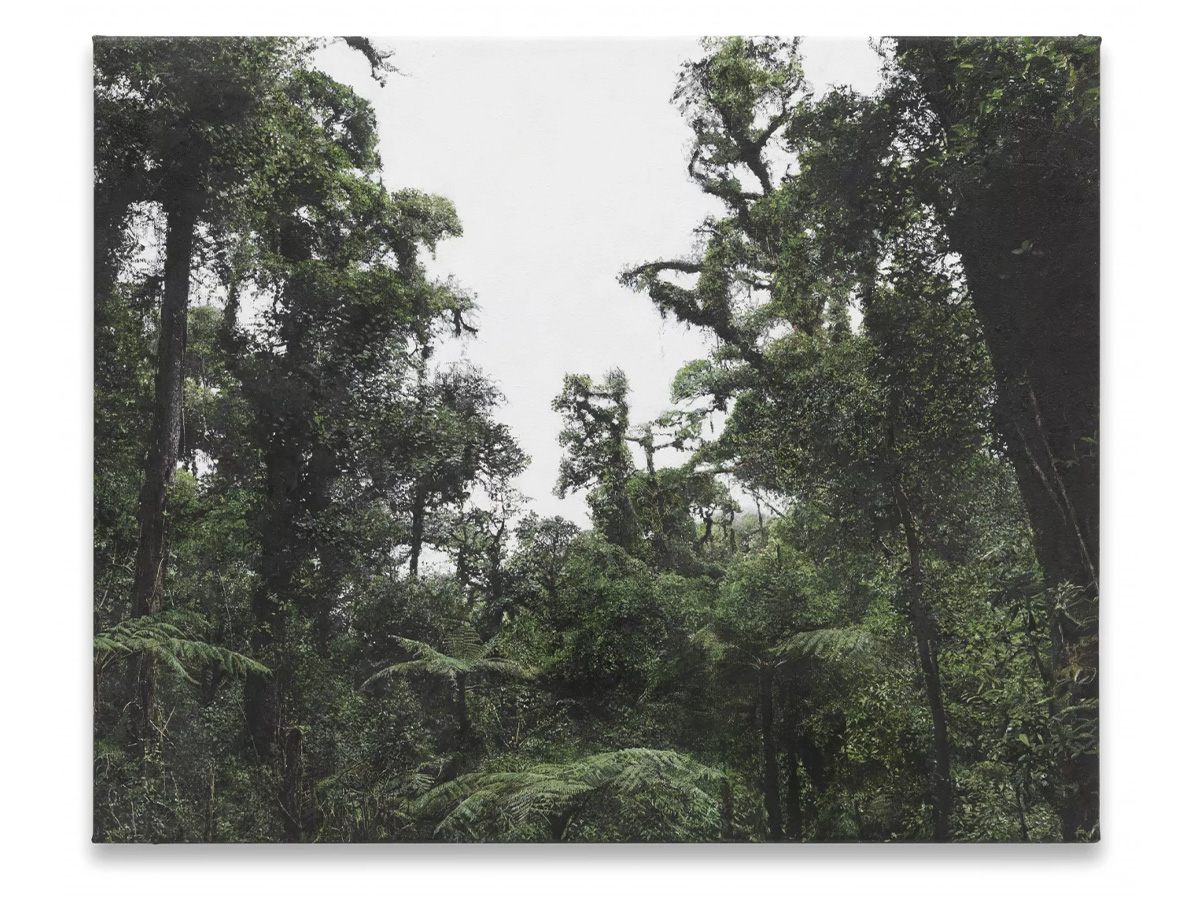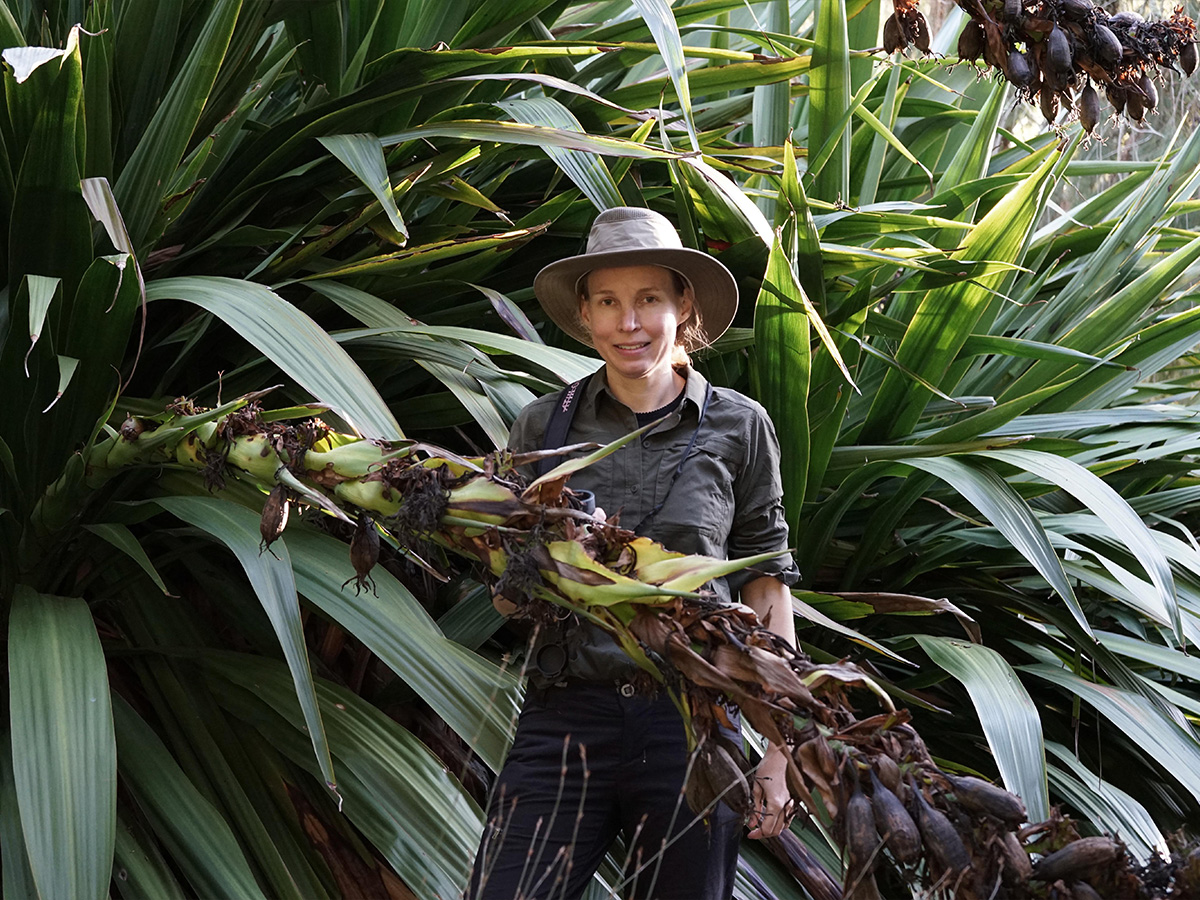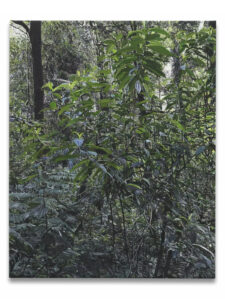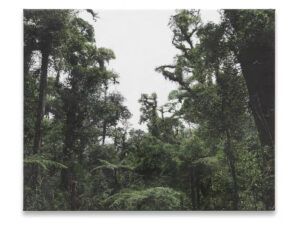


Seen all together, 30 million hectares of primary forests saved from deforestation and conserved in their entirety from one end of the globe to the other, is really a lot. But they are the result of the day-by-day journey, with measures and headstrong actions, one forest after another, one step after another, of Haley Mellin, US artist and activist who has made art her mission to safeguard biodiversity by founding the no-profit organisation Art into Acres.
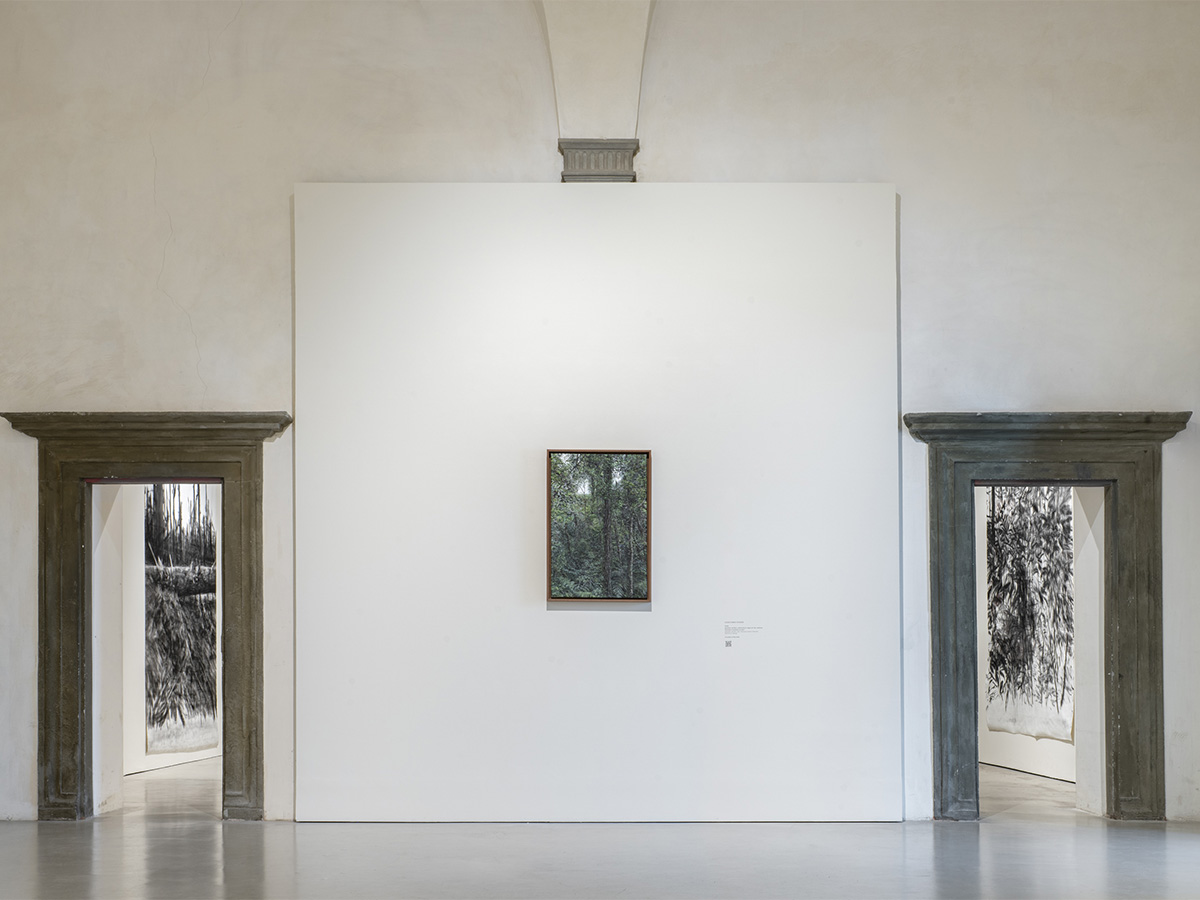
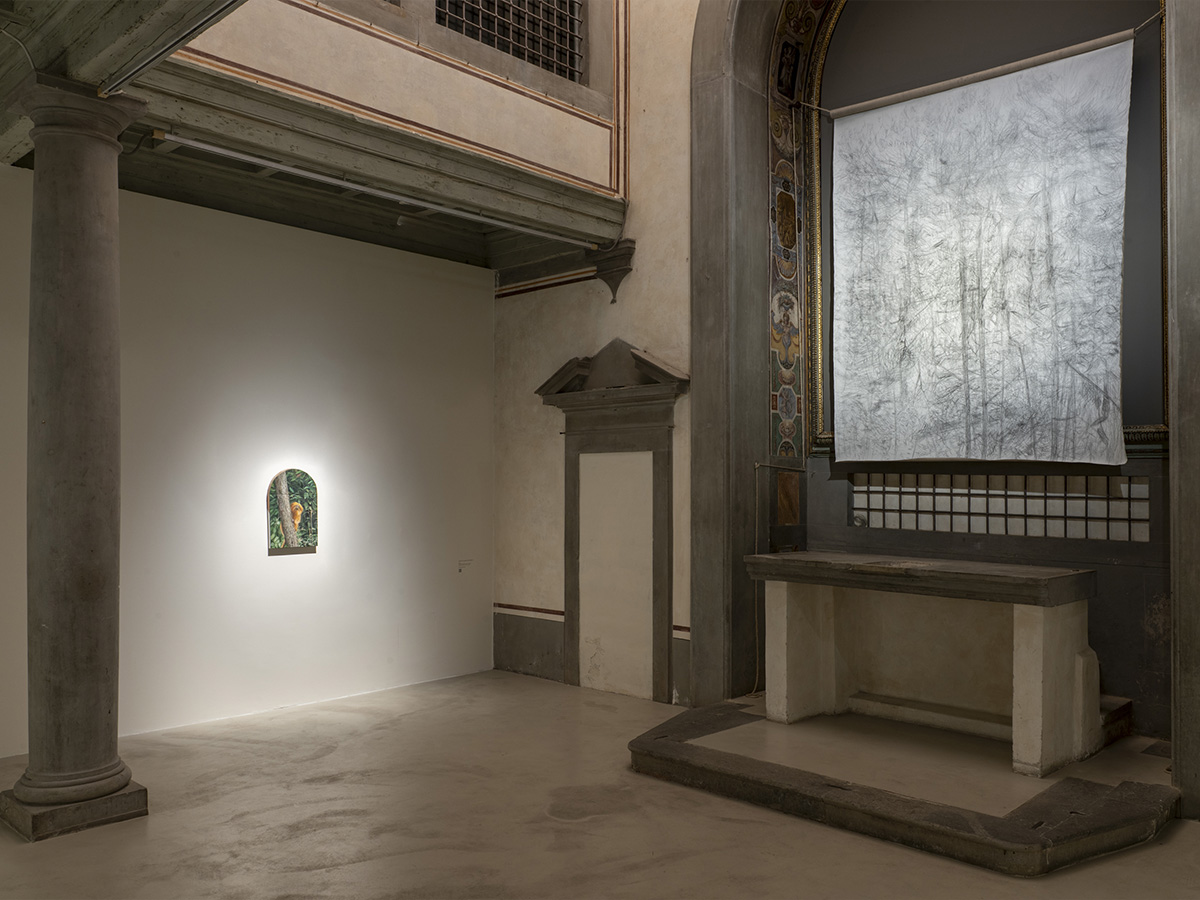
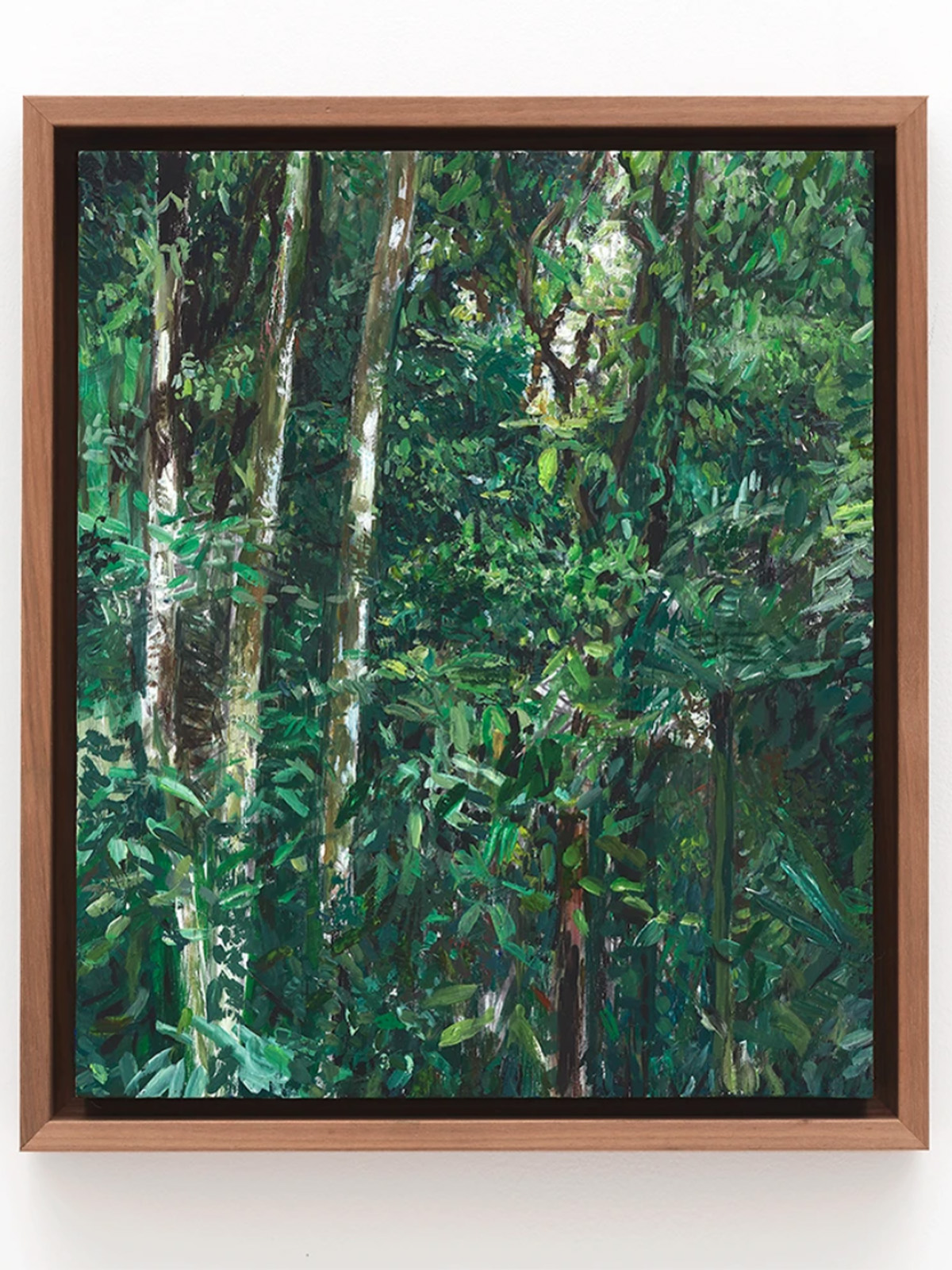
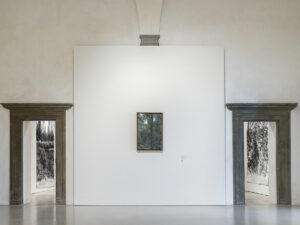
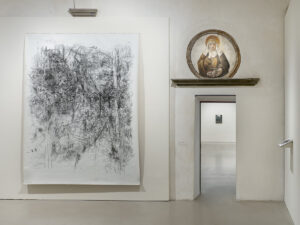
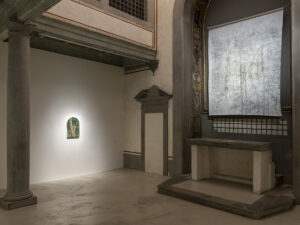
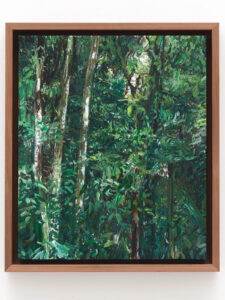
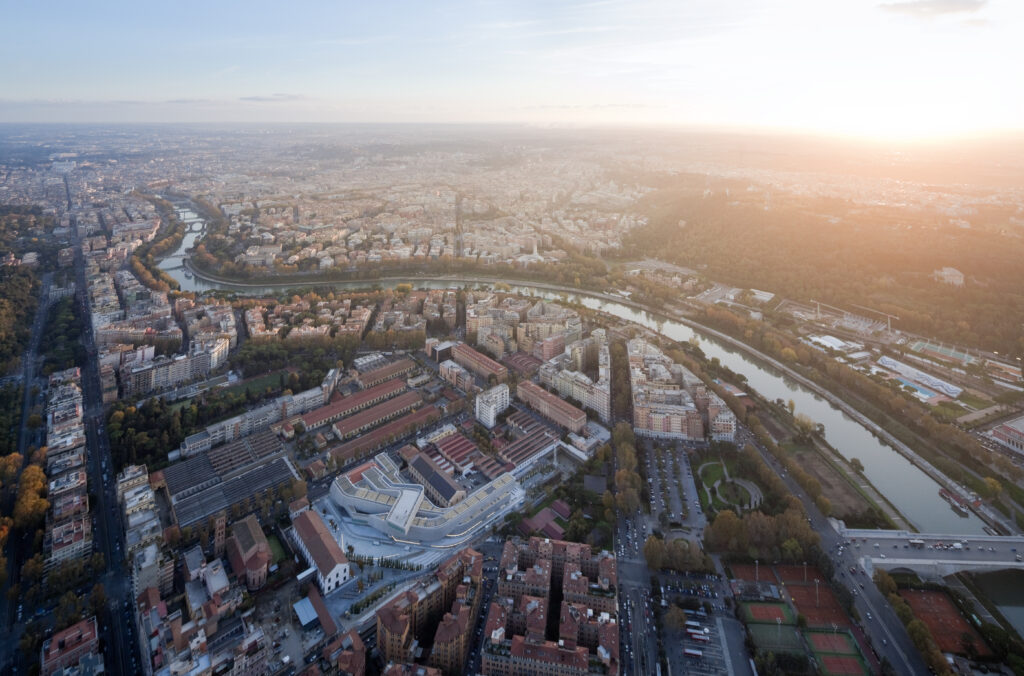
In a recent exhibition at the Museo Novecento in Florence, curated by the director Sergio Risaliti and by Stefania Rispoli, entitled Siamo Natura (We Are Nature) the various fronts of Mellin’s artistic activity have been composed and illustrated in a single place: two rooms in the museum hosted paintings by the artist in the heart of the forests she helped to save; another displays her charcoal and pencil drawings; a final space is devoted to the activities of Art into Acres, with ongoing and completed projects around the world. Finally, the new Giardino delle Leopoldine in the Museo Novecento cloisters, which Haley Mellin helped to create as an integral part of her artistic works.
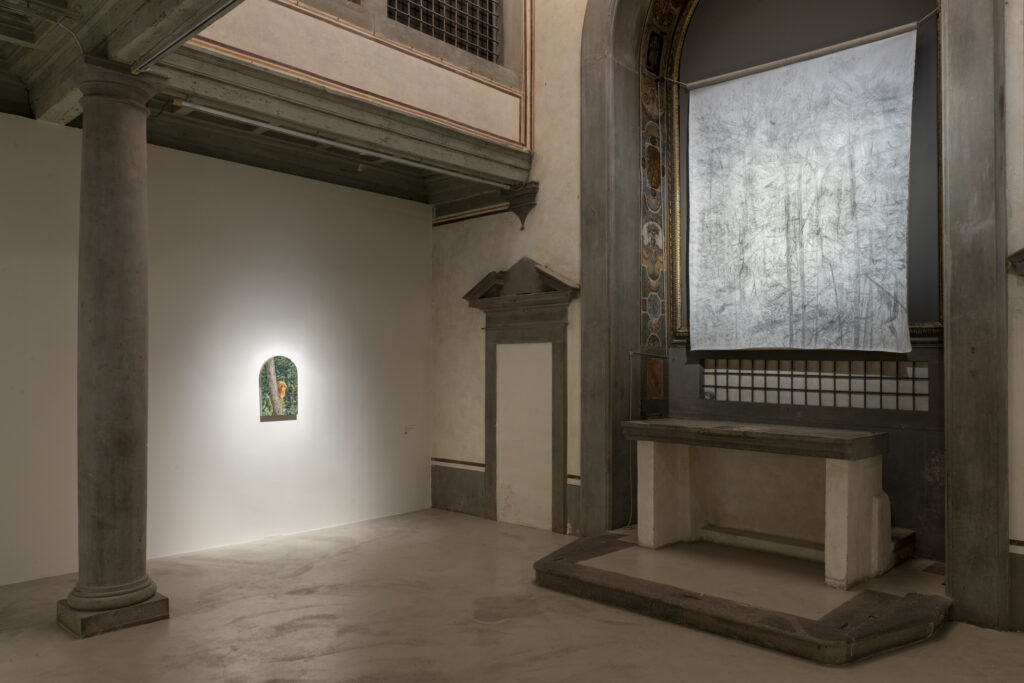
Haley Mellin’s life is one of commitment that coincides with art – and vice versa. Starting from an assumption: the artist’s total identification with nature, which Mellin deeply feels a part of. A sentiment felt as a human and universal dimension, so true for all humans, nobody excluded. “Siamo Natura is the title of the exhibition; it responds to the fact that we are all part of a larger system,” she explains as we walk through the halls of the Museo Novecento where her paintings of forests and trees, soil and animals are displayed. “In time, history is moving the future and our presence is connected with everything around us. It is something educational, where people can reflect and also have some quiet.”
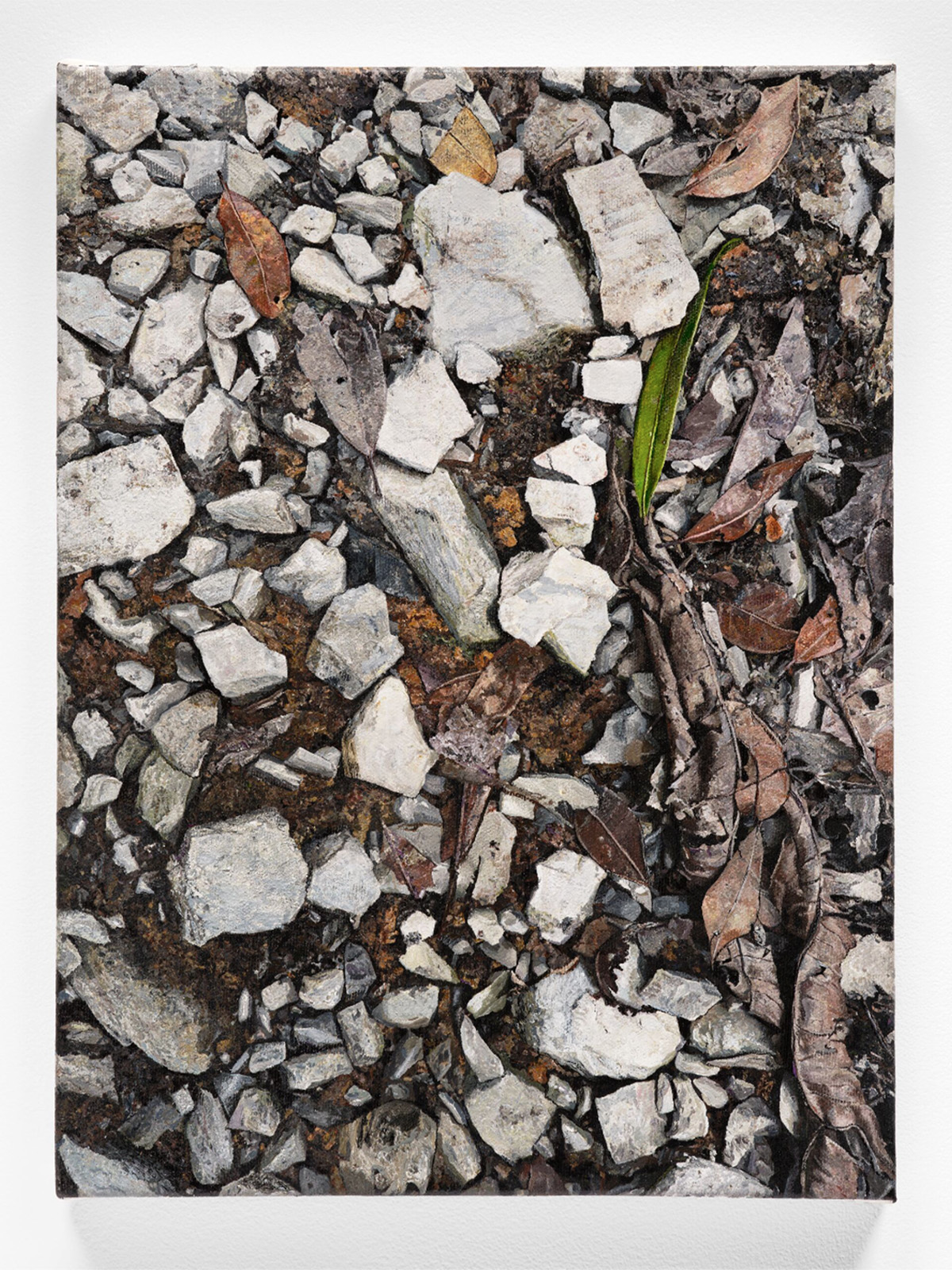
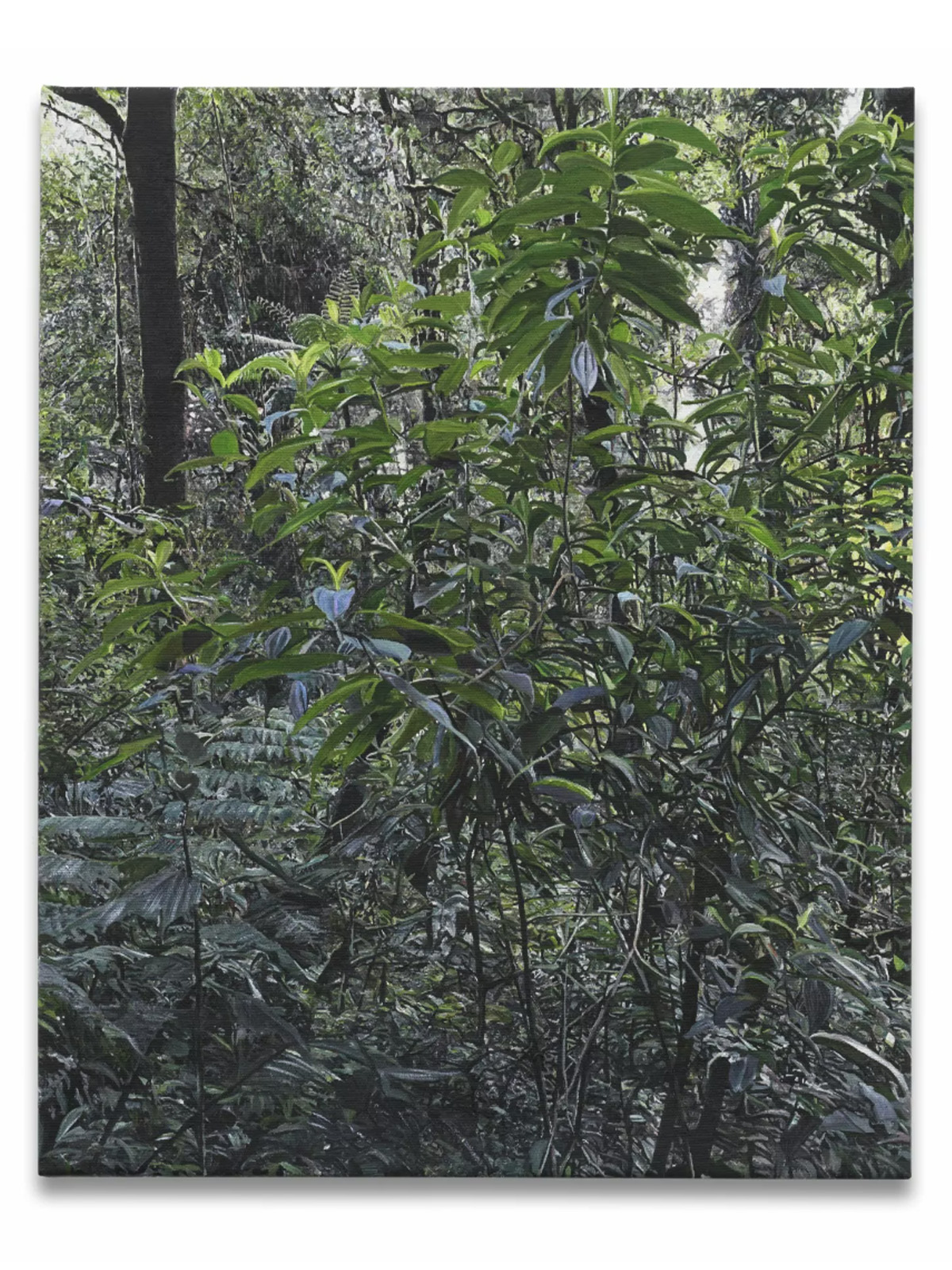
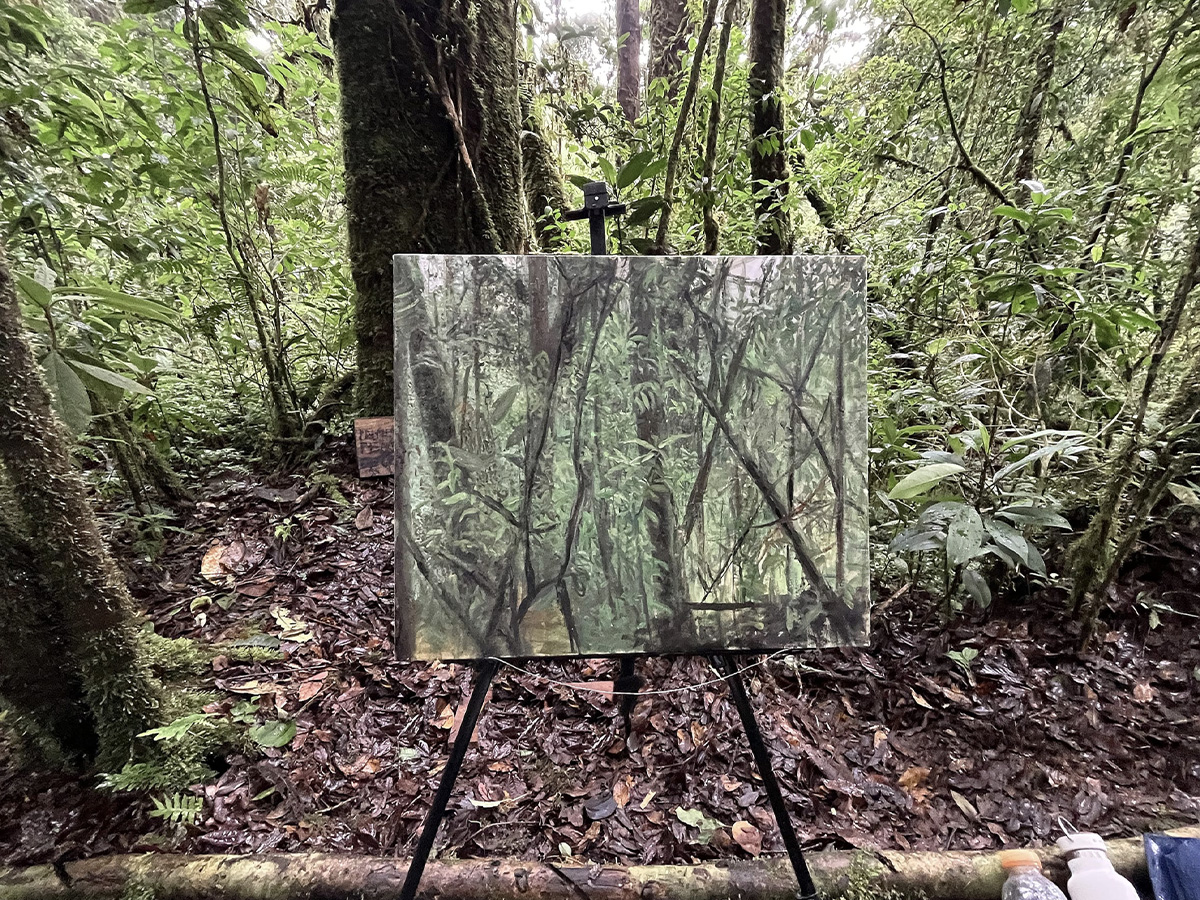
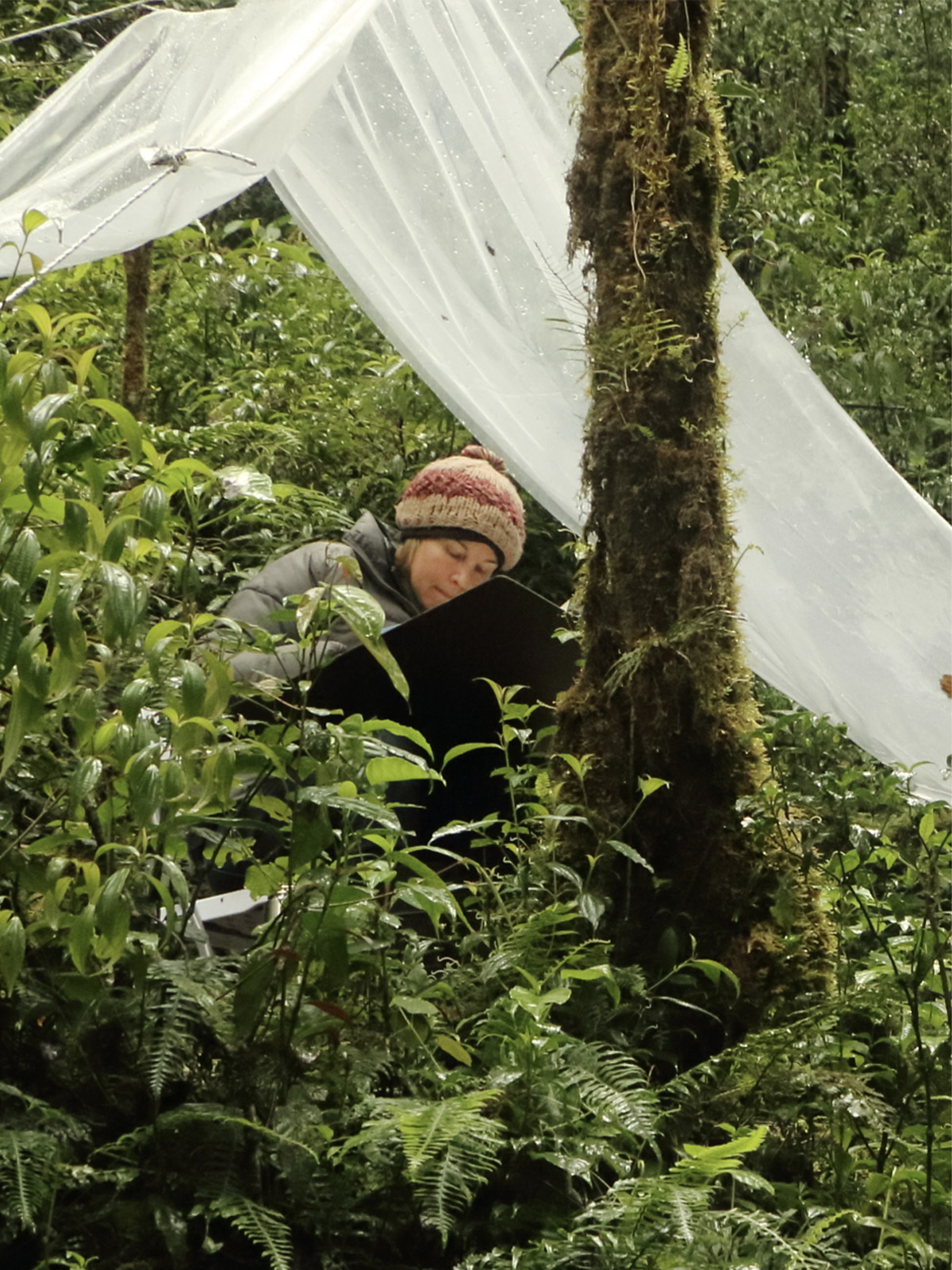
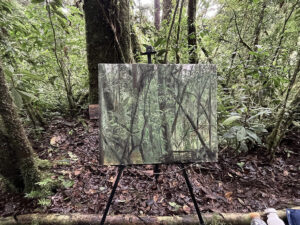
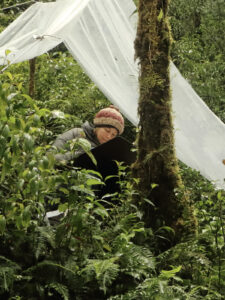
For Haley Mellin, striving to safeguard nature cannot be separated from sustainability in every action: when she goes into the forest to paint, she does so with no electricity, heating or cooling and using only natural materials, small canvases she can carry in her backpack. “As an artist, I paint outside, in the places that I’m working to conserve. I paint quietly, meditative and I’m listening to these places; the paintings are of positive places that have always been wild and very healthy places. Painting for me is about practicing a state of mind. A way of being in and with nature; it’s about paying homage, observing and listening as nature speaks.”
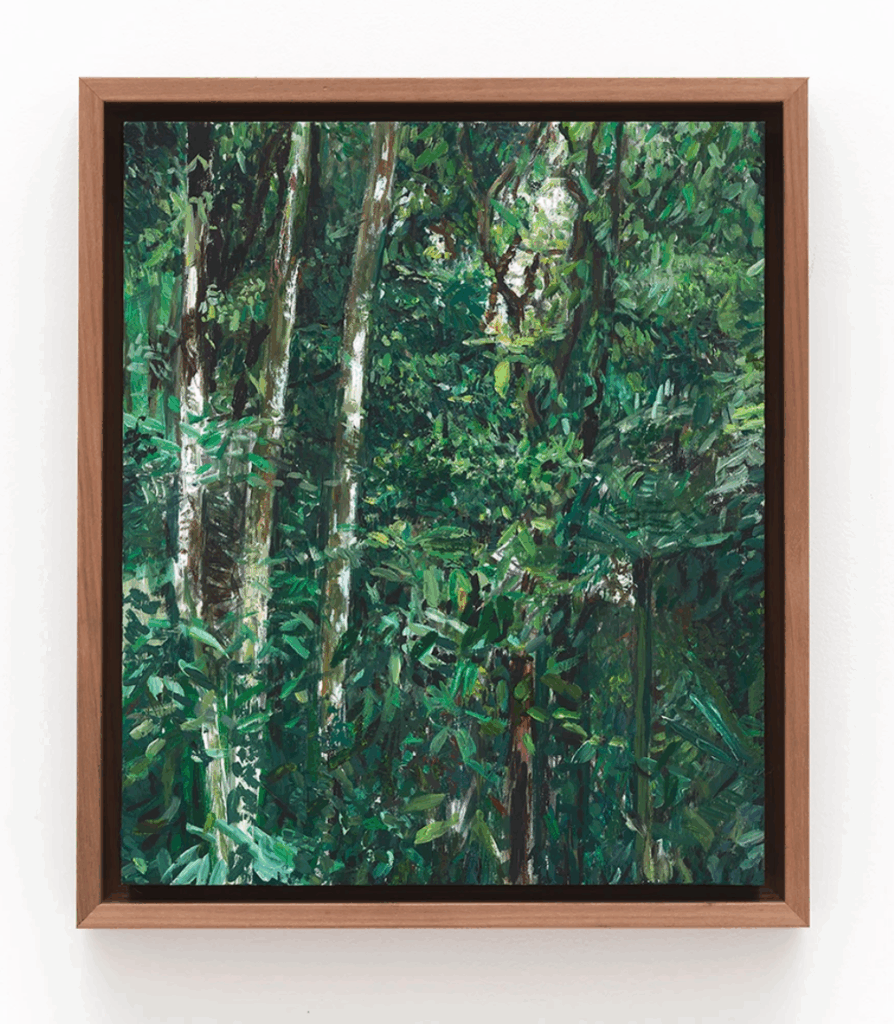
The organisation of her exhibitions is based on recyclable and sustainable materials, with a completely monitored carbon footprint. “Sustainability is very important in my work,” she confirms, “I work with museum pioneers and teach them how they can be more sustainable. I’ve done the first carbon calculation for these museums for free. In my own practice I paint with non-toxic gouache, working on small sizes, easy to carry. For the frame pieces I work with an Italian walnut moulding producer; the plant one tree in California for each frame produced for me in collaboration with One Tree Planted.”
In this field, Haley has contributed to the regeneration of the Giardino delle Leopoldine, the ancient Renaissance cloisters in the building in Florence that today is home to the Museo Novecento, in which, curated by the landscape architect Matilde d’Oriano, 300 local plant species, and others linked historically and culturally to the Tuscan landscape, have been planted: pomegranate, cypress, bitter orange, helichrysum, rosemary, sage, dog rose, myrtle, wild thyme and acanthus, the symbol of perseverance, due to its ability to grow strong even when faced with obstacles. Wes Sechrest and Leonardo DiCaprio’s organisation Re:wild also worked on the project, along with Art into Acres. “This is a civic museum,” Haley says, “as part of my civic commitment I have initiated a project in the cloister with the museum, which a new nature garden; it is about a retreat for hundreds of plants and trees native to Tuscany, medicinal plants or used in cooking. We created a place for plants to live and for the community, a place to rest the eyes and the body.”
The forests where Mellin paints are those where Art into Acres – defined as a kind of environmental collective working to protect vast areas of unspoiled territory – runs its protection projects. The global artistic community takes part in the project by donating and selling works of art, the proceeds of which support forest protection activities (30 million hectares until now), returning them to the local and indigenous communities and engaging international organisations. This huge movement began with Haley Mellin as an artistic practice focusing on the community. “Land conservation is, not always, but tends to be in places of high biodiversity, which tends to be in the tropics. For about eight millions years, near the equator, tropical forests developed a very high biodiversity in a very stable climate,” the artist explains. Art into Acres has worked in reserves and forests in Brazil, Bolivia, Chile, Colombia, Ecuador, Peru and Suriname. One of the most recently completed projects, in October 2024, was the first territory for isolated indigenous peoples in Putumayo in Colombia, protecting a million hectares of Amazonian Forest; in this case not only biodiversity but the cultural rights of the indigenous populations were also protected. But Art into Acres also works in higher latitudes: again in 2024, in Canada, a new conservation area covering 850,000 hectares was established in Aullaviat/Anguniarvik in the Yukon, led by the indigenous Inuvialuit communities.

I ask Haley Mellin how she feels when she is painting in the forest. “Being in the forest is a place where your senses are keen to connect,” she replies. “The sense of smell, sound, touch; just feeling the moisture on your face… You’re not with a tree, you’re not with a plant, you’re not with a bug. You’re with a whole symphony of life. A forest is a place where there are so many living things, living in harmony and competition and I feel very happy in a forest, I’m very aware of my own mortality, we’re life, in a forest.” I also ask her where the beauty of wild nature lies, where humans have left no trace. Haley thinks for a moment before answering. Then, carefully measuring her words, she explains: “For me beauty in wilderness is seeing things as they are. When I’m painting, when drawing, working on conservation I’m very much interested in seeing what is there as it is, which means not making it look a certain way or stylizing it or not choosing one thing over the next but instead being present and documenting what is actually there because it is actually quite beautiful as it is. I think whether you’re looking at a big mountain or wet forest or mud. They all have their toxic beauty. And I think expanding our reception of beauty, expanding our definition of beauty is exceptionally important for the wellbeing of the planet.”